Thyme Soup
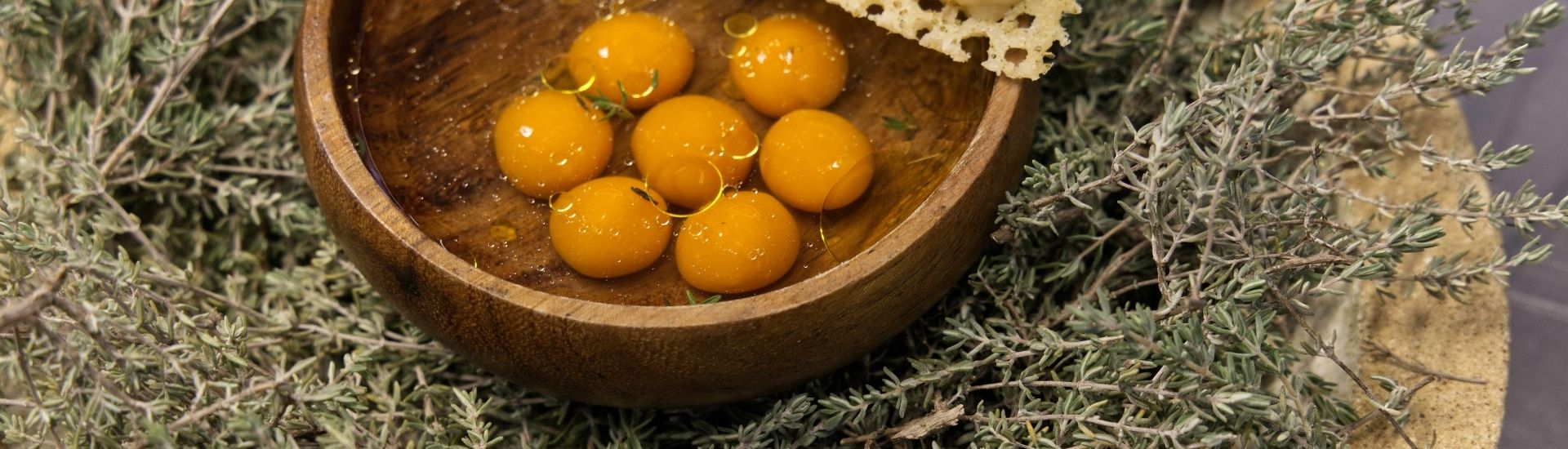
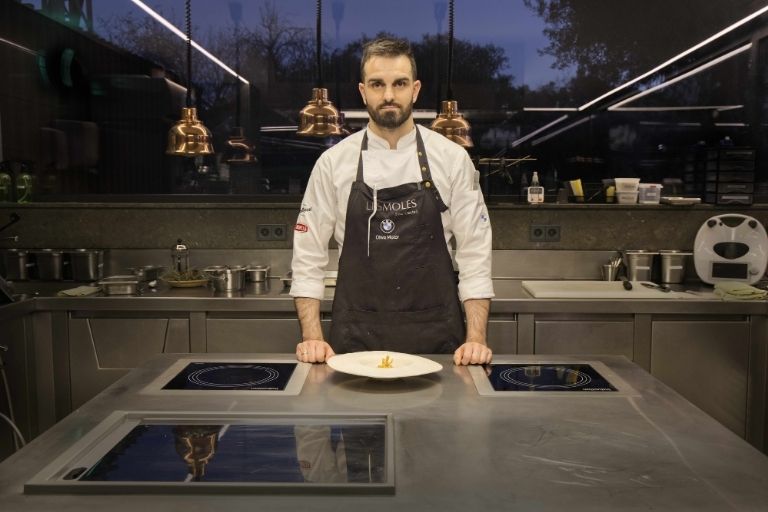
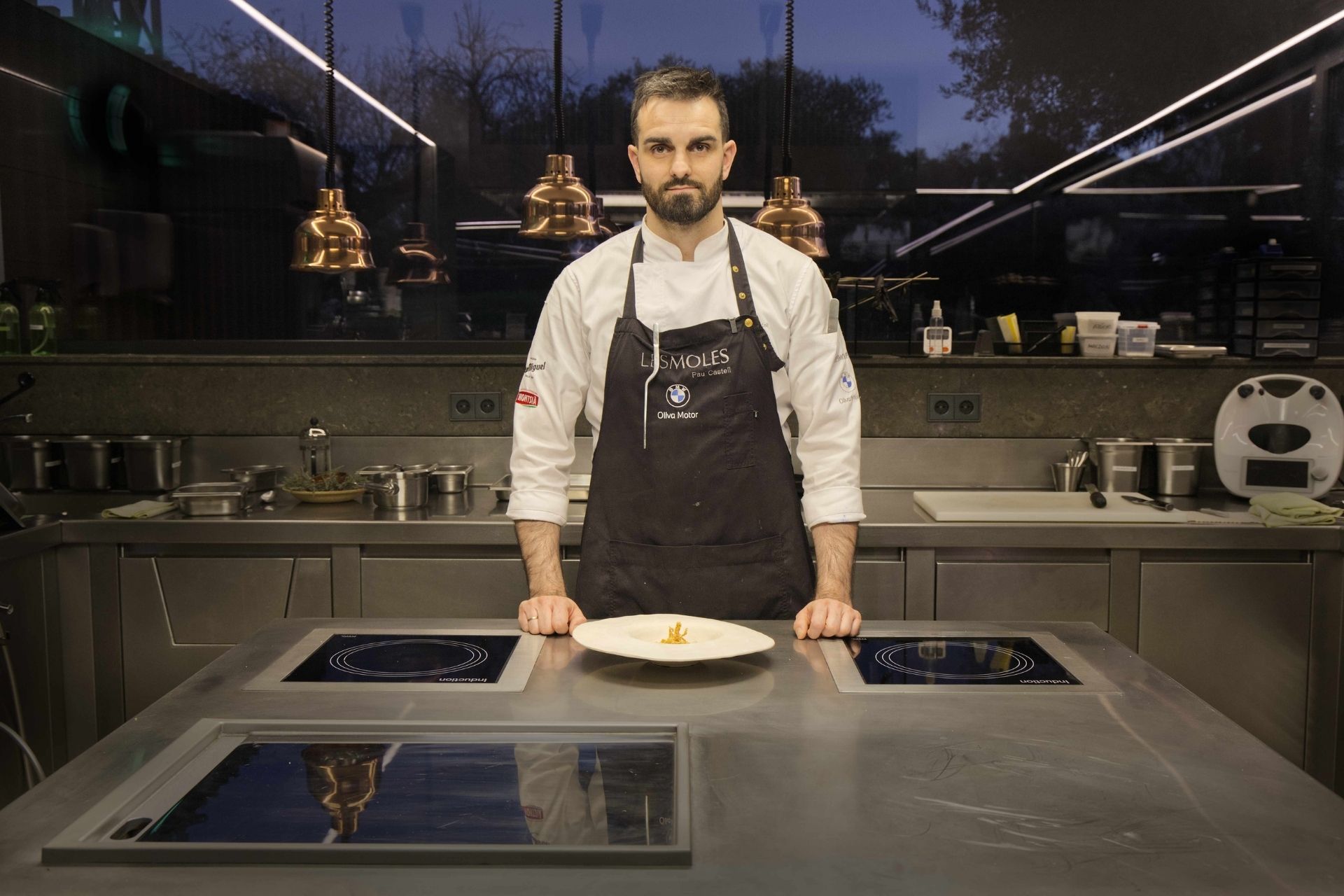
At Les Moles restaurant, chef Pau Castells showcases three recipes with distinctly different identities. They range from the simplicity of thyme soup, a dish created almost to deceive the stomach, to the hearty substance of fideus en costella (noodles with pork ribs), and the technical singularity of sípia solsida. Together, these three recipes represent different facets of Tortosa’s gastronomic heritage, from the rustic traditions of rural cooking embodied in the thyme soup to the market-inspired cuisine reflected in the sípia solsida.
The chef reinterprets these recipes, some of which would rarely be found on a restaurant menu, such as thyme soup, transforming them into delicate expressions of fine dining. Others, such as fideus en costella, are reimagined as a kind of false risotto. Yet throughout these reinterpretations, he remains faithful to the essence of each dish, preserving and highlighting the distinctive identity of every ingredient he works with.
VIDEO RECIPE

Method
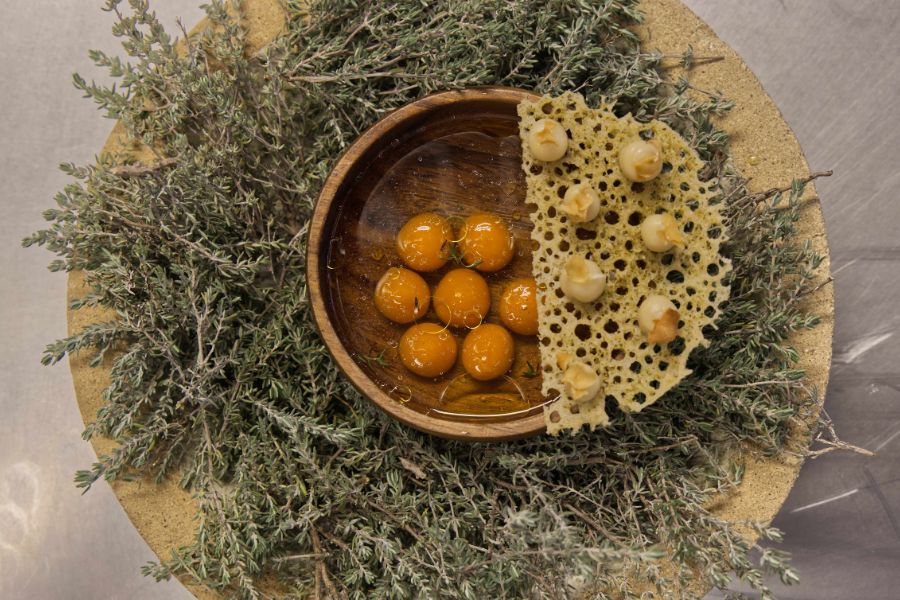
The thyme soup served at Les Moles is based on a roasted tomato soup, combined with a variety of techniques designed to create contrasts in texture and aroma.
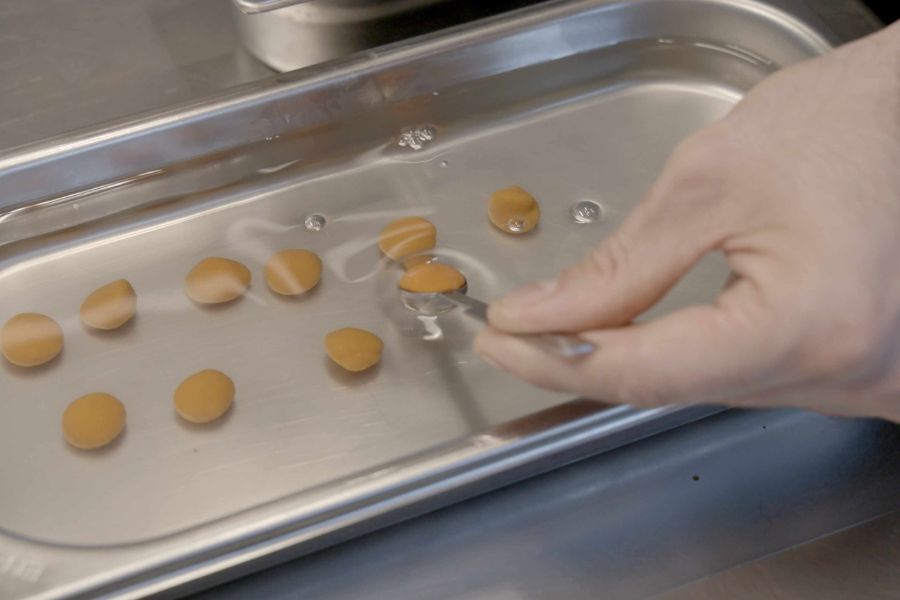
The base of the dish is a tomato cream made from tomatoes roasted over charcoal, which are then blended with salt and olive oil until a smooth, intensely flavoured cream is obtained. Gluconolactone is added to this preparation, making it suitable for the spherification process.
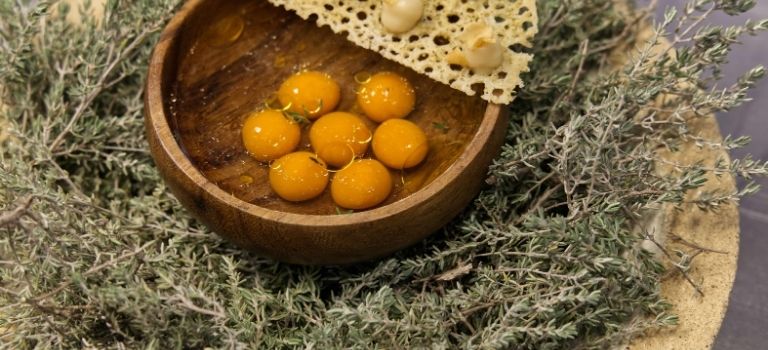
To form the spheres, the tomato cream is dropped into an alginate bath, where it reacts with the gluconolactone to create a thin gel-like outer membrane. The spheres are left in the bath for approximately two minutes, long enough for the external layer to set while the interior remains liquid and creamy.
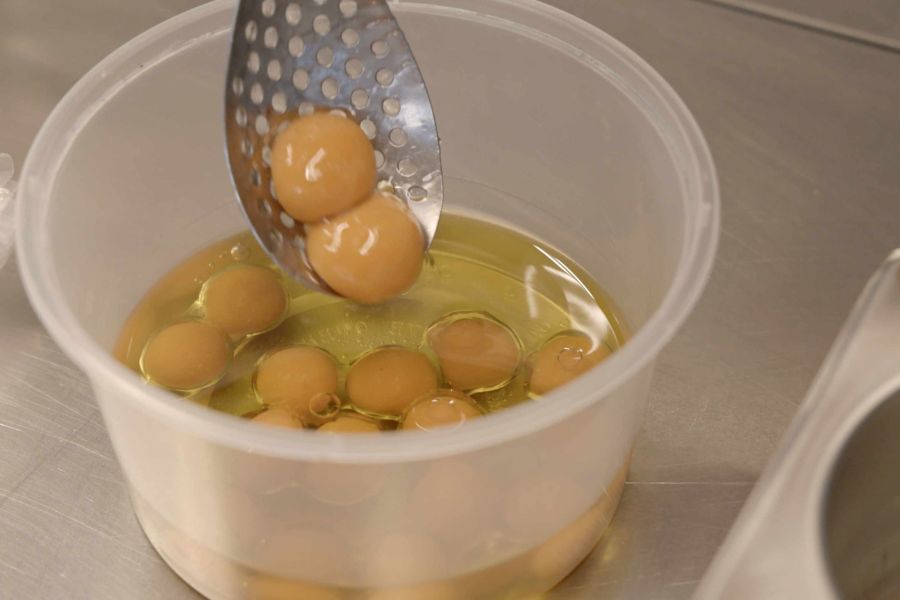
Once formed, the spheres are transferred to a water bath to remove any excess gelling agent and ensure a clean surface. They are then stored in olive oil, as the difference in density prevents them from deforming and helps preserve the integrity of the spheres, keeping the filling perfectly encapsulated without any loss of flavour or aroma.
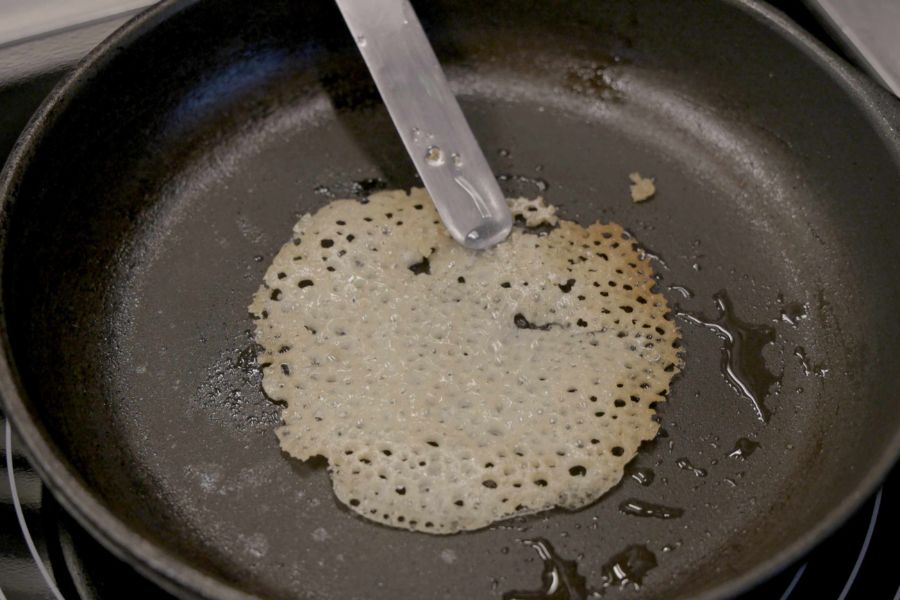
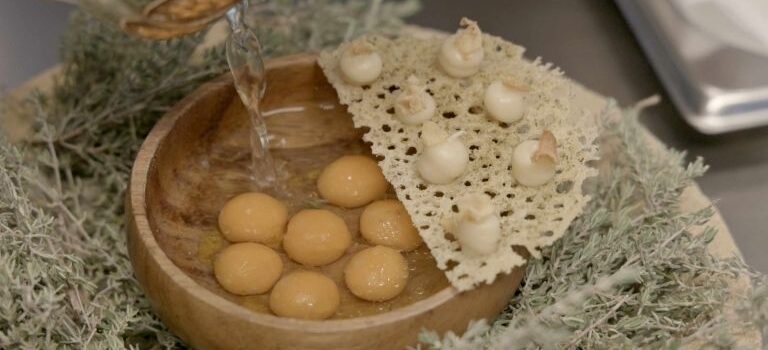
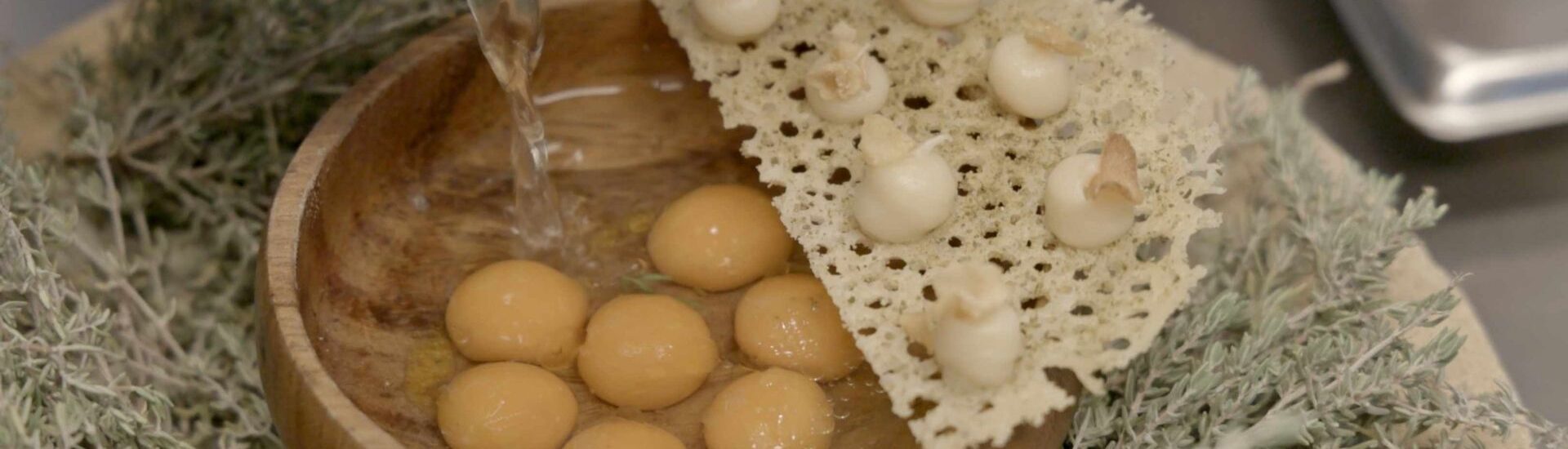
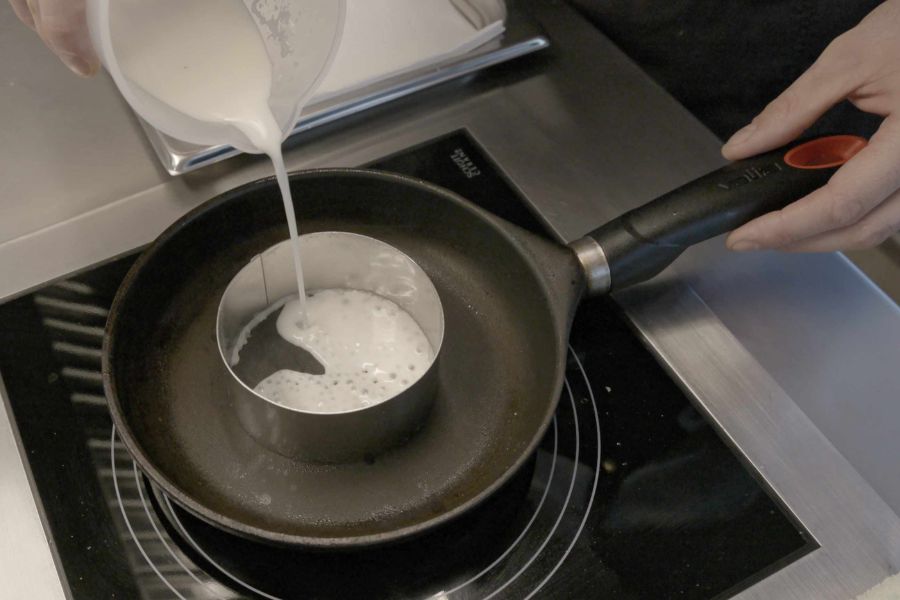
At the same time, a liquid batter is prepared using water, olive oil, salt, chickpea flour and wheat flour. This mixture is spread in a very thin layer over a hot surface to create a crisp wafer. Once the batter has set, it is carefully removed to prevent it from breaking and left to cool until it becomes dry, light and crunchy.
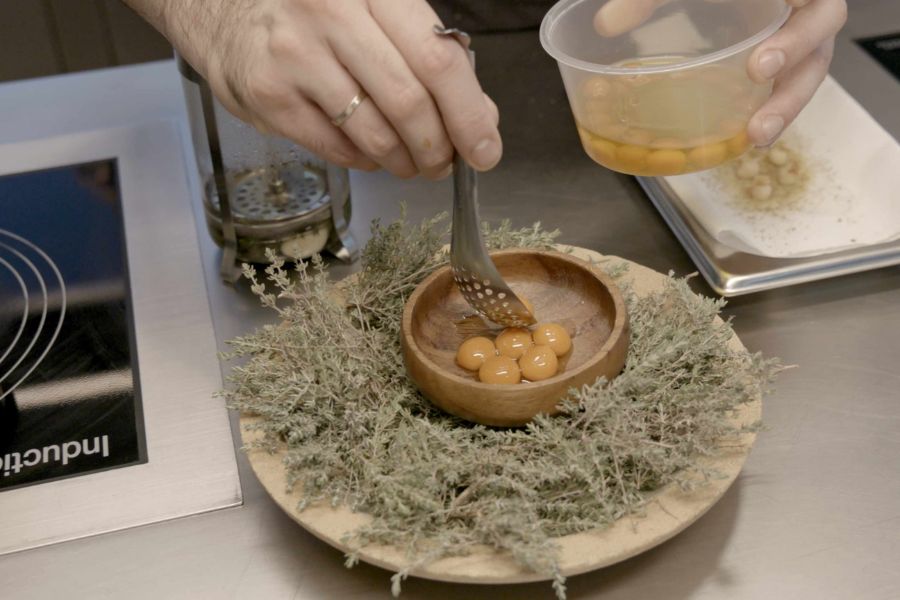
An herbal infusion is also prepared using very hot water, salt, pepper and a small amount of sugar, the latter helping to balance the natural bitterness of the fresh herbs. Thyme and other aromatic herbs are added and left to infuse for a few minutes, producing a light yet intensely fragrant broth.
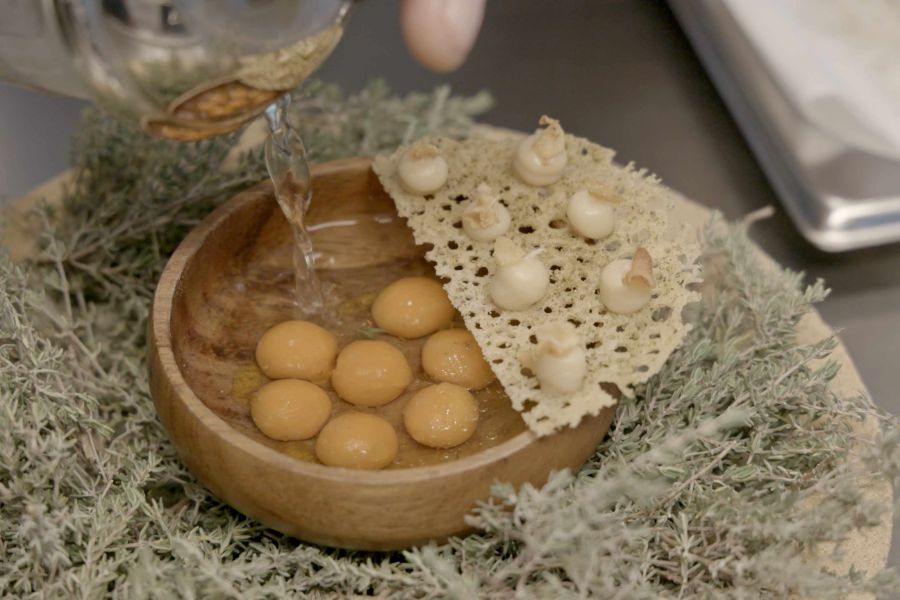
For the final presentation, sprigs of fresh thyme are arranged on the plate, with the tomato spheres carefully placed on top. At the table, the crisp wafer is served alongside the hot herb infusion, which is poured in front of the diner. Just before serving, the thyme may be lightly scorched to intensify its aroma, allowing the dish to evoke the sensation of being in the countryside, enjoying a freshly prepared aromatic soup.