Description
Cultural Tortosa is a guided experience lasting approximately 4 hours, designed to introduce visitors to some of the city’s most important historical and monumental sites. The route combines La Suda Castle, the Royal Colleges, the Jewish Quarter and the Cathedral of Santa Maria, offering an insight into different periods of Tortosa’s history.
In addition, the tour provides a broad overview of the city’s past through its monuments and historic neighbourhoods. In this way, visitors can understand Tortosa’s strategic, cultural and urban importance, as well as its close relationship with the River Ebro.
Cultural Tortosa – City on the Ebro
The Cultural Tortosa route explores the city with a guide and introduces some of the sites that best explain its historical development.
Over approximately four hours, the visit moves from the castle and fortifications to Renaissance architecture, the heritage of the Jewish community and the cathedral complex. As a result, each stop provides a different perspective on the history of Tortosa.
La Suda Castle and the fortified city
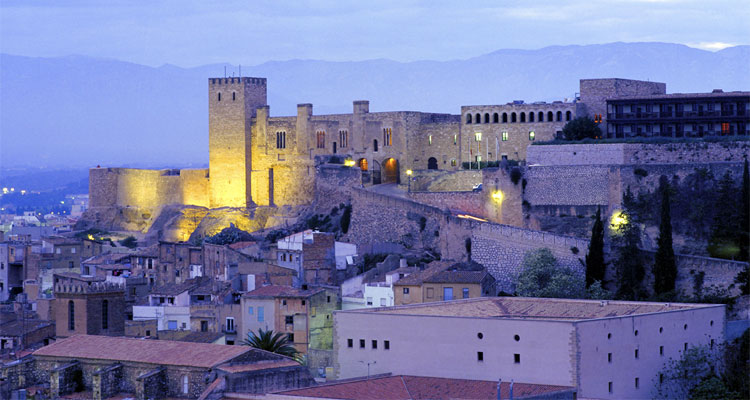
La Suda Castle occupies a prominent position above the historic centre. Its location helps visitors understand the strategic importance Tortosa held for centuries. Moreover, it illustrates the relationship between the city, its fortifications and the River Ebro.
The surroundings of the castle also provide a distinctive perspective over Tortosa’s urban landscape. For this reason, it is an excellent place to interpret the city’s development and its historical role on the Ebro.
The Royal Colleges and the Renaissance
The Royal Colleges form one of the most representative Renaissance architectural complexes in Catalonia. Their architecture reflects a particularly significant period of cultural and artistic development in Tortosa.
One of the most notable features is the Renaissance courtyard of the College of Saint James and Saint Matthias. Therefore, the route includes one of the key places for understanding the city’s Renaissance heritage.
Tortosa’s Jewish Quarter
The tour continues through the Jewish Quarter, an area that provides an insight into the cultural diversity of medieval Tortosa. Walking through its streets helps visitors understand the presence of the Jewish community and its place in the history of the city.
Furthermore, the urban layout retains the character of Tortosa’s historic neighbourhoods. In this way, the route combines monumental heritage with an exploration of the streets and urban fabric of the old city.
The Cathedral of Santa Maria
The Cathedral of Santa Maria of Tortosa is one of the major heritage landmarks on the route. Its construction developed over four centuries, resulting in architectural and artistic features from different periods.
The Cathedral forms part of a monumental complex closely connected with the history of Tortosa. For this reason, the visit completes an itinerary through some of the city’s most important historical landmarks.
Four hours to discover historic Tortosa
Cultural Tortosa brings together medieval, Renaissance and monumental heritage in a single experience. At the same time, the guide’s explanations connect the different sites with the development of the city.
Ultimately, the experience is more than a sequence of monuments. It helps visitors understand Tortosa as a historic city shaped around the River Ebro and influenced by the different cultures and periods that have left their mark here.
Practical information
Type of activity
Guided cultural tour of Tortosa.
Duration
Approximately 4 hours.
Route
La Suda Castle, Royal Colleges, Jewish Quarter and Cathedral of Santa Maria.
Schedule
Check availability and available dates.
Price
Adults: €44
Children: €39
Includes
Tour guide, transport during the activity, guided visits and explanations, tickets and admission fees included in the programme.
Booking
Availability should be checked in advance.