Description
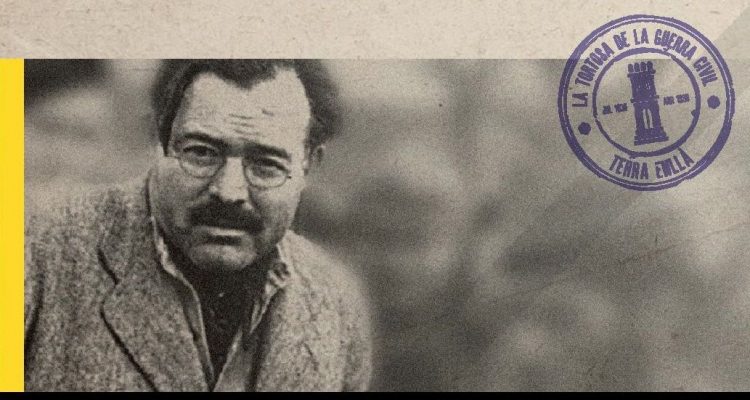
In the spring of 1938, during the Spanish Civil War, Ernest Hemingway arrived in a city heavily affected by aerial bombardment. The Hemingway Route in Tortosa by Terra Enllà follows in the footsteps of the American writer and war correspondent while revealing the city he encountered and wrote about.
The walking tour combines sites associated with the war with the social and everyday history of Tortosa in the late 1930s. In addition, historical documents and period objects help recreate the context encountered by Hemingway and other international correspondents during those months.
Hemingway Route in Tortosa: the city the correspondent encountered
Ernest Hemingway was one of the many foreign journalists who covered the Spanish Civil War. His work as a correspondent also brought him to Tortosa, a city located close to the front during a decisive stage of the conflict.
The Hemingway Route in Tortosa explores these events through the same streets once walked by the journalist. In particular, the tour focuses on his reports about the bombing of Tortosa in April 1938.
In this way, Hemingway becomes the thread connecting visitors with this period of the city’s contemporary history and with the international correspondents who reported on the conflict.
Hemingway and the international correspondents
The tour broadens its perspective beyond Hemingway to introduce other figures from journalism and photography who documented the Spanish Civil War.
Among those featured along the route are Herbert Matthews, Robert Capa and Martha Gellhorn. Their work helps explain the international dimension of the conflict and the important role played by foreign correspondents in documenting it.
As a result, the route connects Tortosa’s local history with events that attracted journalists, photographers and writers from different countries.
The bombing of Tortosa
Tortosa’s strategic location and proximity to the front made the city a target for aerial attacks during the Spanish Civil War. For this reason, an important part of the tour explores how these attacks affected both the city and its civilian population.
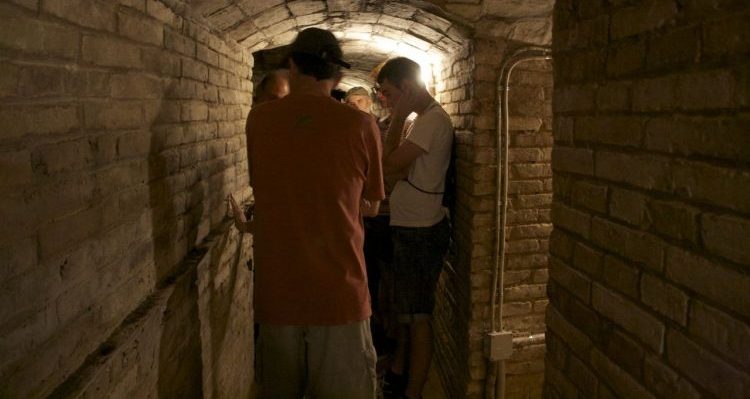
The route begins at Air-Raid Shelter No. 4, on Carrer d’Ernest Hemingway. From here, the tour introduces the measures taken to protect civilians from aerial attacks and explores Tortosa as it was in 1938.
Moreover, the tour connects the bombing with the urban spaces along the itinerary. This allows participants to interpret some of the consequences of the conflict in the places where events unfolded.
A journey through Tortosa in 1938
One of the most distinctive aspects of the experience is that it goes beyond military events. The route also reconstructs the social, political and commercial life of Tortosa in the late 1930s.
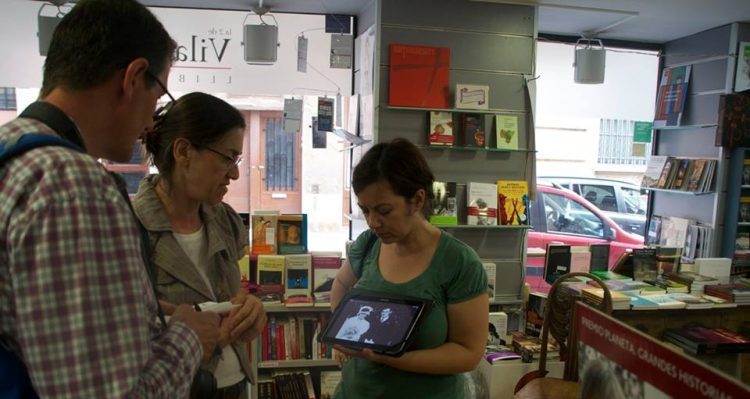
Along the way, visitors discover businesses, companies and services that formed part of everyday life in the city. Among other examples, the tour explores Viladrich Bookshop, the salt-cod shops at the Market, businesses associated with olive oil and rice, hotels, healthcare facilities and clothing shops.
In this way, the streets of present-day Tortosa become a setting in which to imagine a city at war that, despite the circumstances, continued with everyday life.
Documents and objects that bring history to life
Terra Enllà complements the explanations with historical documents and period objects that help place the different episodes of the route in context.
One particularly interesting item is a 1936–1938 Michelin Guide, similar to those used by journalists such as Hemingway and containing a detailed map of Tortosa.
In fact, these materials provide a glimpse of the city from the perspective of those arriving during the war. Maps, documents and other historical evidence connect today’s urban landscape with the Tortosa encountered by foreign correspondents.
From Air-Raid Shelter No. 4 to the railway bridge
The itinerary is completed on foot and begins at Air-Raid Shelter No. 4, on Carrer d’Ernest Hemingway. From here, it passes through different parts of the Eixample district and the city centre.
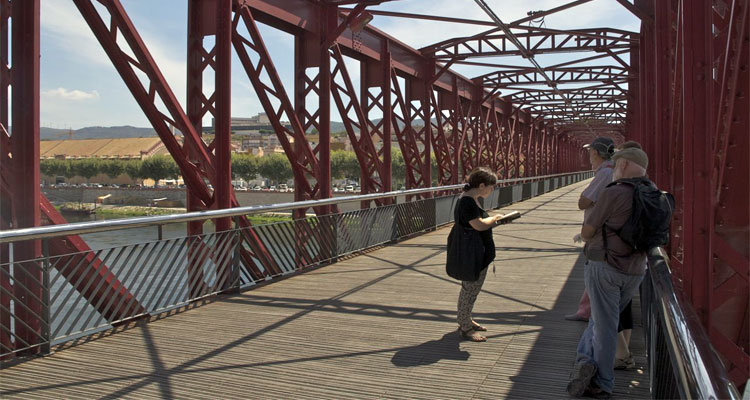
The route ends at the former railway bridge over the Ebro, another location associated with the events that shaped Tortosa during the Spanish Civil War.
Therefore, the experience allows participants to read history through the urban landscape itself, connecting written and documentary accounts with the places where events occurred.
A route through journalism, memory and the city
The Hemingway Route in Tortosa approaches the Spanish Civil War from several perspectives. The accounts of foreign correspondents are combined with the experiences of the local population and the discovery of a city living close to the front.
At the same time, the route explores how major historical events affected everyday life and how journalism helped preserve a record of those experiences.
Finally, following Hemingway’s footsteps through Tortosa offers an insight into a decisive period of the city’s contemporary history through the places, people and accounts that preserve its memory.
Practical information
Duration
Approximately 2 hours 45 minutes.
Price
€15 per adult.
Type of activity
Guided walking tour.
Starting point
Air-Raid Shelter No. 4, on Carrer d’Ernest Hemingway, behind the former Fèmina cinema, at the junction of Carrer de Sant Blai and Carrer de Cervantes.
End of the route
Former railway bridge over the Ebro.
Calendar
Please check dates, times and availability with Terra Enllà.