Description
Between 1936 and 1939, Tortosa experienced one of the most difficult periods in its modern history. Tortosa during the Spanish Civil War is a guided tour by Terra Enllà that explores sites associated with the conflict and explains how the war transformed both the city and the lives of its inhabitants.
Created in 2014, it was the first guided walking tour in Tortosa devoted specifically to this period. Over 3 hours and 30 minutes, the itinerary explores the major events experienced by the city, from the outbreak of war to Francoist repression and the subsequent reconstruction. In addition, photographs, documents, contemporary newspapers, texts and personal testimonies help interpret these events in the very places where they occurred.
Tortosa during the Spanish Civil War: a city shaped by conflict
The Spanish Civil War affected Tortosa with extraordinary intensity. During the first months of the conflict, the city experienced violence and persecution, the burning of religious buildings, two years of bombing by Francoist aircraft and, eventually, the evacuation of its population.
Moreover, for nine months Tortosa was located in an area directly affected by the war front. The city and its surroundings consequently became a setting for the movements and fighting of both armies.
The tour reconstructs this sequence of events through a historical narrative beginning in 1936, revealing how the conflict progressively transformed the city.
1936: the outbreak of war
The first months of the Spanish Civil War were marked by profound political and social upheaval. In Tortosa, religious people and members of the wealthier social classes were subjected to severe persecution, while religious buildings were also set on fire.
The route visits several places that help place these events in context, including Santa Maria Cathedral, Plaça de la Cinta and Plaça dels Dolors, the Church of the Puríssima —when open— and the Convent and neighbourhood of Santa Clara.
In this way, present-day buildings and streets provide the setting for interpreting the events that marked the beginning of the war in Tortosa.
The bombing and evacuation of Tortosa
For almost two years, Tortosa suffered the effects of bombing by Francoist aircraft. The protection of civilians from aerial attacks therefore forms an essential part of the tour.
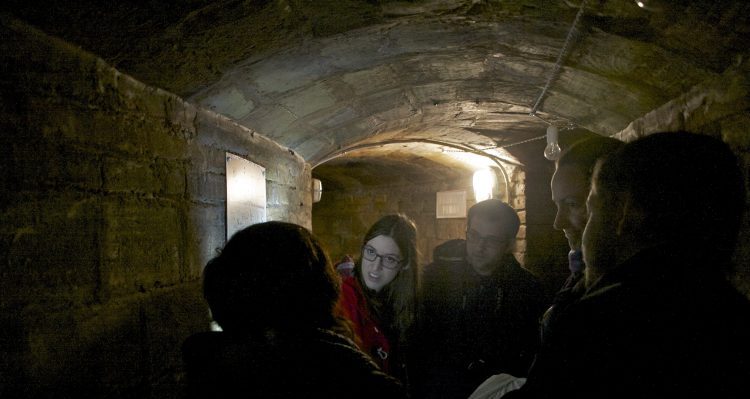
The sites associated with this period include the city’s air-raid shelters, with particular attention paid to Air-Raid Shelter No. 4. The route connects these places of protection with the streets and neighbourhoods affected by the attacks.
At the same time, Tortosa attracted international correspondents documenting the course of the war. Among them was Ernest Hemingway, who wrote about the bombing of the city.
The situation eventually led to the complete evacuation of Tortosa, an episode that illustrates the profound impact the war had on the everyday lives of its inhabitants.
A city beside the front
As the conflict developed, Tortosa spent nine months in an area directly affected by the front. For this reason, the tour goes beyond the aerial attacks to explain the city’s role within a territory at war.
The Ebro riverfront and its bridges form part of the itinerary, providing an opportunity to understand the strategic importance of the river and its transport connections.
Thus, today’s urban landscape helps reconstruct a period when military movements, attacks and the proximity of the two armies shaped life in the city.
From the historic centre to the Ebro riverfront
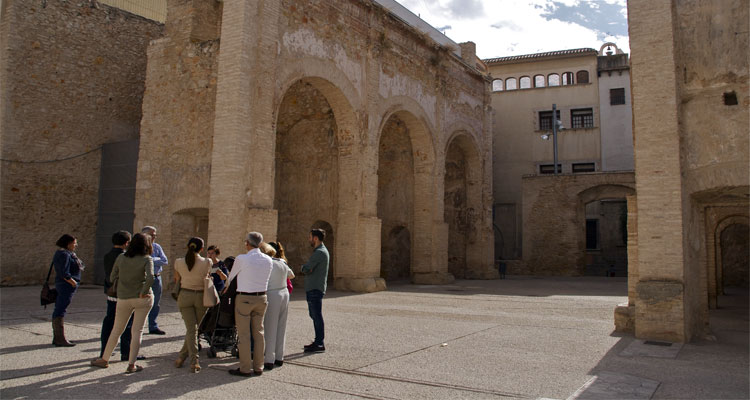
The route begins on Carrer Croera, at the steps of Tortosa Cathedral, before continuing through numerous sites associated with different episodes of the war.
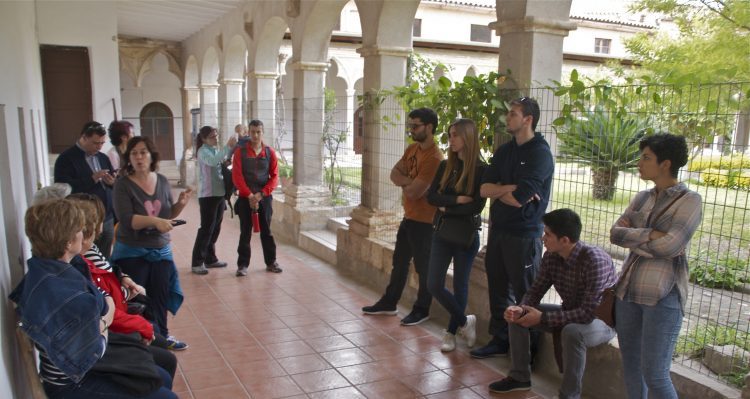
The itinerary includes Santa Maria Cathedral, its cloister and the air-raid shelter within the cathedral complex, Plaça de la Cinta and Plaça dels Dolors, the Church of the Puríssima when open, the Convent and neighbourhood of Santa Clara, and Air-Raid Shelter No. 4.
The route then continues through other settings, including the Modernist Eixample district, Plaça de l’Ajuntament, the Ebro riverfront and the city’s bridges.
The Francoist monument to the Battle of the Ebro also forms part of the narrative, providing an opportunity to explore the subsequent memory of the conflict.
Repression and reconstruction
The end of the war did not bring an end to its consequences. Terra Enllà also addresses the severe Francoist repression that followed the conflict and the lengthy process of reconstruction.
Tortosa’s recovery continued for two decades. Therefore, the tour explores the Spanish Civil War not only through the events of 1936–1939, but also through the consequences that continued to shape the city during the post-war period.
This broader perspective reveals how the scars of the conflict remained present long after the fighting had ended.
Documented history and oral memory
One of the defining features of Tortosa during the Spanish Civil War is the way its historical narrative is presented. Terra Enllà uses photographs, texts, contemporary newspapers, documents, books and audiovisual material to provide context for the different episodes.
In addition, the tour incorporates anecdotes and personal memories from survivors, some recounted directly by those who experienced the events and others preserved by their families. Terra Enllà has also conducted interviews to record testimonies and has assisted families researching aspects of their own history connected with this period.
In this way, documentary sources are complemented by the memories of people who experienced the events and by the accounts preserved within their families.
A route for understanding the traces of war
Tortosa still preserves physical traces of the conflict, together with an important body of written and oral testimony. The tour connects this evidence with the city’s present-day spaces, helping participants understand what happened at each location.
In fact, the length of the tour makes it possible to explore the different episodes in depth and build a broad picture of Tortosa during the war, from the first months of 1936 to the consequences of the Francoist victory.
Finally, this route offers a well-documented approach to a decisive period in Tortosa’s modern history, combining heritage sites, urban spaces, historical documentation and oral memory.
Practical information
Duration
3 hours 30 minutes.
Price
Adults: €18 per person.
Type of activity
Guided walking tour.
Starting point
Carrer Croera, at the steps of Tortosa Cathedral.
Schedule
The route is usually offered twice a month, generally on Saturdays and occasionally on Sundays.
Groups
The tour can also be arranged on request for groups of at least 10 people.
Information and bookings
+34 636 67 99 69.