Description
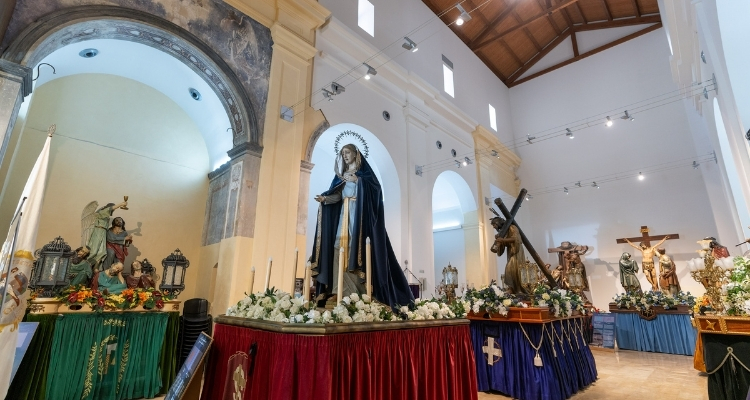
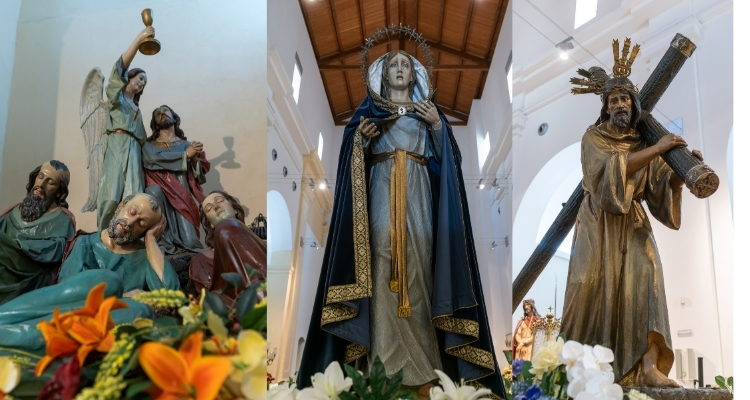
The Tortosa Holy Week Interpretation Centre is an ideal place to discover one of the city’s most deeply rooted traditions. Housed in the former Church of Saint Anthony the Abbot on Montcada Street, it offers visitors the opportunity to see the processional floats up close and learn about the brotherhoods, symbols and history of a celebration closely linked to Tortosa’s cultural heritage.
Tortosa Holy Week Interpretation Centre: the processional floats
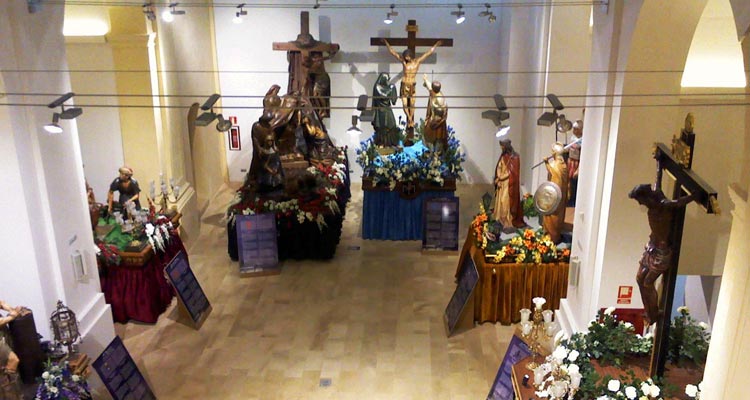
Since 2011, the former church has housed what was conceived as the first museum of processional floats in Catalonia. The restoration of the building recovered this historic space on Montcada Street and gave it a new purpose dedicated to preserving and presenting the heritage of Holy Week in Tortosa.
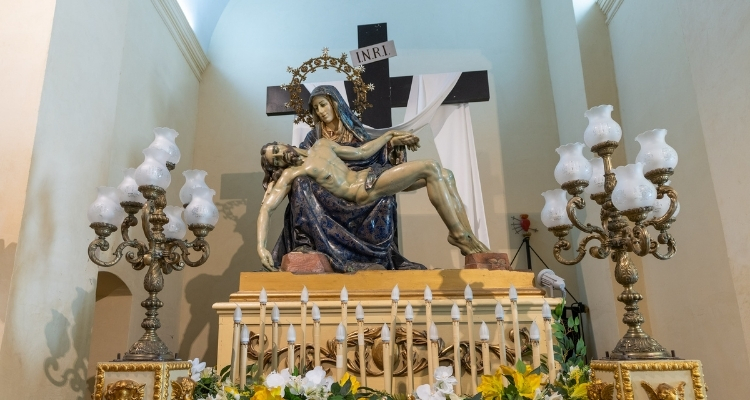
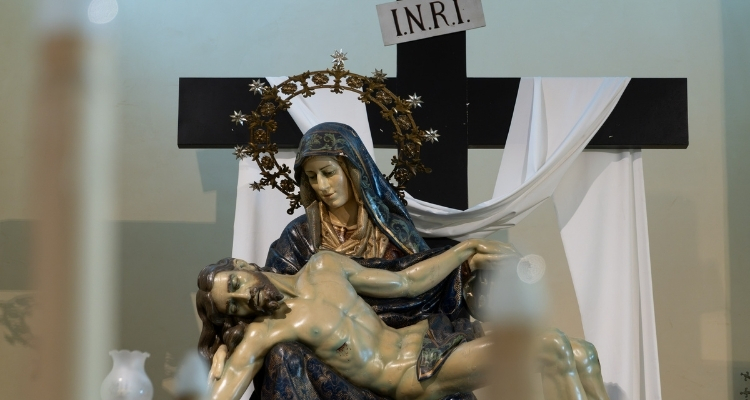
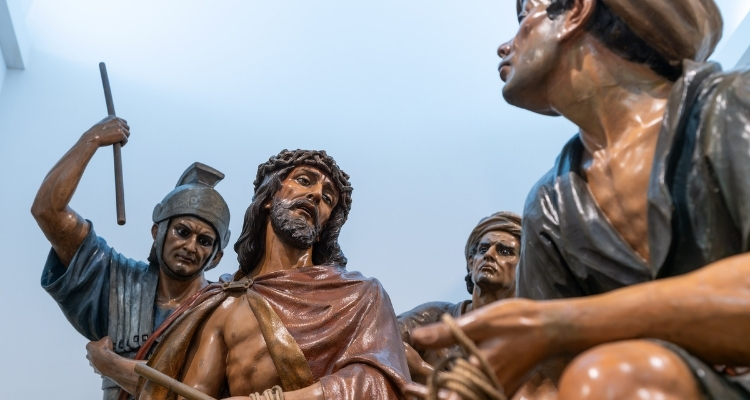
The main attractions are the processional floats, traditionally known in Tortosa as misteris. These sculptural groups depict different episodes from the Passion of Christ and form an essential part of the city’s processions.
In addition, the collection includes works by sculptors such as Innocenci Soriano Montagut and Enric Monjo i Garriga. Seeing them at close range makes it possible to appreciate their scale, the expressiveness of the figures and numerous sculptural details that are more difficult to observe during the processions.
Brotherhoods, ceremonial dress and tradition
The exhibition also features robes, ceremonial dress and other items associated with Tortosa’s Holy Week brotherhoods. As a result, visitors can better understand the symbols that distinguish the different brotherhoods and the role they have played in maintaining this tradition.
The centre therefore offers an insight into Holy Week that goes beyond the processions themselves. At the same time, it reveals the artistic, historical and social dimensions of a tradition that continues to form part of Tortosa’s festive calendar.
The former Church of Saint Anthony the Abbot
The building has a long history associated with the Brotherhood of Saint Anthony the Abbot, traditionally linked to Tortosa’s farmers and documented since 1358. After occupying several locations on Montcada Street, the brotherhood settled here in 1652. The church was subsequently built during the last quarter of the 17th century.
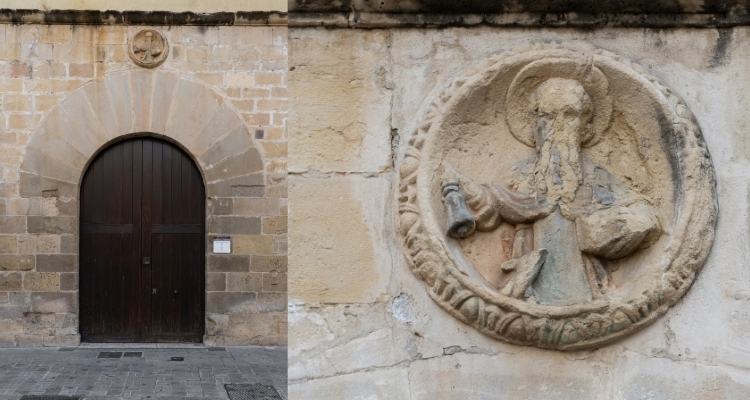
Several architectural details still recall this history. These include the semicircular arched doorway with large stone voussoirs and the tondo depicting Saint Anthony the Abbot. Moreover, the doorway of the former farmers’ guild house features a pruning knife carved into the lintel, reflecting the site’s historic connection with agriculture.
From destruction to the recovery of the building
In 1936, the church suffered extensive destruction, resulting in the loss of much of its artistic and documentary heritage. Afterwards, the building was used for different purposes and underwent a long period of deterioration.
Eventually, the Diocese of Tortosa and Tortosa City Council promoted its restoration. The project, directed by architect Tomàs Homedes, was completed in 2011 with the opening of the interpretation centre.
Overall, visiting the Tortosa Holy Week Interpretation Centre provides an opportunity to admire the misteris away from the processions and appreciate their artistic value at close range. At the same time, the former Church of Saint Anthony the Abbot adds a historical dimension that connects today’s Holy Week traditions with centuries of brotherhoods, crafts and local history.