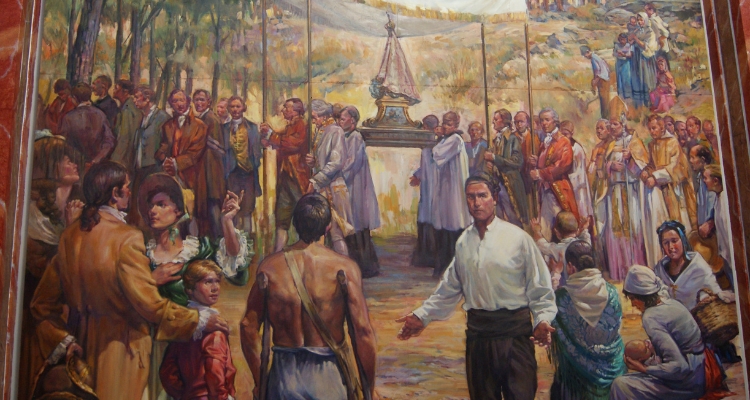
Description
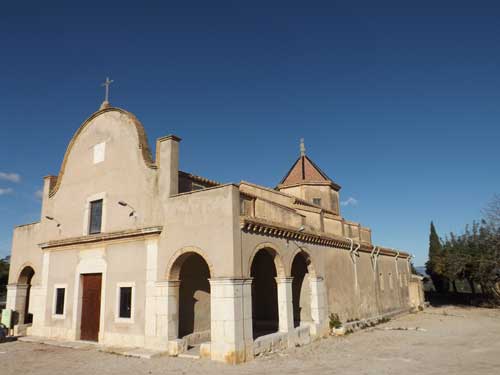
The Mig Camí Hermitage, dedicated to Our Lady of Providence, is one of the places most closely associated with popular devotion and traditions in Tortosa. It stands on the Simpàtica road, heading towards Coll de l’Alba. Its name refers to its location halfway between the city and the cross at Coll Redó.
The site has ancient origins and has undergone several periods of destruction, reconstruction and renovation over the centuries. The present building largely reflects the reconstruction carried out in 1699. It is also protected as a Cultural Asset of Local Interest (BCIL).
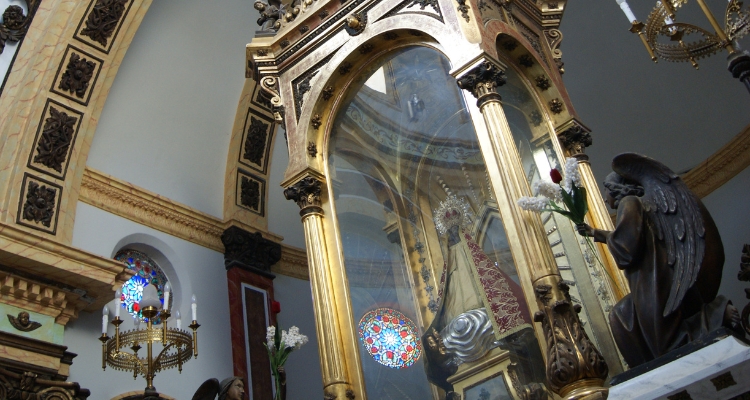
Mig Camí Hermitage and Our Lady of Providence
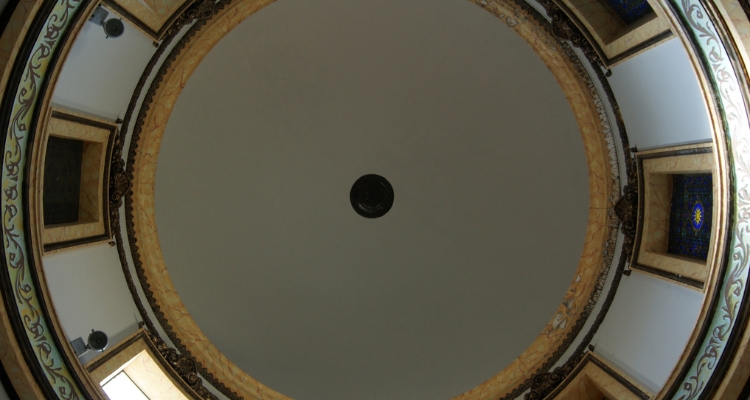
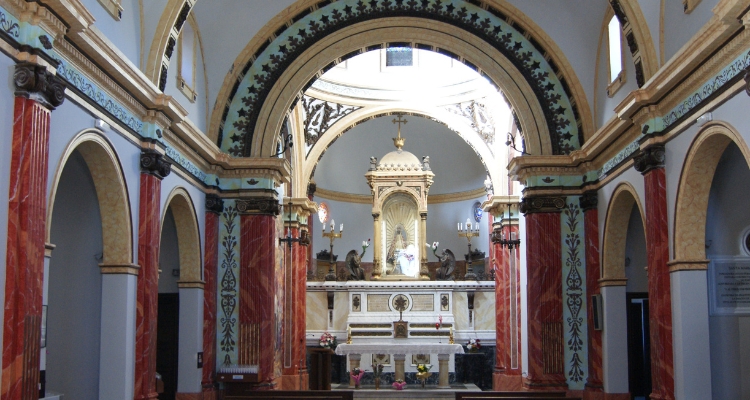
The church has a five-bay nave with side chapels and a barrel vault. An octagonal lantern rises in front of the presbytery. Outside, its glazed ceramic roof is particularly distinctive and features a star motif. The structure is crowned by an image of Our Lady of Providence. The former hermits’ house also survives adjoining the hermitage.
In addition, devotion to Our Lady of Providence is reflected in the traditional goigs, devotional songs dedicated to this Marian title and to Mig Camí Hermitage. These compositions form part of the religious and popular heritage associated with the sanctuary.
In fact, some versions of the goigs explicitly mention the estrelletes of Mig Camí and associate them with the Virgin. Devotion, legend and popular tradition have therefore become closely intertwined over time.
The estrelletes and pilonets of Mig Camí
Among the most distinctive features of the surrounding area are the famous estrelletes of Mig Camí. For generations, they have been associated with legends and popular beliefs connected with Our Lady of Providence.
Geology, however, explains their origin. They are fossilised remains of marine crinoids, organisms that lived in the sea covering this area approximately 130 million years ago. The five-fold symmetry of some fragments gives them their characteristic star shape.
Alongside the estrelletes, local tradition also refers to the pilonets, other fossil remains found in these lands. Thus, an unusual geological phenomenon has become part of Tortosa’s popular traditions and collective memory.
Dijous Llarder at Mig Camí
The connection between the people of Tortosa and this site is particularly evident on Dijous Llarder, the Thursday before Carnival. Traditionally, families and groups of friends make their way up to Mig Camí to spend time outdoors. Having a snack and searching for estrelletes and pilonets in the surrounding area are part of the custom.
In fact, this celebration remains one of Tortosa’s popular pre-Carnival traditions. The day also includes the traditional baldanada, a gathering centred around baldana, a typical local blood sausage. Gastronomy, outdoor activity and intangible heritage therefore come together in one of the traditions most closely associated with Mig Camí.
Mig Camí Hermitage and the Teresian Route
The Mig Camí Hermitage also forms part of the Teresian Route of Tortosa because of its connection with Saint Henry de Ossó. The Tortosa-born priest made pilgrimages to the hermitage with children from his catechism classes and the group known as the Rebañito.
Tradition associates the site with an important episode in his life. On Passion Sunday, 1 April 1876, Henry de Ossó was at Mig Camí with the children. That same night, he is said to have received the inspiration connected with the foundation of the Company of Saint Teresa of Jesus.
Later, in 2006, an altar was dedicated to his memory. The hermitage is therefore one of the places associated with the saint along Tortosa’s Teresian Route.
Cycling routes through Mig Camí
The location of the hermitage on the climb towards Coll de l’Alba makes it a stopping point on several cycling and mountain biking routes. Visitors can therefore combine heritage with cycling and the mountain landscapes surrounding Tortosa.
One of these routes is “Myths, Hermitages and Estrelletes”, a circular itinerary of approximately 12 km. It starts in Tortosa and passes through Mig Camí before continuing to the Coll de l’Alba Hermitage and returning to the city.
Furthermore, other cycling routes pass through this area towards Coll de l’Alba and the Cardó and el Boix mountain ranges. Mig Camí is therefore a useful reference point for exploring Tortosa’s surrounding landscapes by bicycle.
Mig Camí and the Via Augusta route
The area around the hermitage is also associated with one of the proposed historical routes of the Via Augusta. This major Roman road crossed the region and reached ancient Dertosa. One hypothesis places the road coming from Coll de l’Alba through this area as it descended towards Tortosa.
However, the exact course of the Roman road at this location has not been established with sufficient certainty. It cannot therefore be stated that the Via Augusta passed directly in front of the hermitage.
Today, this historical connection can be explored along the Via Augusta and Medieval Settlement of Fullola Route. The itinerary starts in Tortosa, passes through Mig Camí and Coll de l’Alba, and then continues towards Fullola.
La Brasa de l’Ermita
Today, the complex also has a gastronomic use. La Brasa de l’Ermita restaurant is located in the same building complex, next to the church. Its cuisine focuses mainly on grilled dishes with Mediterranean influences.
Thus, two distinct uses coexist within the same complex. On the one hand, there is the hermitage and its religious, historical and heritage significance. On the other, there is the restaurant in the adjoining space.
Finally, the Mig Camí Hermitage is much more than a religious building. Our Lady of Providence, the goigs, estrelletes and pilonets all form part of its identity. Dijous Llarder, the Teresian Route and the itineraries through the surrounding landscape are also closely connected with the site. Together, they form a rich tangible and intangible heritage linked to Tortosa’s history, landscape and traditions.