Description
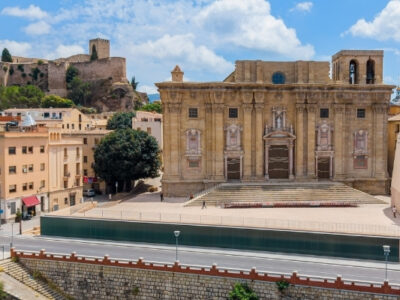
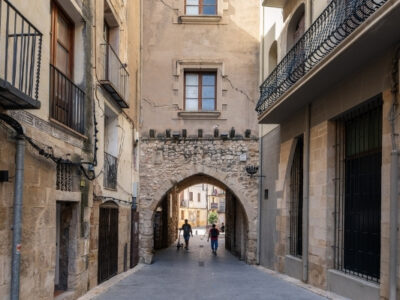
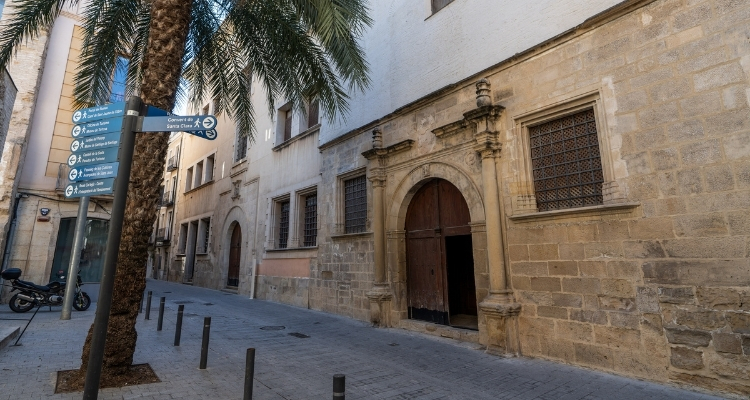
The Church of the Immaculate Conception Victoria is one of the most distinctive religious complexes in Tortosa’s historic centre. Located on Montcada Street, its restrained exterior conceals an interior of remarkable artistic richness. The complex is particularly notable for its Baroque heritage and the presence of artworks and materials closely linked to 17th-century Italian art.
Church of the Immaculate Conception Victoria: a 17th-century complex
The convent was founded in 1644 on the initiative of Bishop Joan Baptista Veschi, who was of Neapolitan origin. The new convent for women and its church were dedicated to the Immaculate Conception.
The name Victoria is associated with events during the Reapers’ War. More specifically, it commemorates Tortosa’s resistance to the Franco-Catalan forces that besieged the city in 1642.
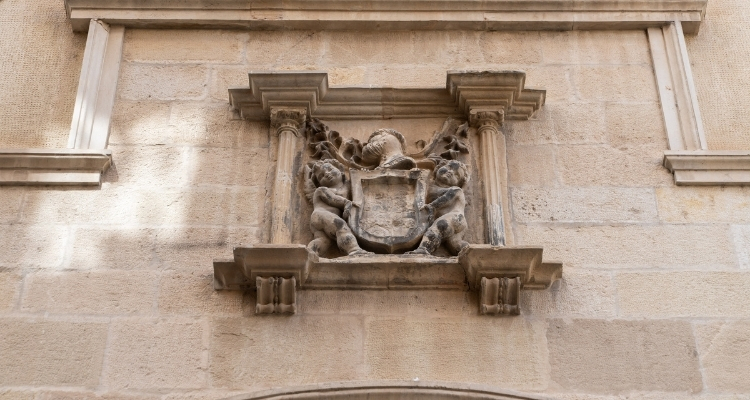
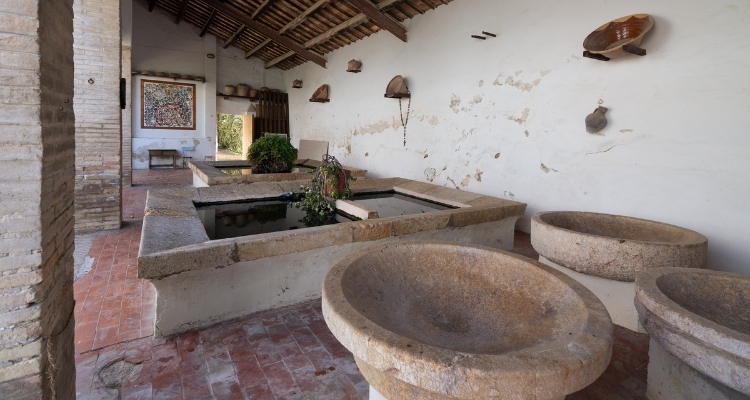
The complex was established on a site with a much longer history. In fact, it occupies the former Montcada Palace and incorporates elements from earlier buildings. These different architectural layers reflect several periods in Tortosa’s history.
A Baroque interior with Italian influences
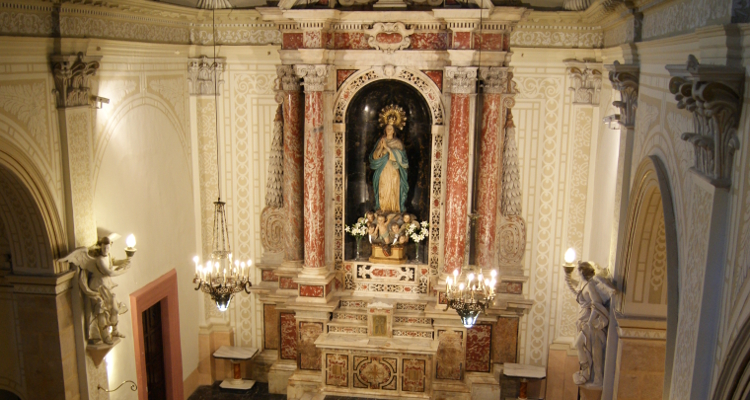
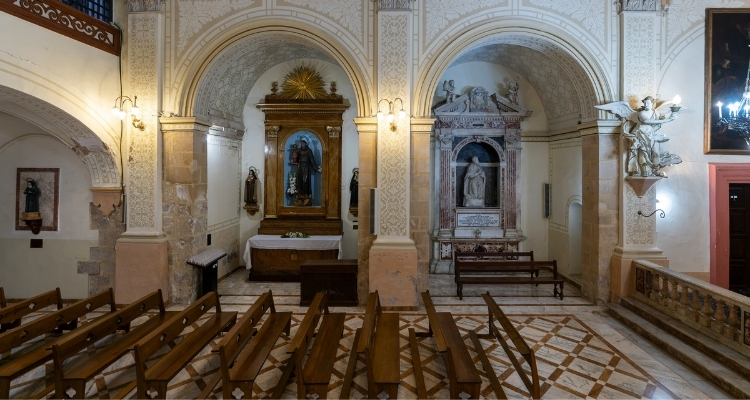
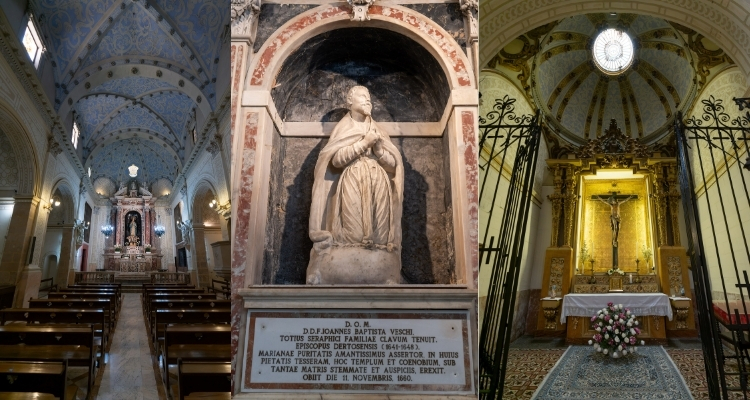
Entering the church reveals a striking contrast with its restrained exterior. The interior features stucco decoration, plant-motif sgraffito and Baroque ornamental elements, creating a richly decorated architectural space.
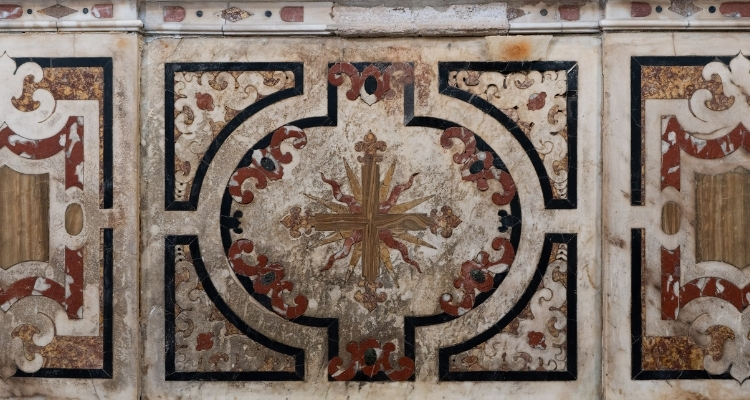
One of its outstanding features is the high altarpiece made of polychrome marble, commissioned in Genoa by Bishop Veschi. Its composition combines stone from different parts of the Mediterranean, including white Carrara marble, black Genoese marble, Tortosa jasper and red Languedoc marble.
In addition, the church contains the founder’s mausoleum, created in a similar artistic language. Together, these works illustrate the close cultural and artistic connections between Tortosa and Italy during the 17th century.
Baroque painting and the Holy Christ
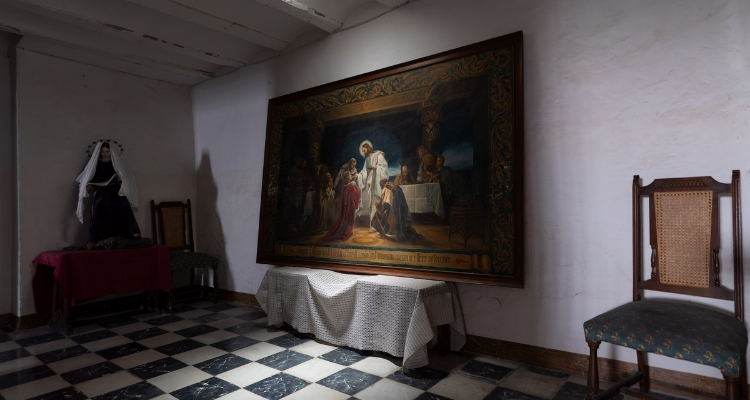
Italian influence can also be seen in other works preserved in the church. These include two large oil paintings attributed to the Neapolitan painter Francesco Paterno da Buccino, dated 1655.
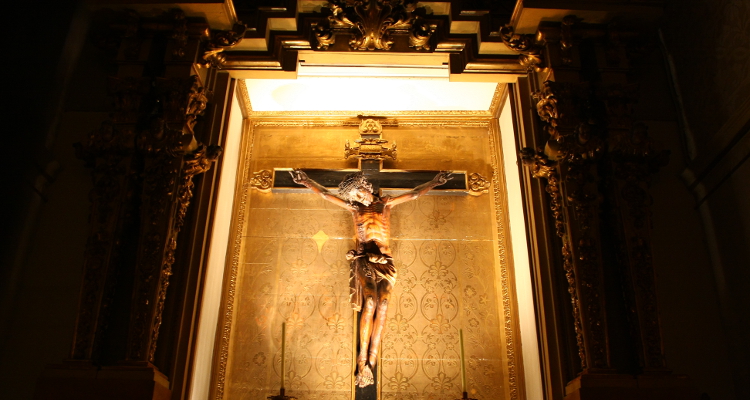
Another particularly significant space is the chapel of the Holy Christ. Its image was carved in 1635 by the Sicilian friar and sculptor Fra Humili da Petralia.
The sculpture is remarkable for its intense Baroque realism. The facial expression, anatomical detail and depiction of the wounds heighten the dramatic character of the figure. At the same time, the image retains an important devotional significance within Tortosa’s religious heritage.
A convent built upon centuries of history
The Immaculate Conception Victoria complex has undergone numerous transformations. During the Spanish Civil War, it suffered extensive damage and a fire that affected a significant part of its heritage. Subsequent restoration work helped recover the church and preserve some of its most valuable artistic features.
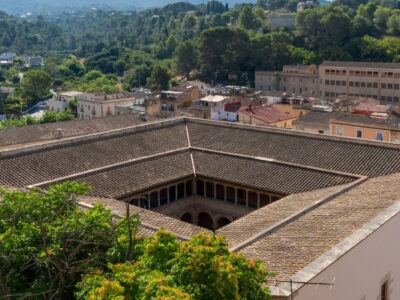
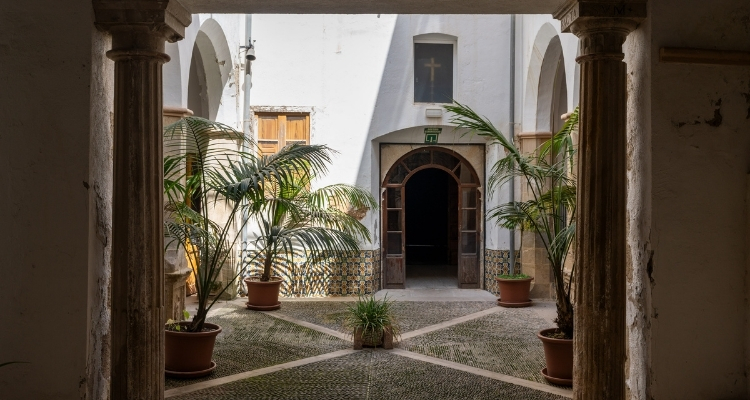
The convent occupies the site of earlier buildings and incorporates surviving Gothic and Renaissance elements, particularly around the cloister. Thus, the complex reveals different layers of the urban and religious history of Montcada Street.
Overall, the Church and Convent of the Immaculate Conception Victoria brings together architecture, sculpture, painting and decorative arts in an exceptional historic setting. Its polychrome marble altarpiece, the Holy Christ and its Italian artistic influences make it one of the most distinctive religious heritage sites in Tortosa.