Description
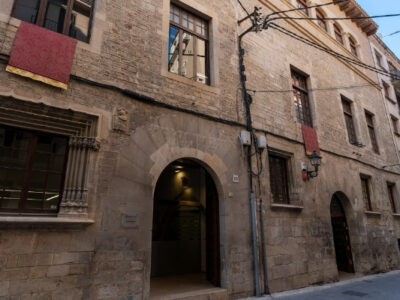
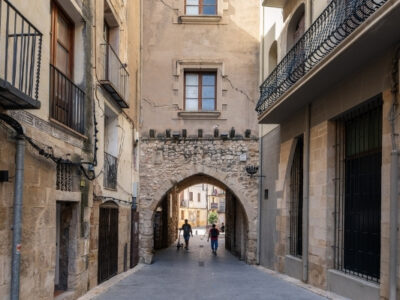
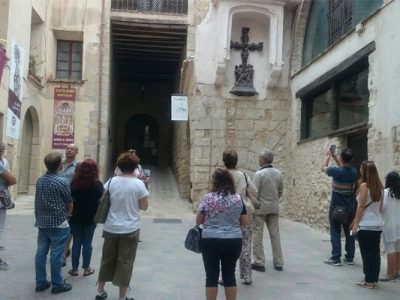
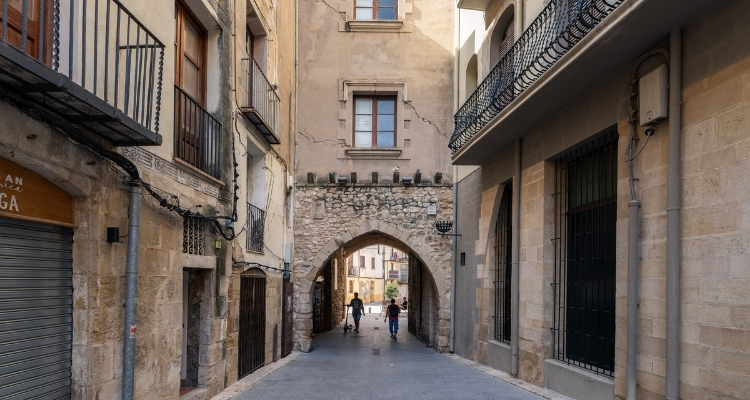
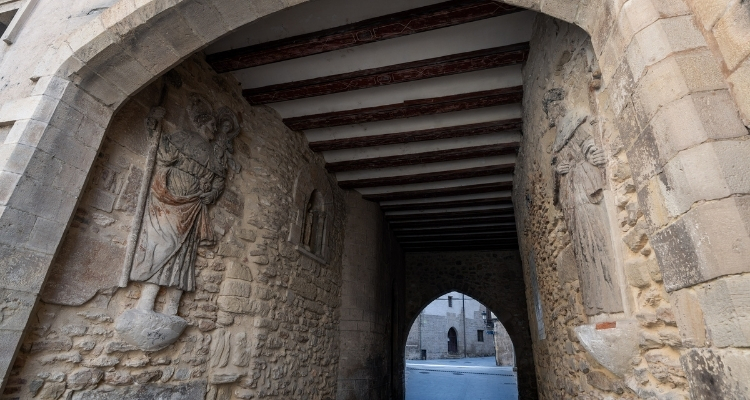
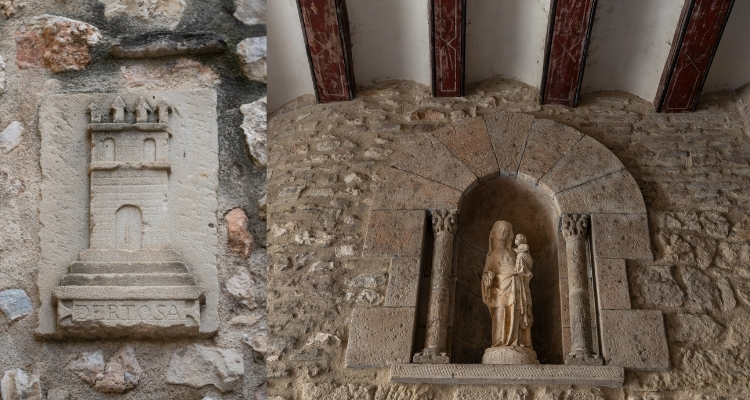
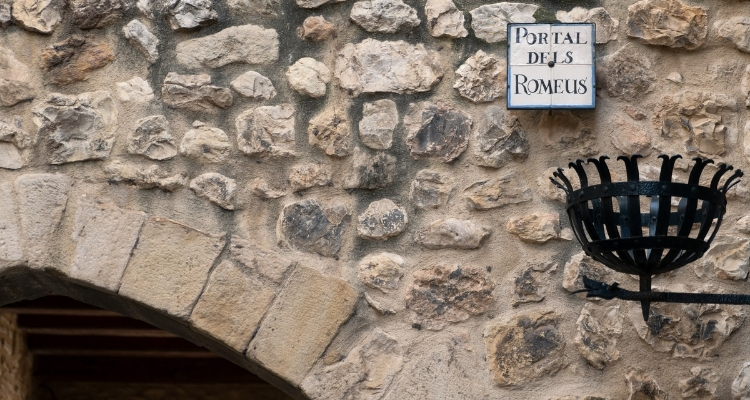
The Medieval Romeu Gate is one of the most emblematic landmarks in Tortosa’s historic centre. Located very close to Tortosa Cathedral, it is the only surviving inner gateway of the medieval city. However, it has undergone several reconstructions and restorations over the centuries.
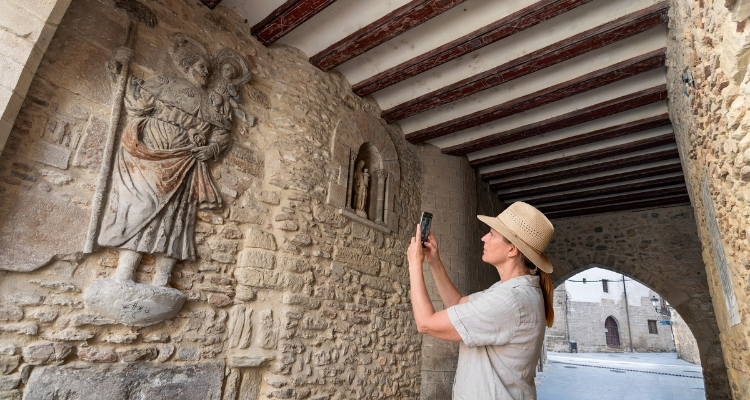
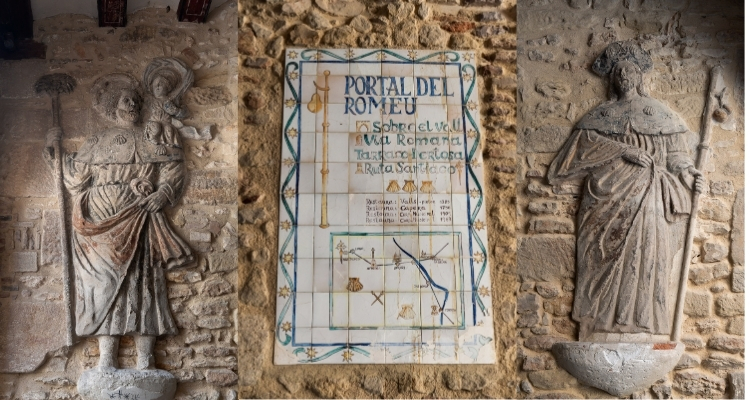
Its architecture, the reliefs of Saint James and Saint Christopher, and an ancient legend give this historic site a particularly distinctive character.
Medieval Romeu Gate: a gateway to the medieval city
For many years, the structures on which the gateway stands were thought to be of Roman origin. However, archaeological research has established that the remains are medieval and possibly date from the Islamic period.
The site was closely connected to the Vall ravine, which once ran directly in front of the gateway and is now incorporated into the urban landscape. For centuries, a wooden bridge provided a crossing over the watercourse. Thus, the gateway formed part of an important passage through the medieval city.
The legend of the pilgrim and the women of Tortosa
The name of the gateway is linked to one of Tortosa’s best-known legends. The tradition was recorded in the 16th century by Cristòfol Despuig in Los col·loquis de la insigne ciutat de Tortosa.
According to the story, the women of Tortosa defended the city against an attempt by Muslim forces to retake it after the Christian conquest. At the most critical moment, they are said to have received the help of a mysterious pilgrim. Later tradition identified this figure as Saint James the Apostle.
In this way, history, legend and popular devotion have become closely intertwined with this corner of the historic centre.
The story has also traditionally been associated with the legend of the Order of the Axe. This tradition commemorates the role attributed to the women of Tortosa in defending the city. However, it should be understood as a legend rather than as a literally documented historical event.
Saint James and Saint Christopher
The symbolism of the gateway reinforces these traditions. Particularly notable are the large reliefs of Saint James and Saint Christopher, created in the 18th century. However, the presence of Saint Christopher at this location is documented as early as the 14th century.
Saint Christopher was traditionally associated with the protection of travellers and safe passage across waterways. For this reason, his presence here is particularly significant given the former Vall ravine.
In addition, the figure of Saint James recalls the gateway’s traditional connection with the Ebro Way of Saint James.
An emblematic landmark in the historic centre
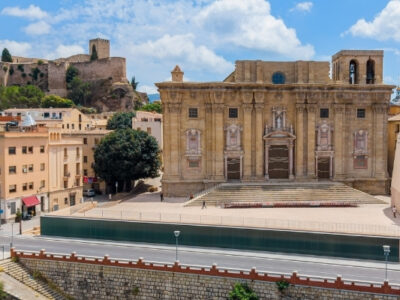
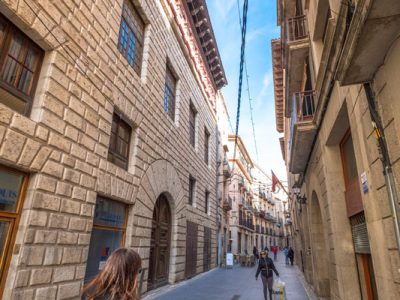
Today, the Romeu Gate is fully integrated into the pedestrian routes through Tortosa’s historic centre. Its proximity to the Cathedral and other heritage sites makes it easy to include in a walk through medieval Tortosa.
Overall, passing through the Romeu Gate offers an opportunity to discover a place where architecture, history and legend come together. Its reliefs, medieval origins and tradition associated with Saint James make it one of Tortosa’s most distinctive historic landmarks.