Description
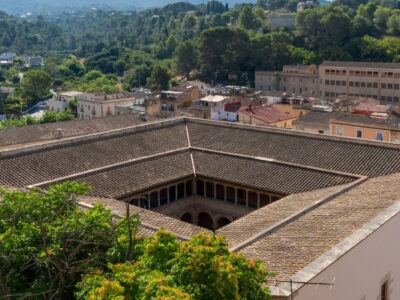
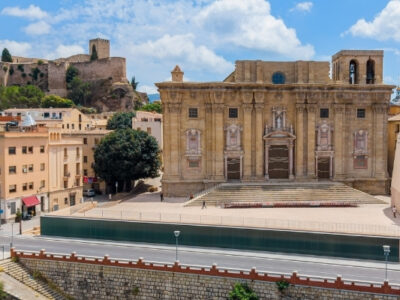
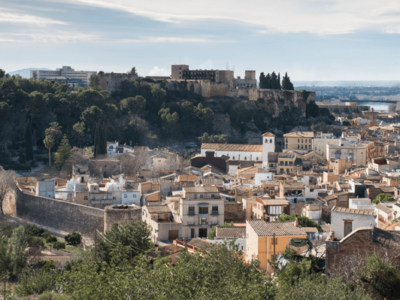
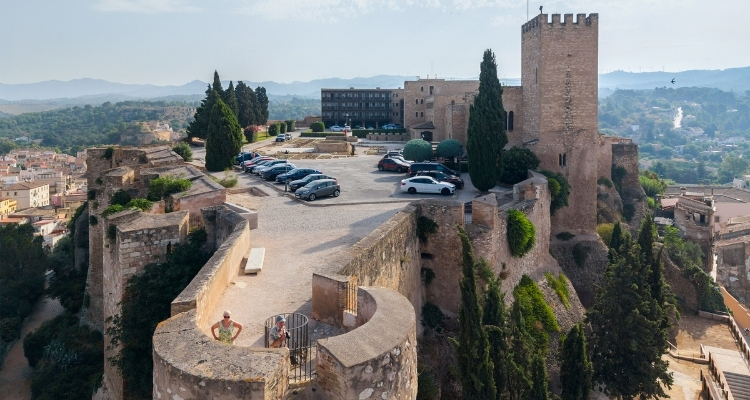
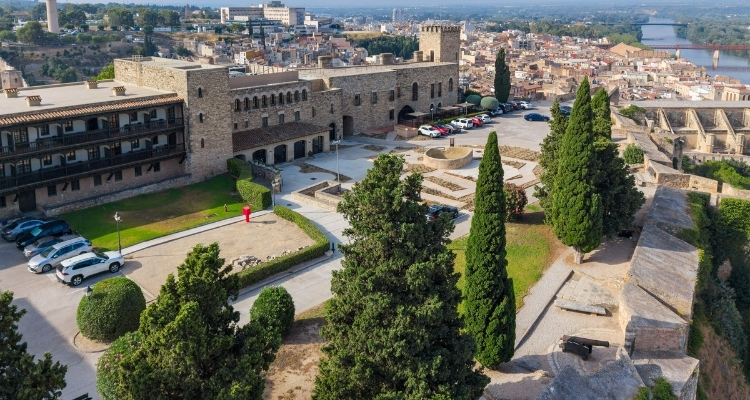
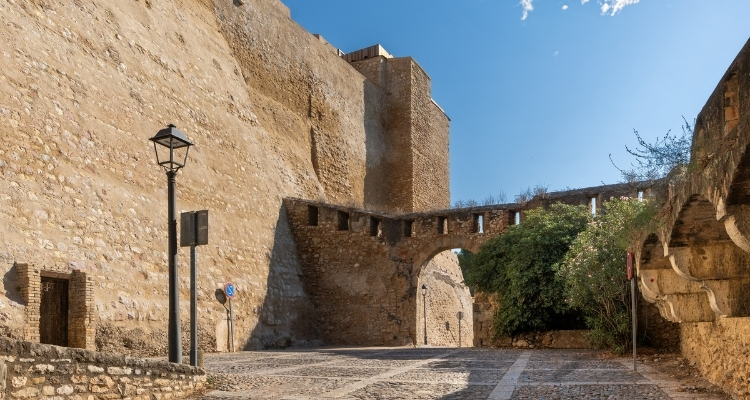
Suda Castle in Tortosa is the city’s great defensive landmark and one of its most iconic monuments. Standing at the highest point of the historic centre, it overlooks Tortosa and the River Ebro. In addition, its privileged location offers panoramic views of the cathedral, the old town and, on clear days, a vast landscape stretching towards the Ebro Delta and the Els Ports mountain range.
The ensemble formed by the castle, walls and fortifications was chosen by popular vote as one of the 7 Treasures of Tortosa’s Cultural Heritage, as part of Tortosa’s designation as Capital of Catalan Culture in 2021.
Suda Castle in Tortosa: centuries of history
The hill of La Suda has been occupied since ancient times. In fact, archaeological excavations have uncovered Iberian and Roman remains. Later, during the 10th century, under Caliph Abd al-Rahman III, the fortress was transformed into a powerful Andalusi citadel. As a result, it became one of the main political and military centres of the Islamic city.
After the Christian conquest of Tortosa in 1148, the castle became a royal residence. James I of Aragon stayed here on several occasions. According to tradition, he also prepared part of the expedition to conquer Mallorca from the castle. Over the following centuries, the fortress continued to play a strategic role in the defence and control of the surrounding territory.
A fortress shaped by the hill
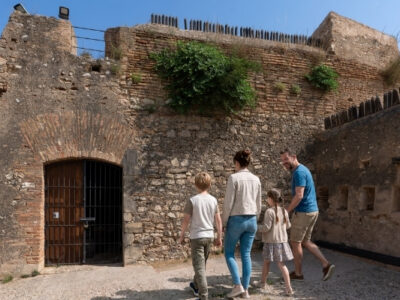
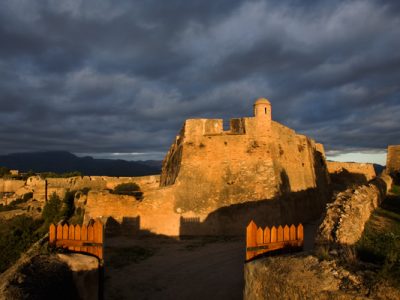
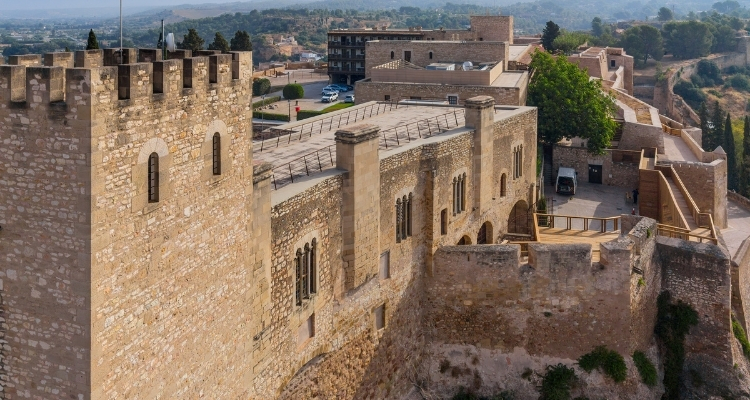
The structure of Suda Castle in Tortosa adapts to the irregular shape of the hill. Much of its perimeter preserves the layout of the medieval fortification, with stretches of wall alternating with square towers. However, advances in military technology gradually led to major changes in its defences.
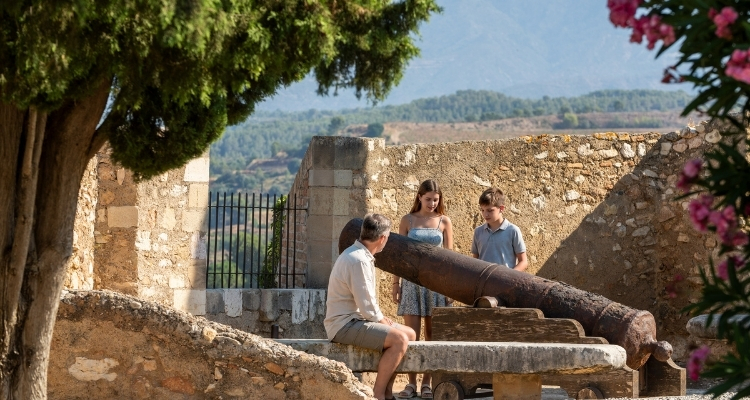
Between the 16th and 18th centuries, the complex was adapted to the use of artillery. For this reason, gun ports, parapets and other defensive elements were added. Furthermore, new fortifications were built in the north-eastern sector during the 17th and 18th centuries to strengthen the city’s defences.
Inside Suda Castle
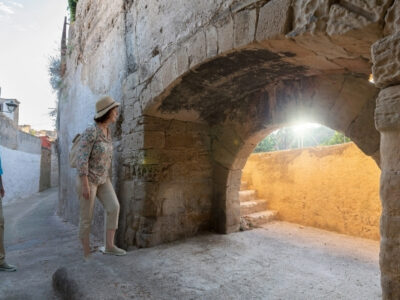
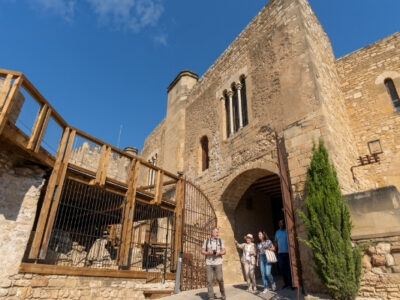
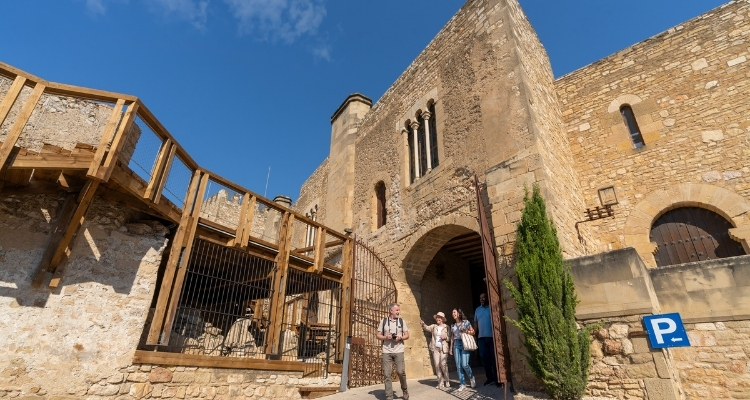
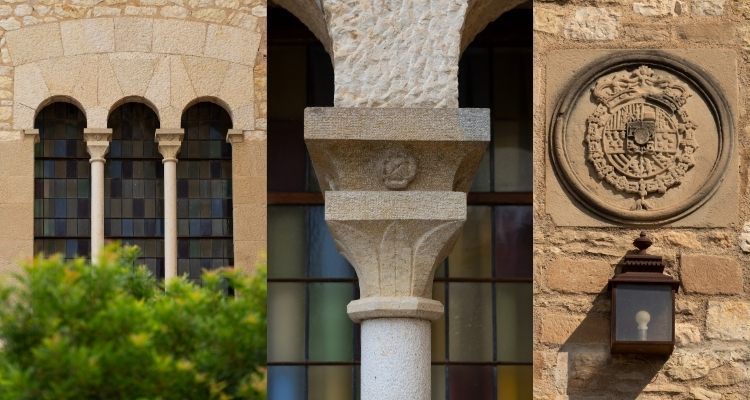
The enclosure once contained numerous spaces associated with military life and the supply of the fortress. Today, visitors can still see remains of cisterns, the gunpowder magazine, underground galleries and the parade ground. Several elegant arches and a room with distinctive three-light windows are also preserved.
One of the most remarkable features is the large central well known as the Suda. Several underground galleries converge here and are connected with silos and former ovens. Therefore, the complex provides an insight not only into the castle’s defensive role but also into aspects of everyday life within the fortress.
From medieval castle to Parador
During the Spanish Civil War, bombing raids over Tortosa caused extensive damage to the castle. Subsequently, the complex underwent restoration and recovery. Finally, in 1972, it opened as a Parador, giving much of the former fortress a new purpose while helping to ensure its preservation.
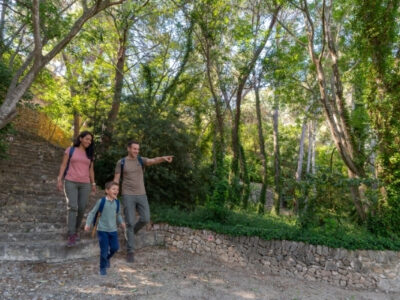
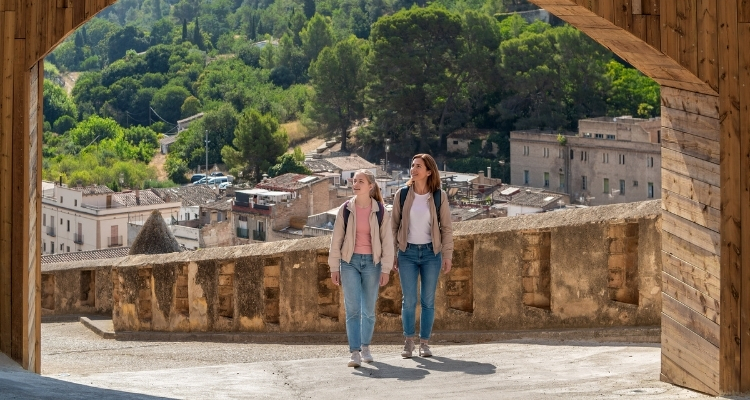
Today, exploring the castle and its surroundings reveals different periods in Tortosa’s history. At the same time, its viewpoints offer some of the finest panoramas over the city and the Ebro valley. For all these reasons, Suda Castle is an essential visit for understanding the historical and defensive development of Tortosa.