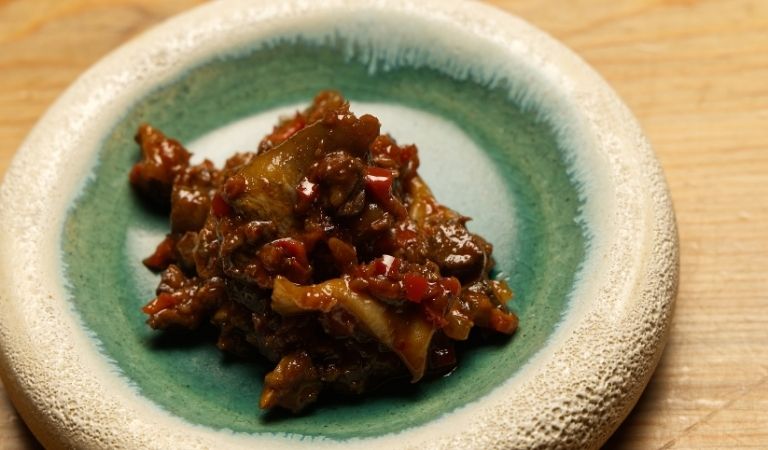
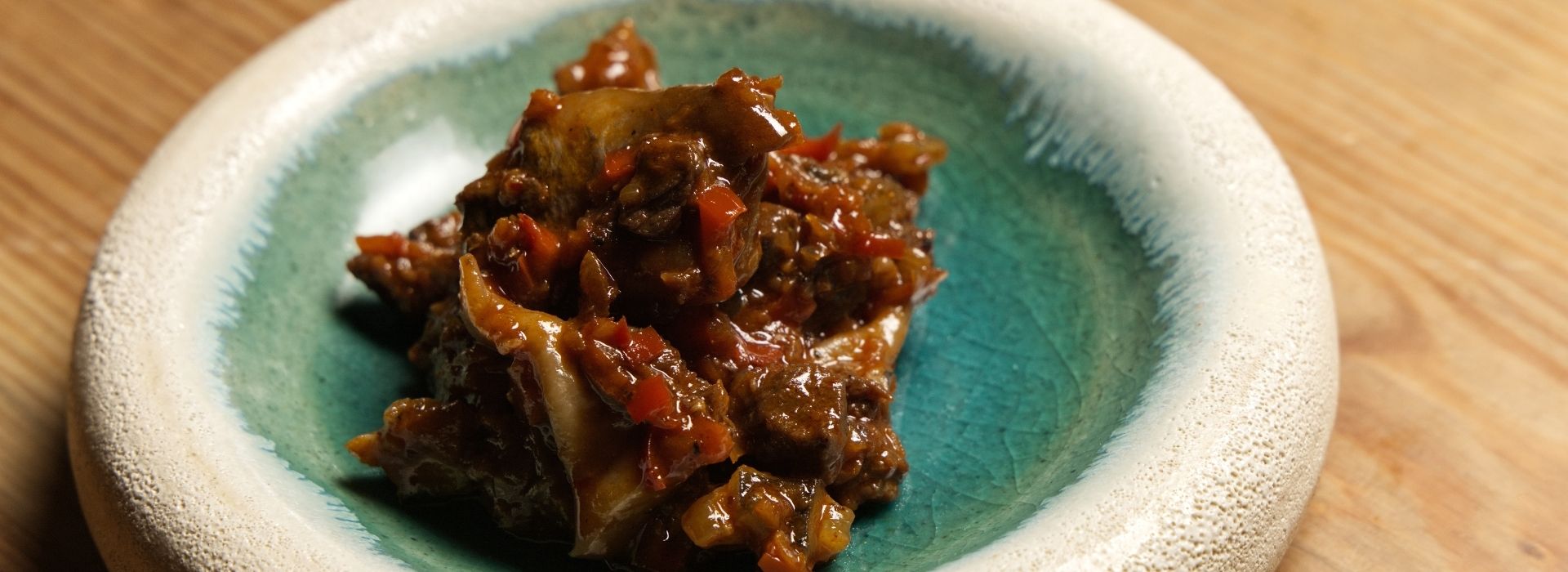
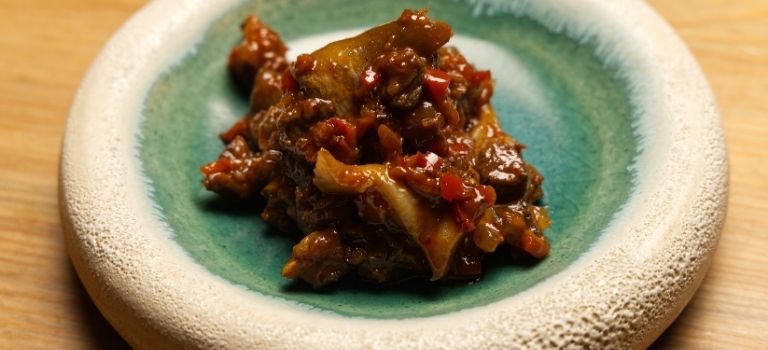
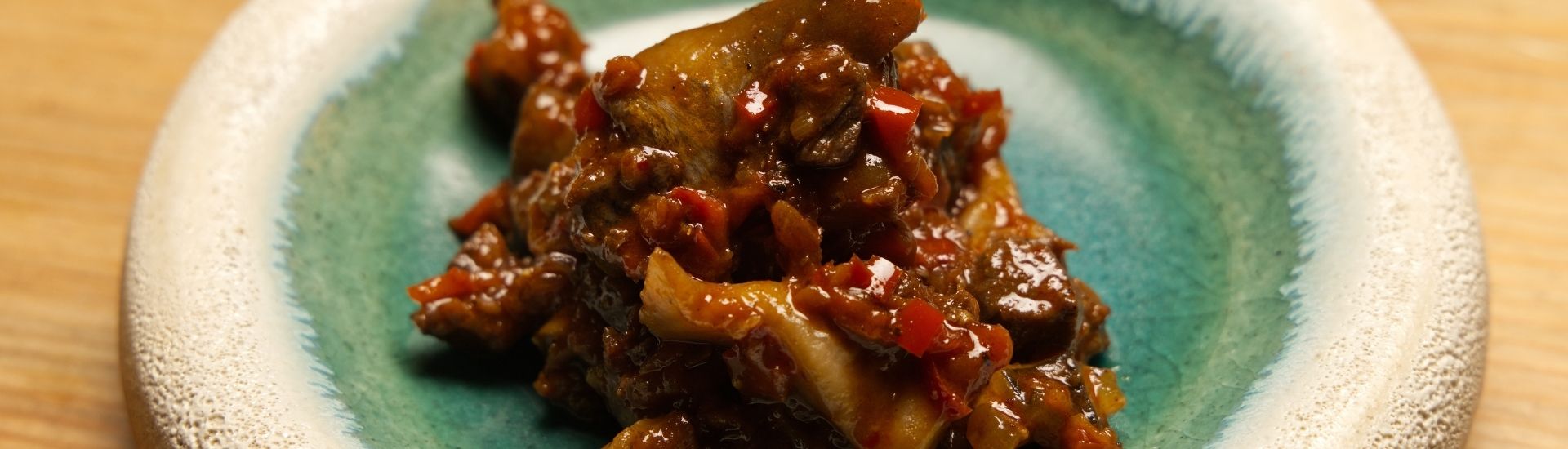
Tripe with Pig’s Snout and Ears
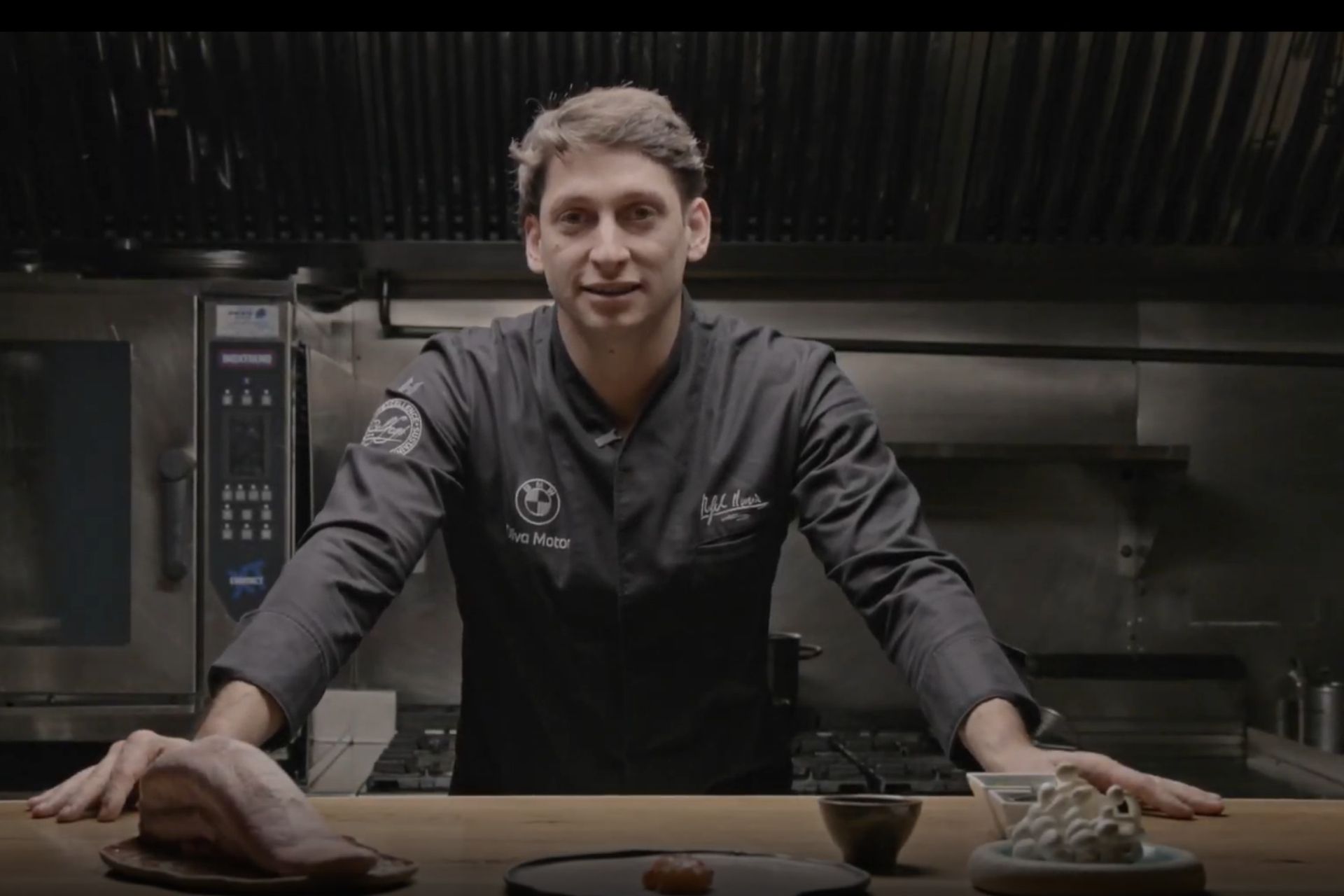
Quatremolins restaurant and its chef-owner, Rafel Muria, have chosen to work with two dishes that reflect a style of cooking rooted in a culture of resourcefulness and making the most of every ingredient. It is a cuisine closely linked to the marketplace and to the traditional use of offal, but also one that intersects with other gastronomic traditions, such as pastry-making, as exemplified by Sopa de la Reina.
One of the most distinctive aspects of Chef Muria’s reinterpretations is his ability to revisit traditional dishes through the use of new ingredients while preserving the original concept and spirit of the recipe. This approach can be seen in dishes such as Sopa de la Reina and Tripe with Pig’s Snout and Ears, where contemporary ingredients and techniques are employed to recreate the essence of familiar flavours while remaining faithful to the culinary heritage from which they originate.
VIDEO RECIPE

method
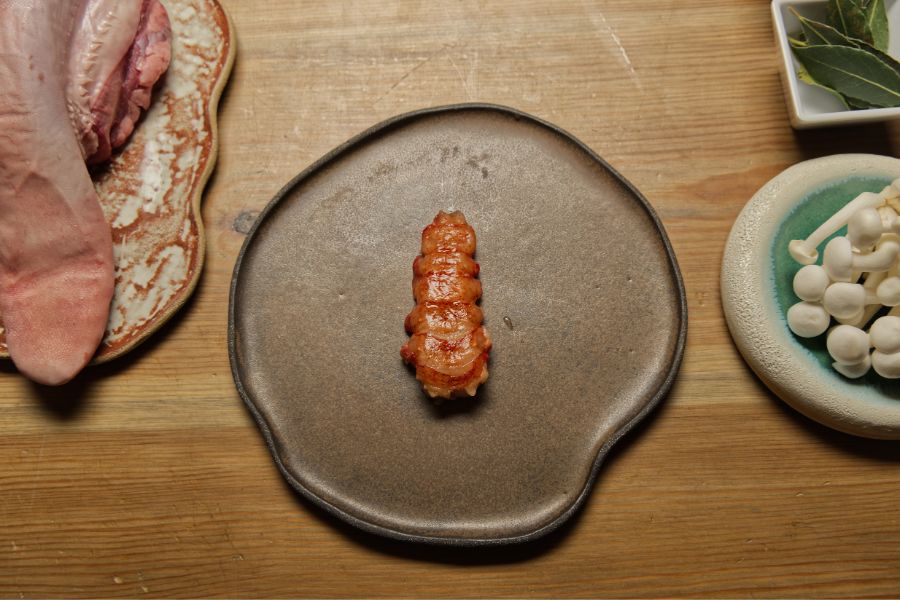
This dish takes its inspiration from a highly traditional recipe, but instead of using pork, bluefin tuna is employed as the principal ingredient. The aim is to preserve the structure and spirit of the original preparation while adapting its components, creating a reinterpretation that remains faithful to the character of the classic dish while introducing a distinctly maritime dimension.
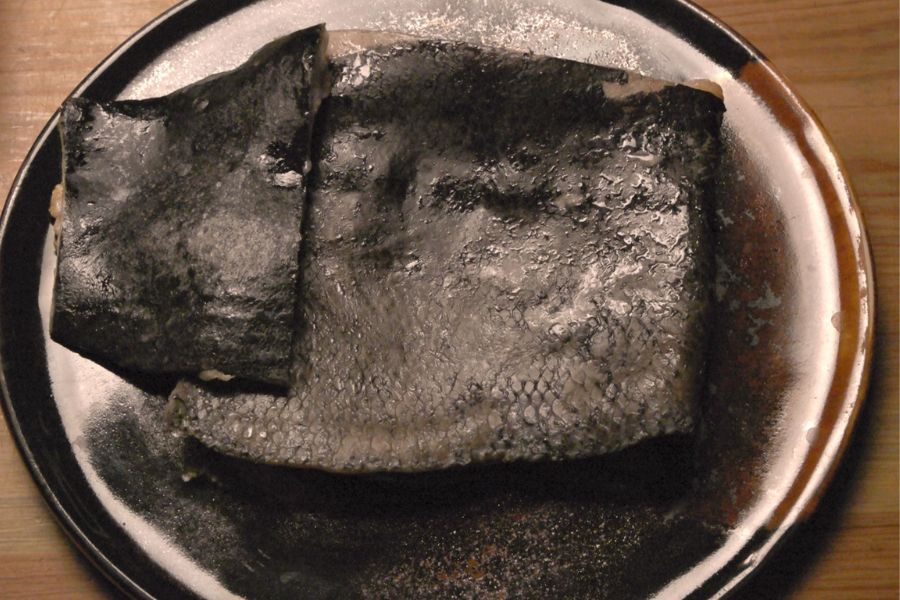
To prepare the dish, three different parts of the tuna are used, each intended to replace one of the key elements of the traditional recipe. In place of the tripe, the tuna skin is used, as its high gelatin content closely resembles the rich, succulent texture of tripe. To substitute the pig’s snout, the tuna secret is employed—a cut located inside the head, near the palate—which has a slightly lean texture yet is exceptionally flavourful. Finally, to represent the ear, the cartilage found behind the gills, known as tuna ear, is used. This cut combines gelatinous and firmer sections, closely resembling the texture of pig’s ear or trotters, making it particularly well suited to this reinterpretation of the traditional dish.
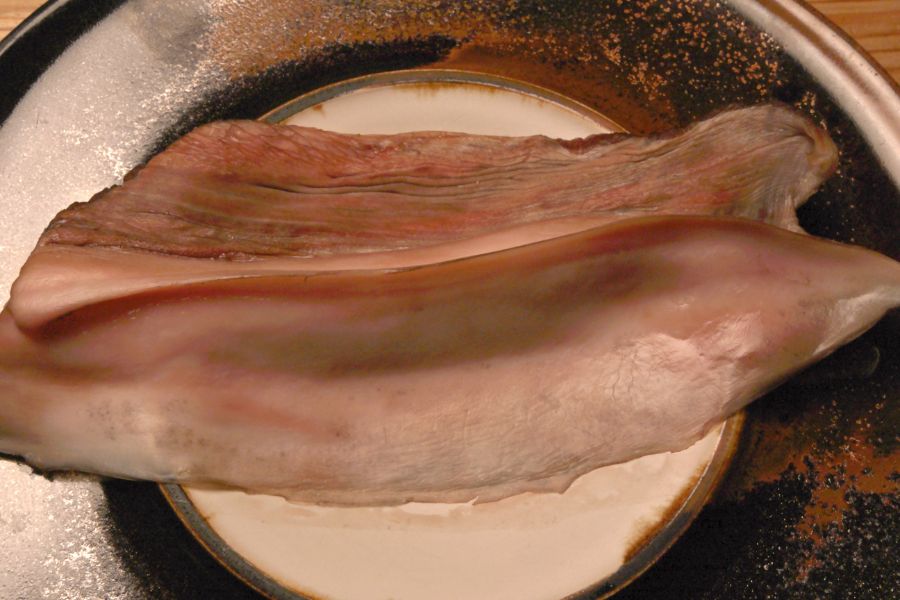
Using these three tuna cuts, the dish is constructed according to the same principles as the traditional recipe. It begins with a sofregit made from onion, garlic and red pepper, to which spices such as paprika, saffron, a touch of chilli and concentrated tomato are added. To deepen the flavour profile, both white wine and vi ranci are incorporated, lending complexity and evoking the rich character of traditional casserole cooking.
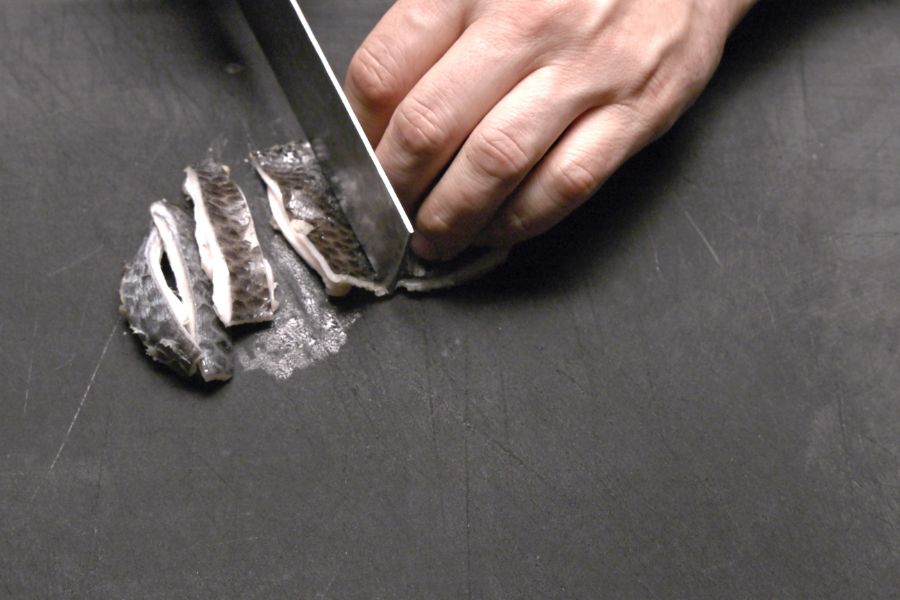
Before the stew is begun, the tuna skin is prepared by blanching it for a few seconds in boiling water and then immediately cooling it in iced water. This step makes it easier to remove the scales and allows the skin to be handled more effectively. Once cleaned, it is cut into cubes and sautéed without the addition of oil, as the skin naturally releases its own fat during cooking. When it has rendered its excess fat and is lightly cooked, it is removed and set aside for later use.
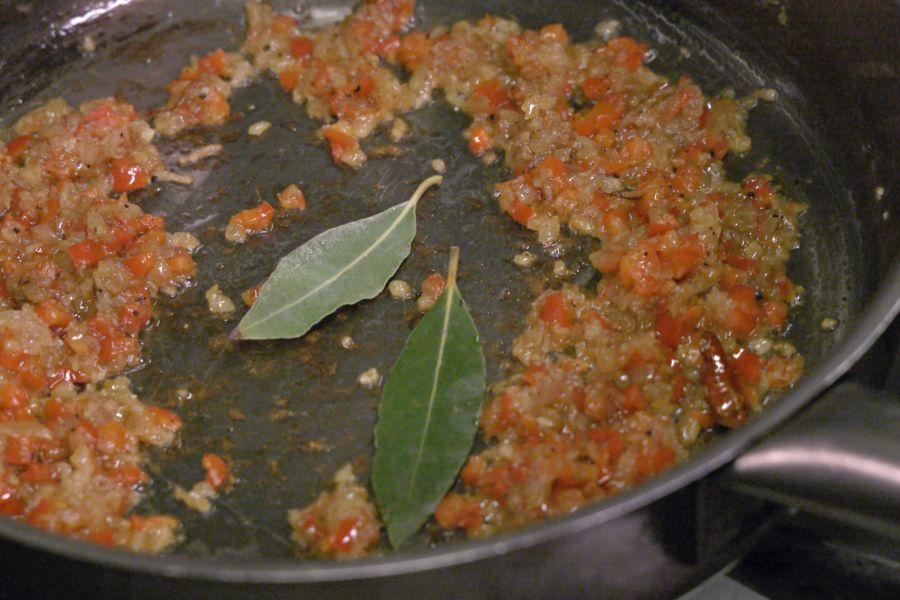
Using the fat released by the tuna skin, the sofregit is then begun. Paprika, saffron and a touch of chilli are added, followed by the previously prepared mixture of onion, garlic and red pepper. Bay leaves, white wine and vi ranci are then incorporated, and the mixture is left to reduce until the alcohol has evaporated. Finally, a small amount of concentrated tomato is added to give the sauce greater body and depth.
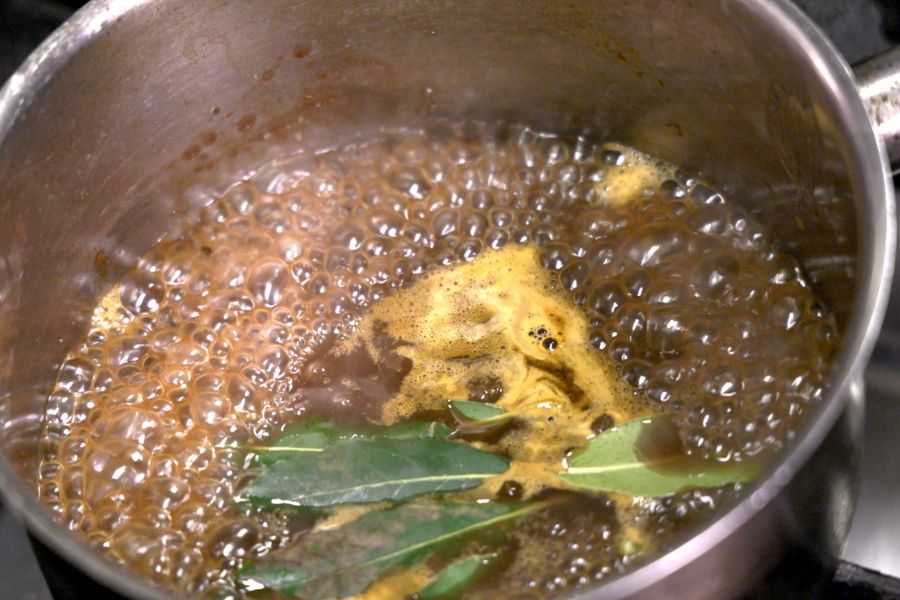
When the sofregit is ready, the tuna ear is added raw so that it cooks gently within the sauce. Unlike pork, these tuna cuts require only a short and delicate cooking time, as prolonged cooking would compromise their texture. Once the tuna ear is partially cooked, the previously sautéed tuna skin is added, together with a little stock made from the tuna’s own bones. This stock forms the basis of the sauce, creating something reminiscent of a classic salsa española, but reinterpreted through the flavours of the sea.
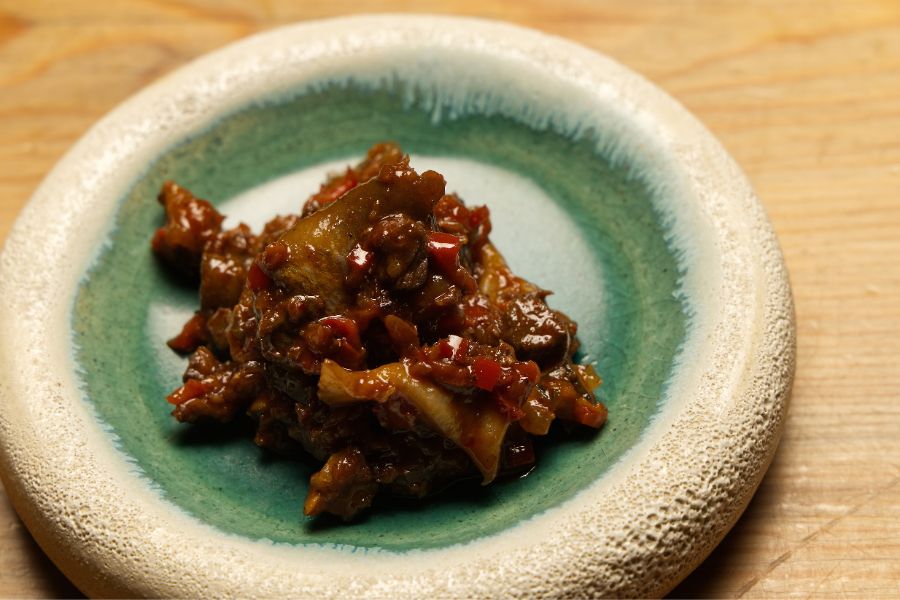
Finally, the tuna secret is added, requiring only a very brief cooking time to ensure that it remains tender and does not become tough. Once all the elements have come together, the heat is turned off and the stew is left to rest for a few moments, allowing the flavours to meld and harmonise before the dish is plated.