Sípia Solsida (Traditional Cuttlefish Stew)
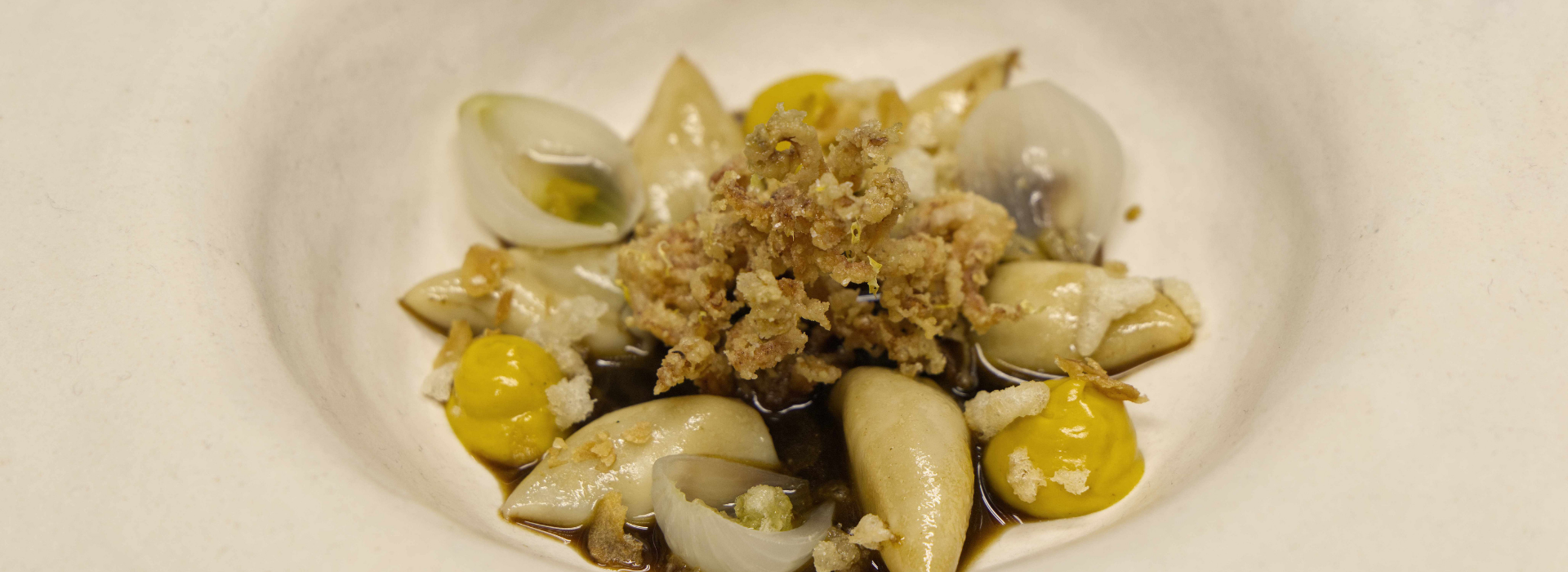
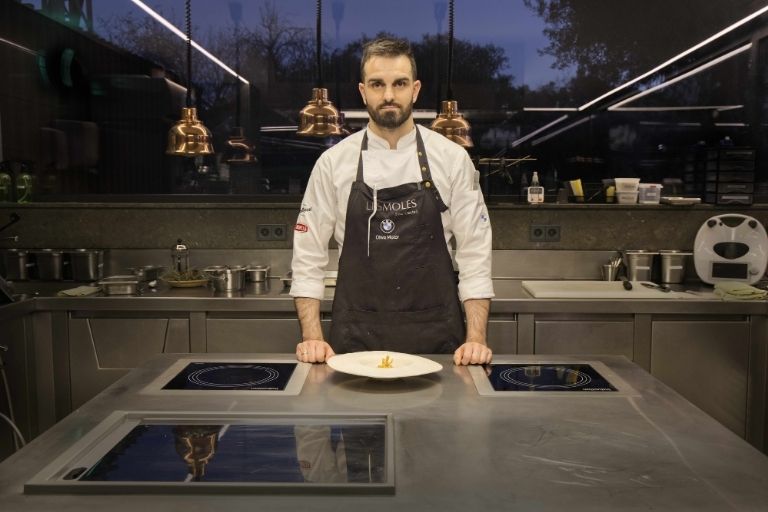
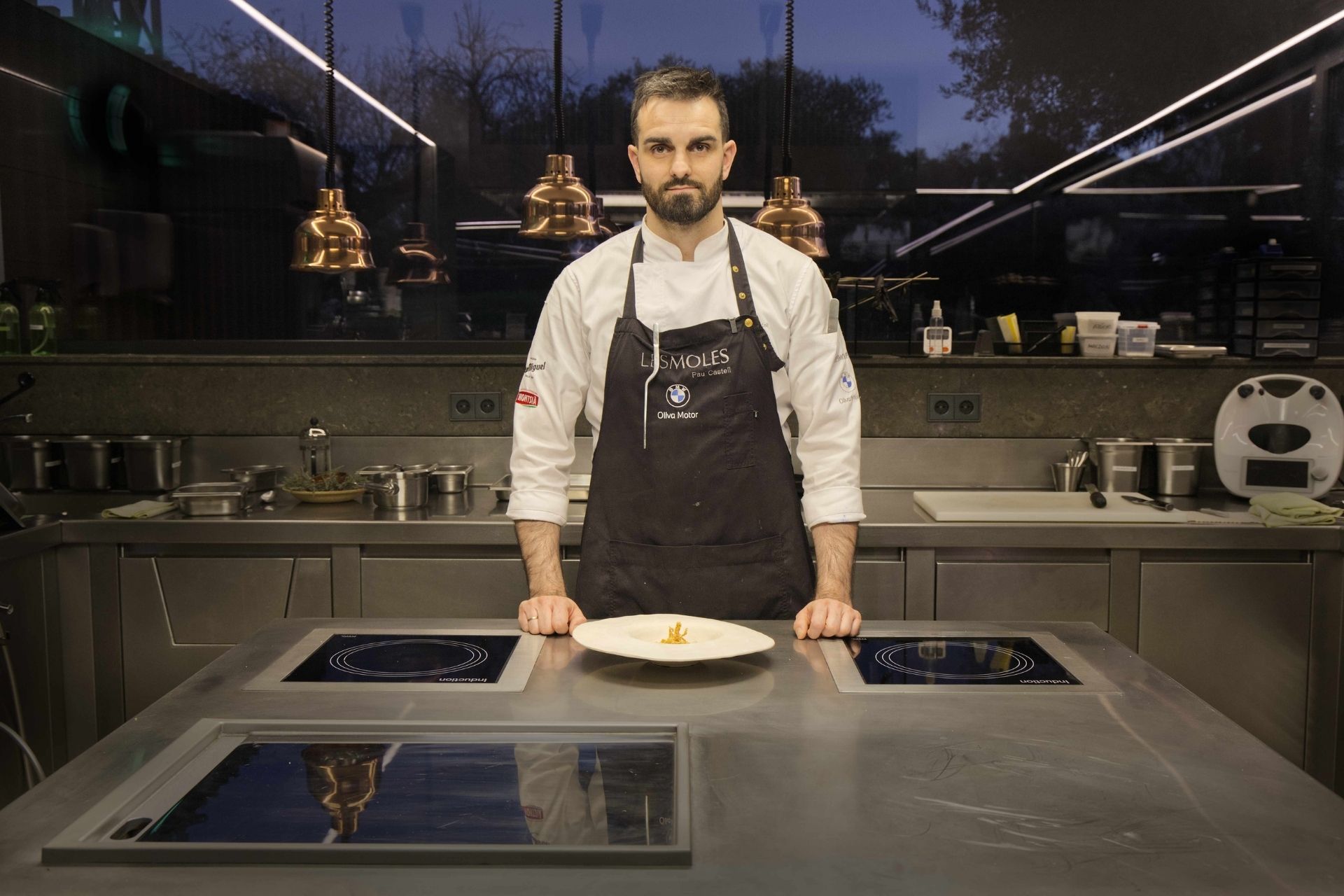
At Les Moles restaurant, chef Pau Castells showcases three recipes with distinctly different identities. They range from the simplicity of thyme soup, a dish created almost to deceive the stomach, to the hearty substance of fideus with pork ribs, and the technical singularity of sípia solsida. Together, these three recipes represent different facets of Tortosa’s gastronomic heritage, from the rustic traditions of rural cooking embodied in the thyme soup to the market-inspired cuisine reflected in the sípia solsida.
The chef reinterprets these recipes, some of which would rarely be found on a restaurant menu, such as thyme soup, transforming them into delicate expressions of fine dining. Others, such as fideus with pork ribs, are reimagined as a kind of false risotto. Yet throughout these reinterpretations, he remains faithful to the essence of each dish, preserving and highlighting the distinctive identity of every ingredient he works with.
VIDEO RECIPE

METHOD
Pau Castells’s reinterpretation is based on a cuttlefish sauce similar to that used in a traditional stew. From this foundation, he combines a variety of elements that would typically be found in such a dish, but instead of cooking them together from the outset, they are prepared separately and incorporated at the final stage of the process.
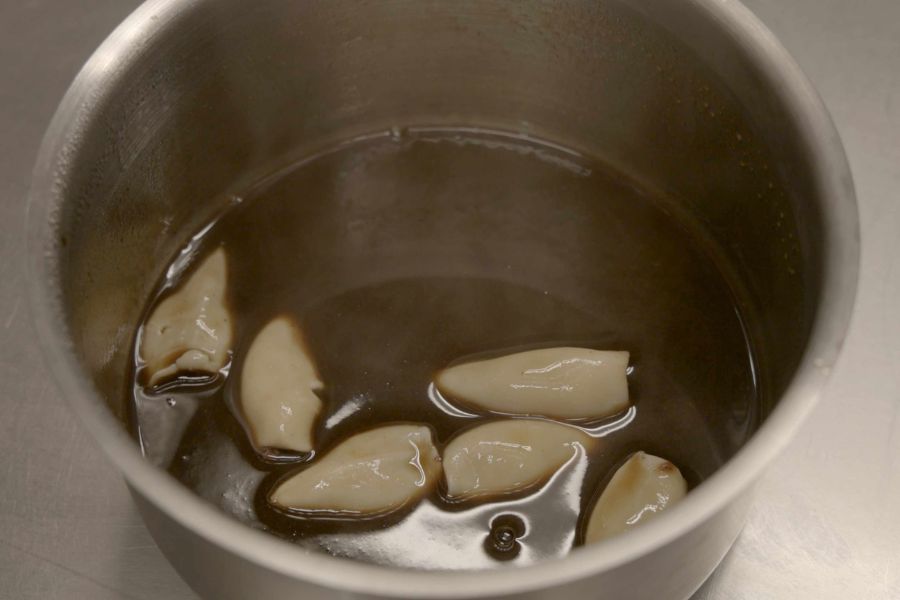
The sauce is prepared in advance through the long, low-temperature sous-vide cooking of cuttlefish, until a concentrated and intensely flavoured cooking liquor is obtained. This method of preparation recalls the traditional stew, in which cuttlefish requires time to become tender and develop its full depth of flavour. At the same time, a vegetable and tomato sauce is prepared and enriched with the juices released during the cooking of the cuttlefish. The sauce is then thickened with Gelcrem, giving it the consistency of a light, velvety sauce.
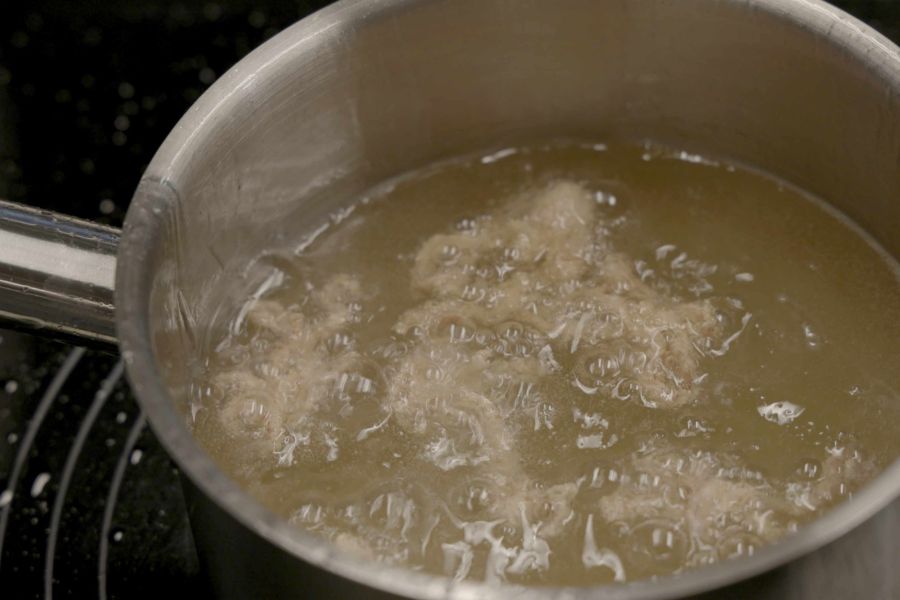
In this reinterpretation, baby squid takes centre stage, but it is cooked for only a matter of seconds in the sauce prepared separately. The aim is simply to bring it up to temperature and give it the desired texture without sacrificing its tenderness. To achieve this, the body of the baby squid is immersed briefly in the boiling sauce, just long enough for it to firm up slightly. It is then removed immediately to prevent overcooking and set aside until the final assembly of the dish.
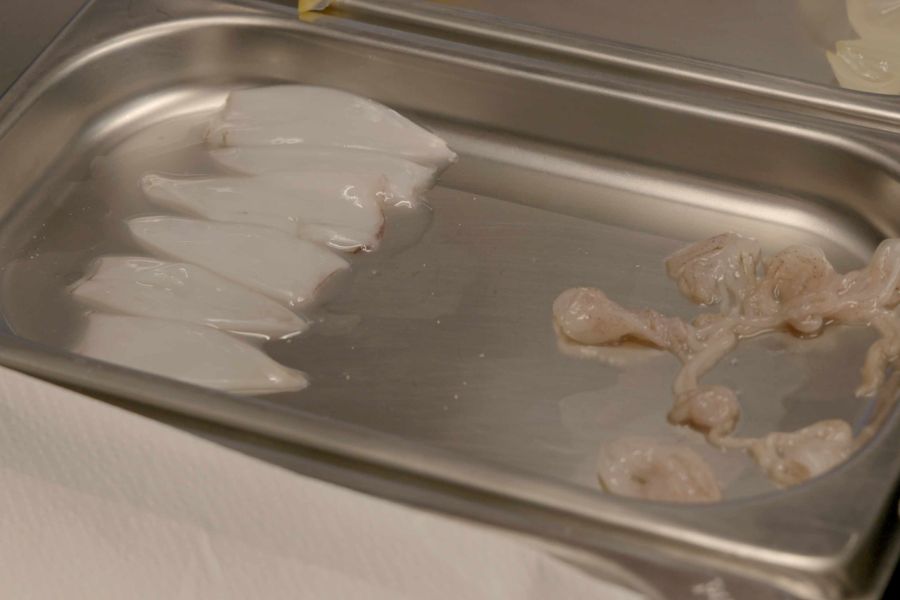
The tentacles of the baby squid are prepared separately by coating them in chickpea flour and frying them until crisp. They are fried until the bubbling ceases, ensuring that all moisture has evaporated and that they develop a dry, light texture, almost like a delicate crisp. This element provides a contrast to the tenderness of the squid body and the smoothness of the sauce.
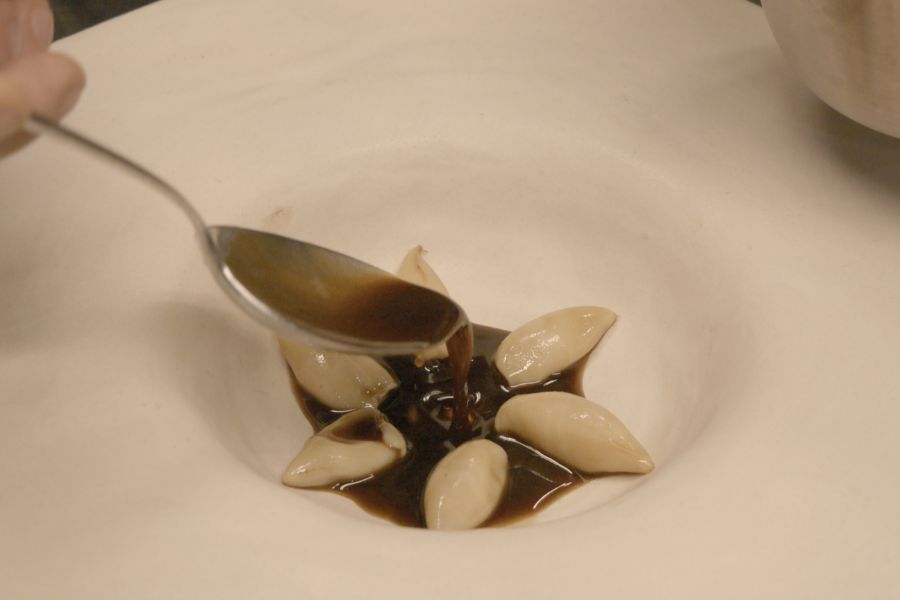
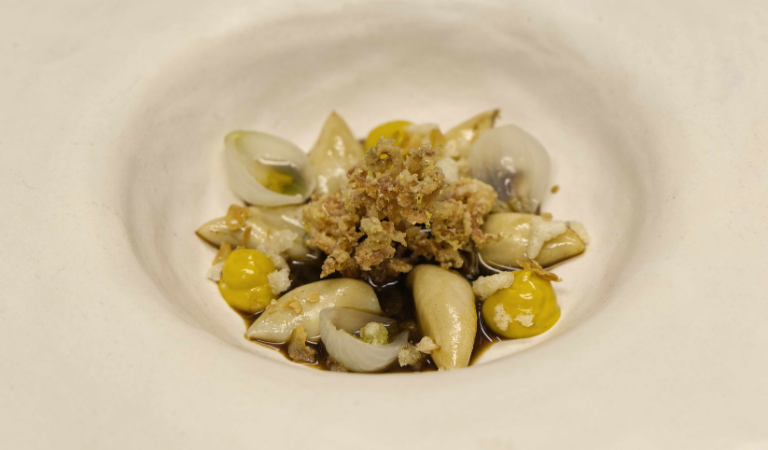
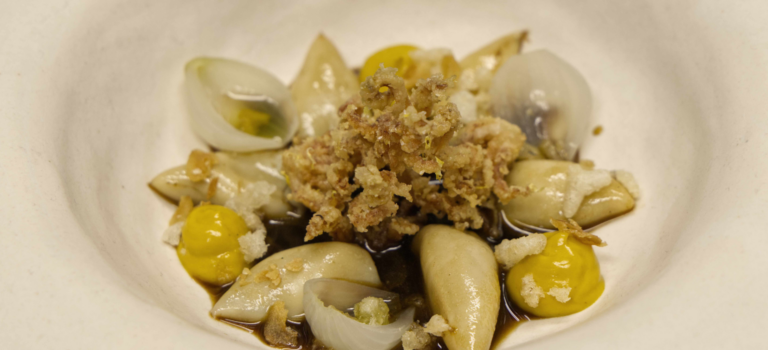
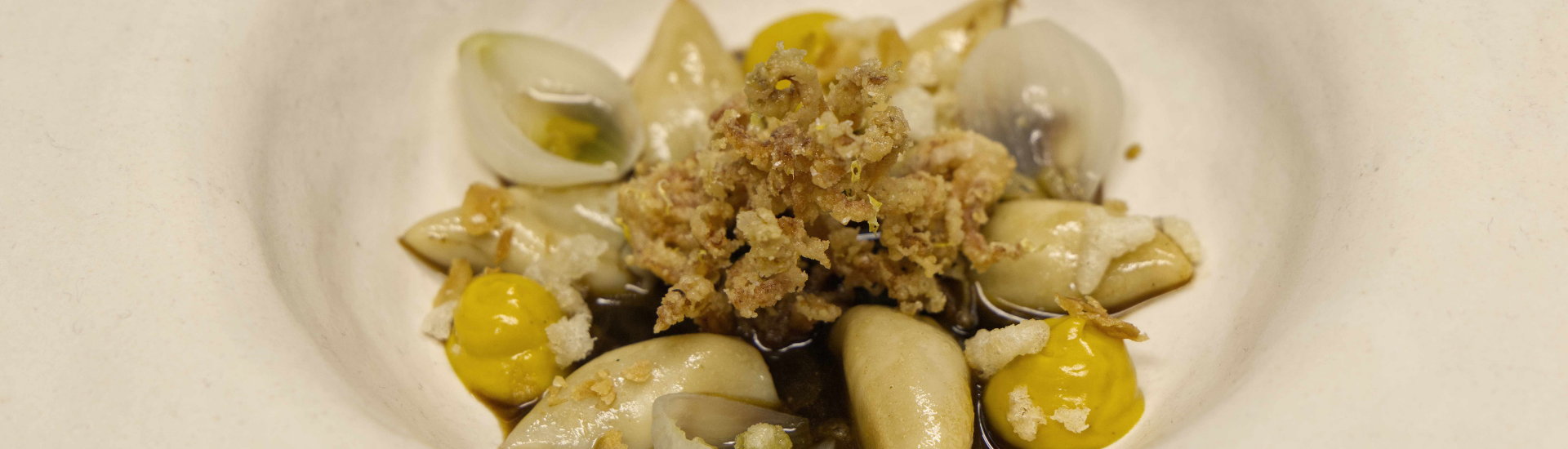
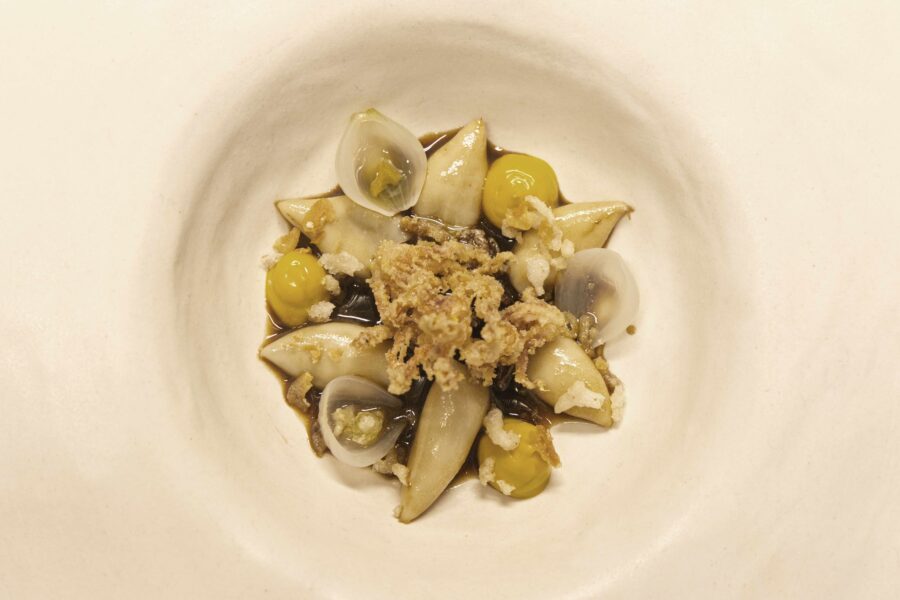
For plating, the cuttlefish sauce is first spooned onto the plate to form the base. The cooked baby squid is then arranged on top, followed by the crisp fried tentacles. Small onions, previously cleaned and blanched, are added, together with small dots of pickled vegetable purée. These elements complete the dish, bringing together the deep flavour of the cuttlefish sauce, the tenderness of the squid, the crunch of the fried tentacles and the acidity of the pickled vegetables, creating a balanced and contemporary interpretation of a traditional stew.
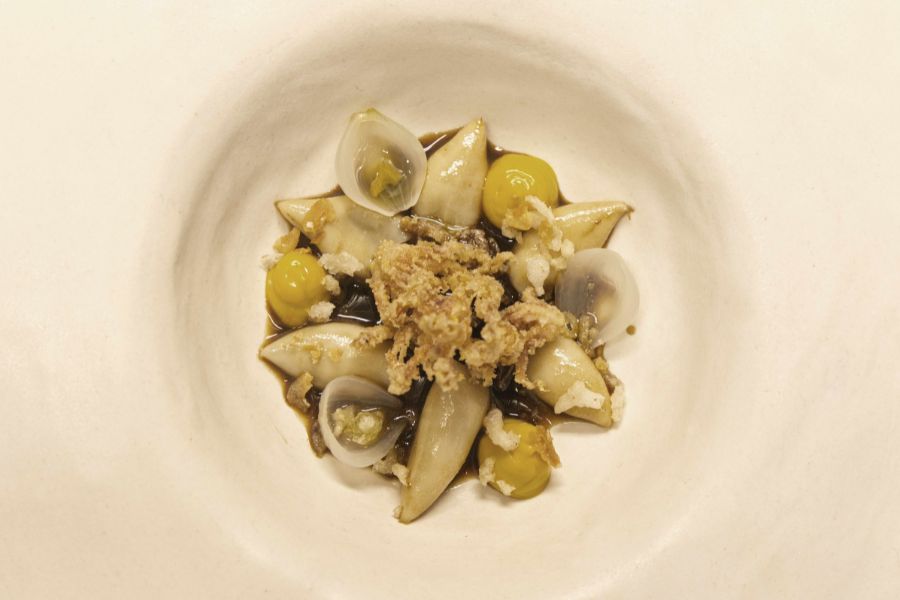
To complete the dish, small pieces of fried tempura batter and garlic crisps are added. Finally, it is finished with a drizzle of olive oil, which brings shine, aroma and balance to the composition, leaving the dish ready to serve.