Description
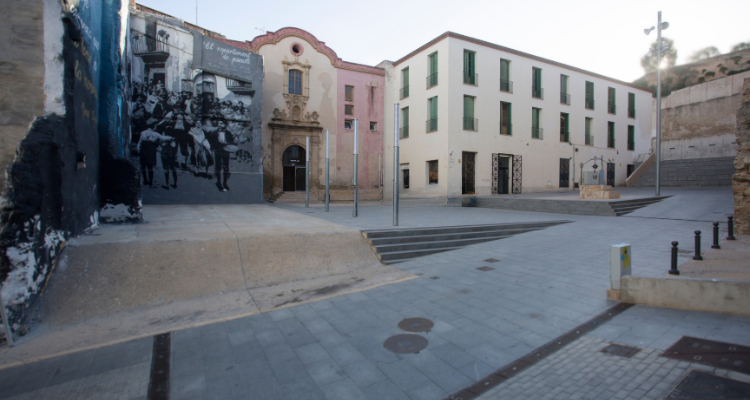
The Church and Convent of Saint John form a Baroque complex in Plaça de Sant Joan, in Tortosa’s historic centre. Built mainly during the 18th century, the complex is closely associated with the Hospitaller nuns of Saint John of Jerusalem, who had been present in the city since the late 16th century.
Today, the complex no longer functions as a convent. The building houses the Tarragona Provincial Council School of Art and Culture and other services. The square also features two large contemporary murals dedicated to Felip Pedrell and Gerard Vergés, creating an interesting dialogue between Baroque heritage, urban art and Tortosa’s cultural memory.
Church and Convent of Saint John: the origins
The Hospitaller nuns of Saint John of Jerusalem arrived in Tortosa in 1579 from the monastery of Santa Maria de la Ràpita. They initially settled in the former Trinitarian convent in the Remolins district. Between 1580 and 1586, a new convent was built for the community.
In the early 18th century, changes to Tortosa’s defensive system led to the disappearance of this first complex. In 1709, the convent was demolished and the nuns temporarily moved to Casa Caspir. Finally, in 1734, they settled in the new convent built on the present site.
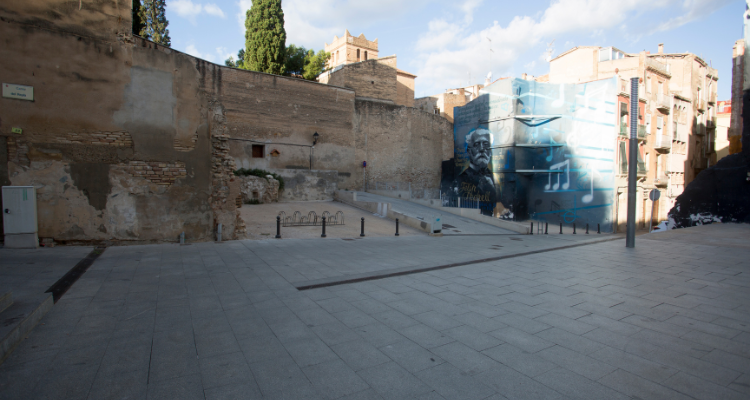
Thus, the history of Saint John is also closely connected with the urban and defensive development of Tortosa, as the rear boundary of the building reaches the 14th-century medieval city wall.
An 18th-century Baroque complex
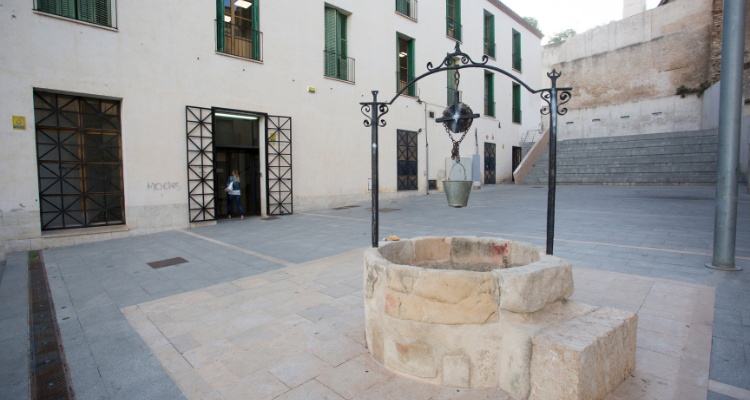
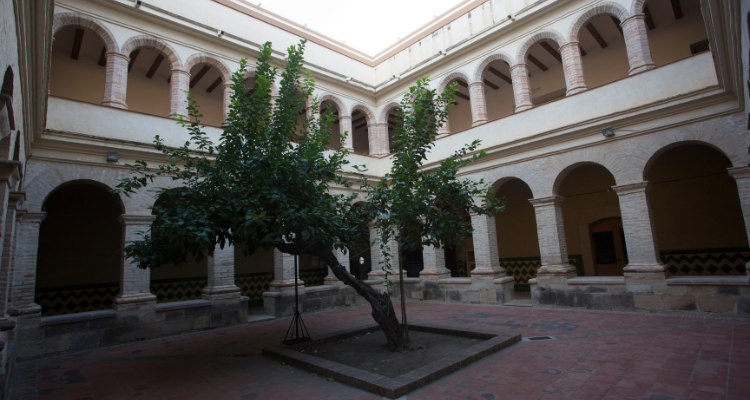
The former convent is a Baroque-style building arranged around a central courtyard and divided into three storeys. Several original features survive on the façade, including balconies, windows and lintelled doorways.
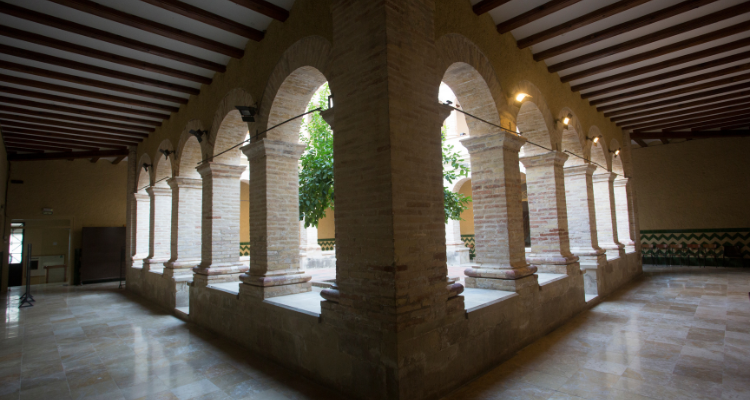
Inside, galleries surround the courtyard on different levels. Round arches, rectangular pillars with moulded capitals and timber-beamed ceilings characterise this space. However, as the building is now used for cultural, educational and other services, these interior features should not be considered part of a regular tourist visit.
The Baroque portal of the Church of Saint John
The church forms part of the same complex, although its construction continued for longer than that of the convent. The nuns moved into the new building in 1734, but work on the church was not completed until 1777.
From the square, its richly decorated Baroque portal is particularly striking. The entrance is vertically aligned with the window above and is one of the most recognisable architectural features of the complex.
For this reason, visitors should pay particular attention to the composition of the façade and portal, as well as the relationship between the church, the former convent and the surrounding square.
Wars and transformations of the convent
The history of the Church and Convent of Saint John was also shaped by the conflicts that affected Tortosa. During the Peninsular War, the convent was requisitioned by the occupying army and used as a military hospital and weapons depot. The nuns returned in 1814.
In 1936, during the Spanish Civil War, the complex was attacked and set on fire. The convent was subsequently restored by the religious community, while the church did not reopen for worship until 1956.
The community eventually left the building during the second half of the 20th century. Since 1987, the former convent has housed the School of Art. Today, its cultural role continues through the School of Art and Culture, with spaces also used for exhibitions and other activities.
The murals of Plaça de Sant Joan
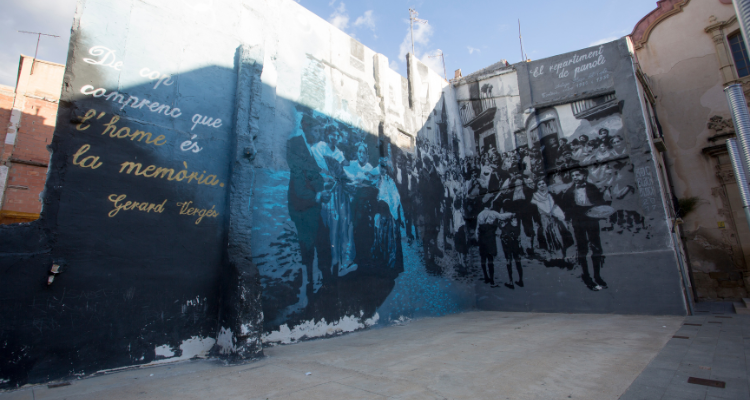
The murals in Plaça de Sant Joan add a contemporary dimension to the historic complex. These two large works of urban art by Roc Blackblock commemorate important figures and episodes in Tortosa’s cultural history.
One of the murals pays tribute to composer and musicologist Felip Pedrell, who was born in Tortosa in 1841. The work stands on the site of his former birthplace and features a large portrait of the musician accompanied by a musical stave.
The second mural is dedicated to Tortosa-born writer Gerard Vergés and the city’s collective memory. Created in 2017, it reproduces a historical photograph from the 1920s showing the distribution of panoli, a traditional local pastry, in Plaça de Sant Joan. Above the scene appears a quotation by Vergés: “De cop comprenc que l’home és la memòria” (“Suddenly I understand that man is memory”).
In this way, the square brings together historic heritage and contemporary creativity. The murals preserve the memory of Pedrell, Vergés and a traditional local custom, while the church and convent recall the Hospitaller community and the Baroque past of this part of Tortosa.
A site to discover from the square
The Church and Convent of Saint John do not currently operate as a monument with regular tourist visiting hours. The former convent has cultural, educational and administrative uses, so access to its different areas depends on the activities taking place there.
The church also has no regular opening hours for independent visits to its interior. Therefore, a visit to the complex should focus primarily on its exterior architecture, the Baroque portal, the history of the buildings and the murals in the square, without expecting access to the interior.
Finally, Plaça de Sant Joan brings together different layers of Tortosa’s history in a single setting: the religious legacy of the Hospitaller nuns, 18th-century Baroque architecture and contemporary urban art dedicated to Felip Pedrell and Gerard Vergés. This combination makes the square a distinctive stop on a walk through the historic centre.