Description
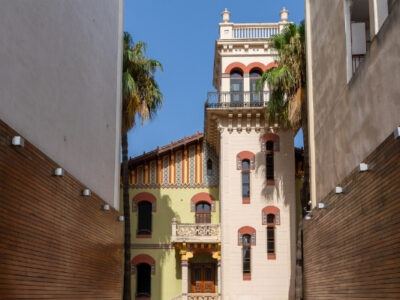
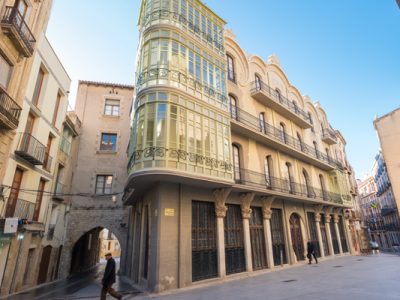
Pinyana House Tortosa is one of the most monumental examples of late Modernism in the city. Located on Generalitat Avenue, opposite Teodor Gonzàlez Municipal Park, it stands out for its richly decorated façade featuring ceramics, trencadís mosaic, wrought iron and ornamental forms. Together, these elements make it one of Pau Monguió i Segura’s most distinctive works in Tortosa.
Pinyana House Tortosa: late Modernism by Pau Monguió
The building was constructed in 1923 for David Pinyana Domingo, during Pau Monguió’s second professional period in Tortosa. At this stage, the architect developed a freer and more expressive architectural language, with a particularly prominent role for the decorative arts.
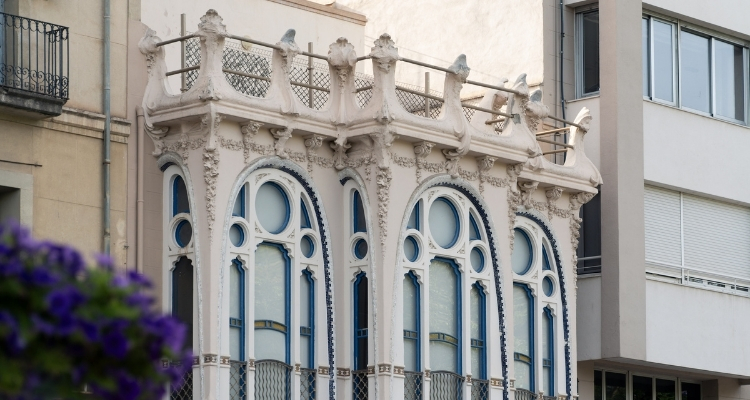
Although the building has only one main floor above the ground level, Pinyana House achieves a striking sense of monumentality through the composition of its façade. In addition, its location opposite the park makes it particularly prominent along this section of Generalitat Avenue.
A large bay window decorated with trencadís
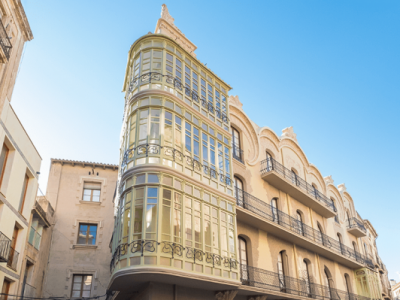
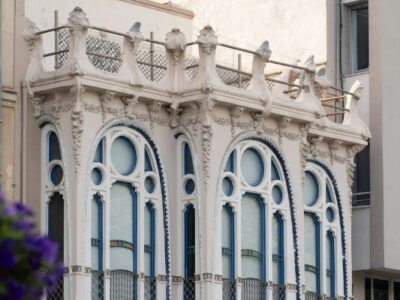
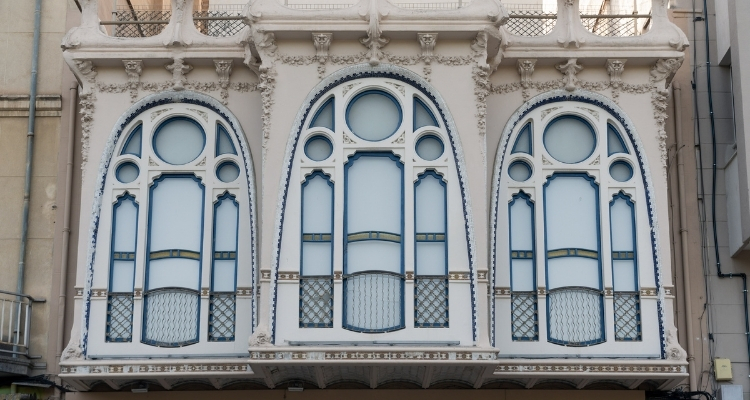
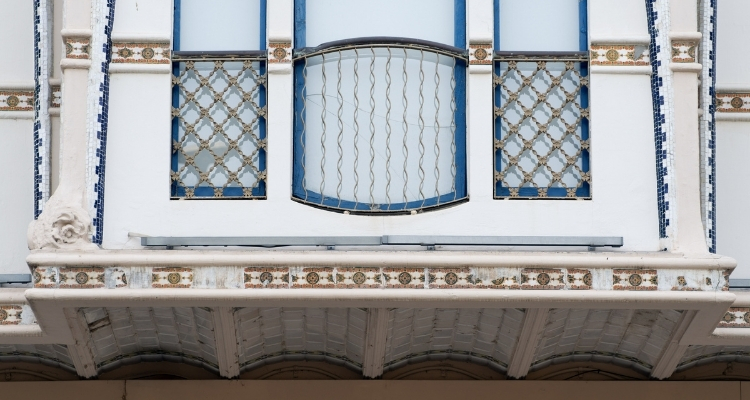
The main architectural feature of Pinyana House is the large continuous bay window extending across almost the entire main floor. This structure is divided into three sections by elegant curved arches.
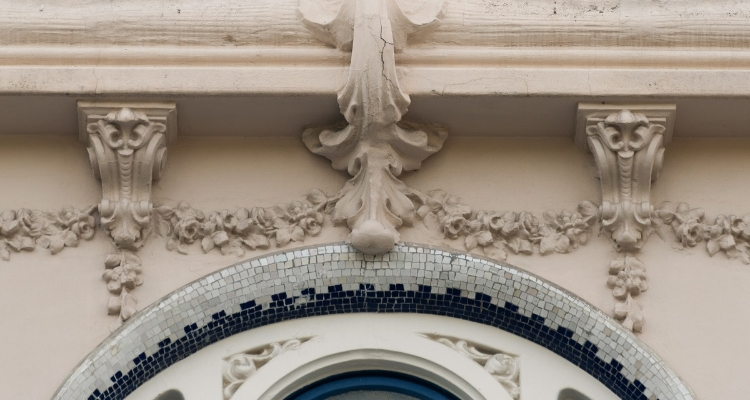
The arches are outlined with carefully executed trencadís mosaic, adding colour, texture and movement to the façade. As a result, the bay window is not only a functional element but also the main focus of the architectural composition.
Moreover, its curved forms contrast with the overall horizontality of the building, reinforcing the distinctive character of this work within Tortosa’s Modernist heritage.
Ceramics, rose windows and decorative ironwork
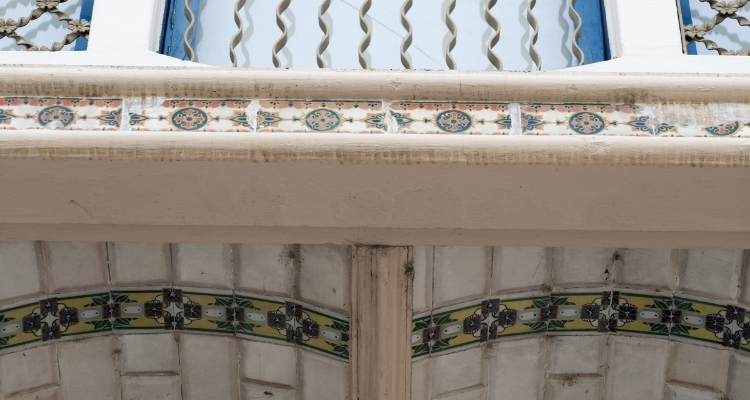
The richness of its ornamentation is one of the façade’s main attractions. Particularly notable are the ceramic tiles, plant motifs, decorative garlands and wrought-iron details, all integrated into an elaborate architectural composition.
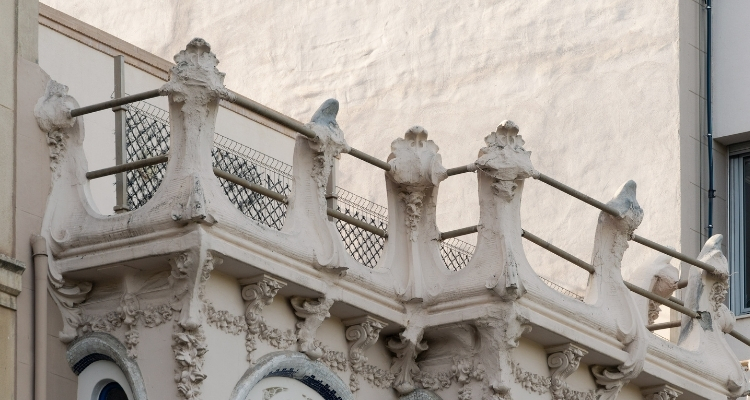
Above the windows are distinctive rose windows, which further enhance the decorative character of the building. Finally, an unusual cresting combining stone and iron crowns the structure and completes the silhouette of the façade.
The influence of Antoni Gaudí’s architecture has also been noted in this work. Its organic forms, expressive use of ceramics and compositional freedom reflect this influence. However, Monguió incorporated these elements into his own distinctive architectural language.
A Modernist façade opposite the park
Pinyana House forms part of the architectural heritage created during Tortosa’s urban expansion in the early decades of the 20th century. Furthermore, its location opposite Teodor Gonzàlez Municipal Park makes it easy to include on a route exploring the Modernist architecture of this part of the city.
Pinyana House is privately owned and is not open as a tourist attraction. Therefore, its main interest for visitors lies in viewing the façade from Generalitat Avenue.
Overall, Pinyana House offers an opportunity to discover one of Pau Monguió’s most spectacular façades in Tortosa. Its large bay window, trencadís, rose windows, ceramics and decorative ironwork make it an outstanding landmark of the city’s Modernist heritage.