Description
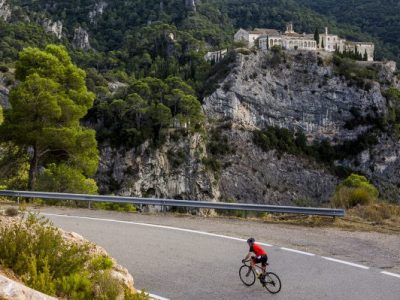
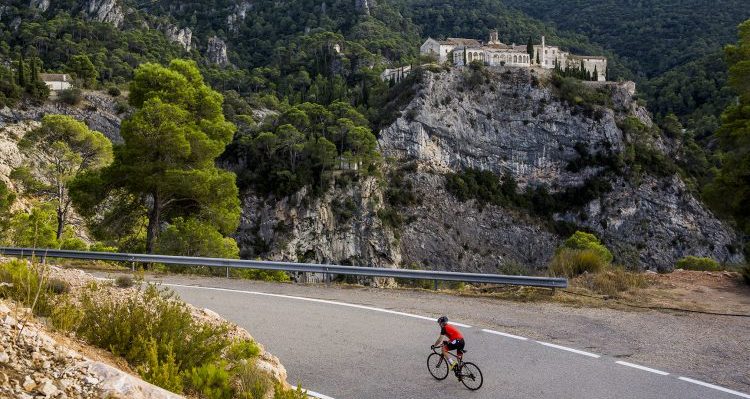
The Cardó Massif, Serra del Boix and Coll Redó form one of the major mountain landscapes of the Terres de l’Ebre. To the east of Tortosa, these ranges have a rugged landscape dominated by limestone. Cliffs, ravines and striking rock formations contrast with the plains and the Ebro Valley.
Much of this territory is protected within the Serres de Cardó-el Boix Natural Area, which forms part of the PEIN (Plan for Areas of Natural Interest) and the Natura 2000 network. The protected area covers more than 16,000 hectares, over 5,000 of which lie within the municipality of Tortosa.
A remarkable mountain landscape
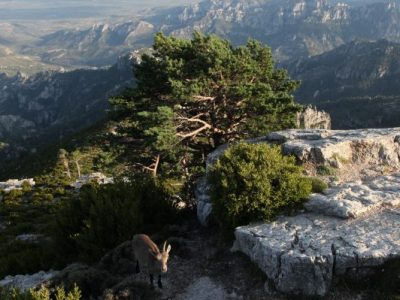
The Cardó and Boix ranges are representative of the Pre-Coastal mountains of the central Mediterranean system. In fact, geological folding and the erosion of limestone have created a complex landscape. Ridges, cliffs and distinctive rock formations give the area considerable scenic value.
At 941 metres above sea level, Creu de Santos is the highest point in the Serra de Cardó. In addition, the variety of elevations and orientations creates a diversity of natural habitats. Holm oak woodland, scrub and species such as the yew thrive on shaded slopes, while rocky areas support vegetation adapted to cliffs and exposed terrain.
A landscape shaped by centuries of history
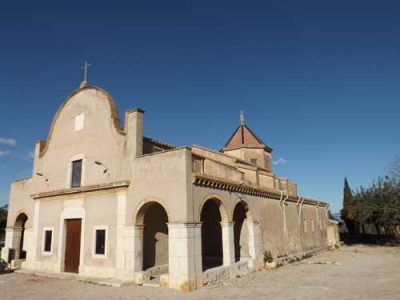
The Cardó Massif also has a rich cultural heritage. One of its most important landmarks is the former Cardó monastery and spa, surrounded by a historic group of hermitages. As a result, natural and cultural heritage come together in a landscape shaped by centuries of human presence.
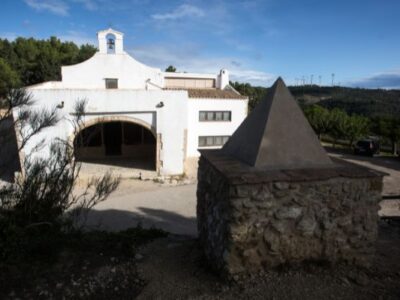
Closer to Tortosa are the hermitages of Mig Camí and Coll de l’Alba. The latter is associated with the historic route of the Via Augusta, which continues towards the Fullola area.
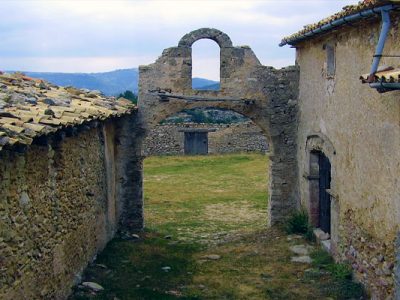
In addition, the medieval deserted settlement of Fullola preserves a tower that is one of the most significant reminders of medieval settlement in these mountains. Fullola was granted settlement charters during the 13th century and is now part of the historical heritage of the municipality of Tortosa.
Natural and cultural heritage
The Serres de Cardó-el Boix also preserve evidence of a much earlier human presence. Prehistoric rock art survives within the protected natural area, further enhancing the cultural importance of this landscape.
The landscape therefore reflects a long relationship between people and the mountains. Hermitages, towers, historic paths and deserted settlements coexist with ravines, forests and dramatic limestone formations. In addition, the Baix Ebre Wind Farm is located in this area, within the municipality of Tortosa, in the Buinaca and Fullola sector.
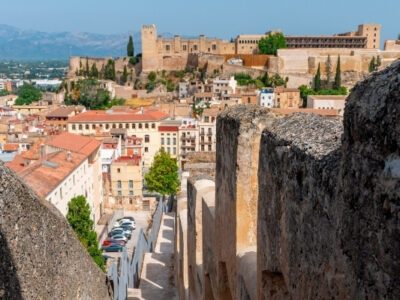
Finally, exploring the Cardó Massif, Serra del Boix and Coll Redó reveals another side of the municipality of Tortosa. From the Ebro Valley, its territory extends into these mountain landscapes. Here, natural heritage, history and sweeping views combine to create an area of remarkable diversity.