Description
The Medieval Settlement of Fullola preserves the remains of a former settlement in a valley around 12 kilometres north-east of Tortosa. Set in a rural landscape away from urban areas, its most notable features are a 13th-century fortified tower and the ruins of a Gothic church.
The first clear documentary references date from the early 13th century. At that time, Fullola was under the control of the Montcada family, one of the main feudal families associated with Tortosa. In addition, historical records document several attempts to populate the settlement and the changes in jurisdiction it experienced during the Middle Ages.
Medieval Settlement of Fullola and the settlement charters
In 1208, Ramon de Montcada granted the first settlement charter to Pere Nebot and his followers. Its purpose was to populate the castle and territory of Fullola according to the customs of Tortosa. However, this first attempt was unsuccessful. Therefore, a new settlement charter was granted in 1216 to Arnau de Figuerola and the settlers he established there.
Later, during the reign of James I, Fullola came under royal control. Historical sources also document its subsequent connection with the Knights Templar. Finally, the settlement became part of the territory of Tortosa.
The tower of Fullola
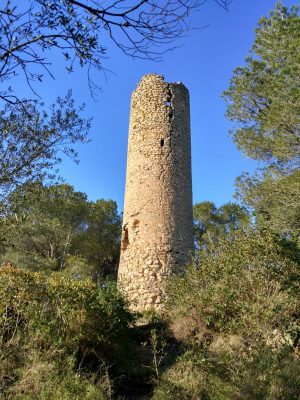
The tower of Fullola is the most prominent feature in the landscape. Probably built in the early 13th century, it has a circular plan and a tall, slender structure. It stands approximately 16 metres high and is built of courses of roughly worked stone.
Around the tower, remains of walls indicate the existence of a fortified enclosure. In fact, the settlement charter of 1208 already refers to a castle with a tower, houses and plots of land. Thus, the structure served both defensive purposes and as a means of controlling the surrounding territory.
The ruins of the Gothic church
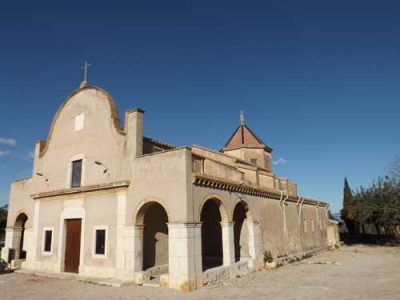
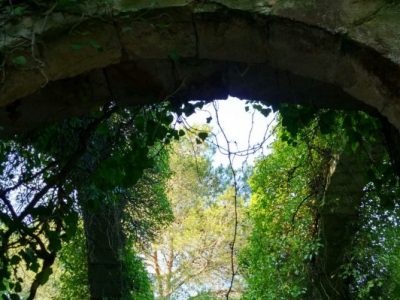
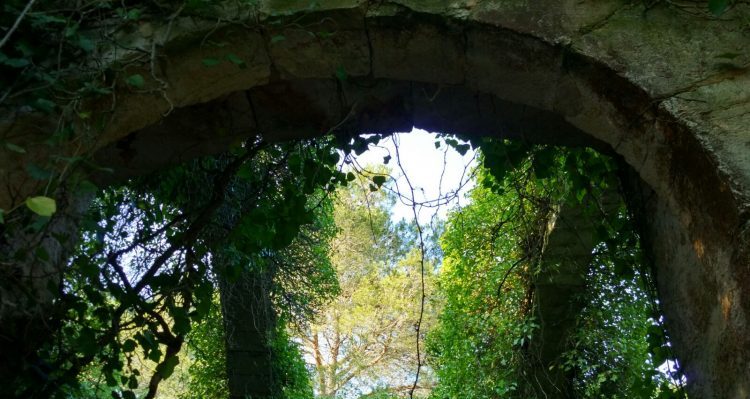
Next to the tower are the remains of the former church of Fullola. Among the surviving features are structures with pointed arches that reflect the Gothic character of the building.
Its connection with Tortosa is particularly evident in 1342. At that time, the city contributed to construction work on the church on the condition that the coat of arms of Tortosa was displayed there. Medieval records also document several later repairs to the church.
From medieval settlement to abandoned village
Over the centuries, Fullola gradually lost its population until it was abandoned. Its jurisdiction also led to a long-running dispute between Tortosa and El Perelló. In any case, on 19 January 1863, Tortosa City Council officially recorded the settlement as abandoned.
Today, the remains of various structures are scattered around the tower and the church. Therefore, Fullola should be understood as a group of ruins within a rural landscape, rather than as a developed visitor attraction with an indoor tour.
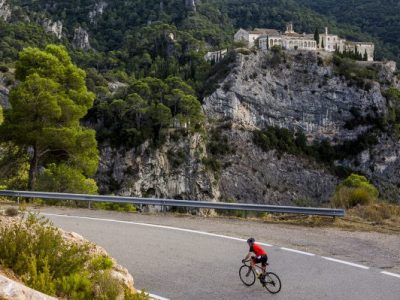
In addition, the site forms part of a 45-kilometre route from Tortosa that passes through Coll de l’Alba and the wind farm before descending towards the tower of Fullola. This route combines medieval heritage, landscape and outdoor activity.
Finally, the Medieval Settlement of Fullola offers an opportunity to discover a lesser-known aspect of medieval Tortosa. Its tower, church ruins and remains of the former settlement reveal the history of a community established during the reorganisation and resettlement of the territory in the 13th century.