Description
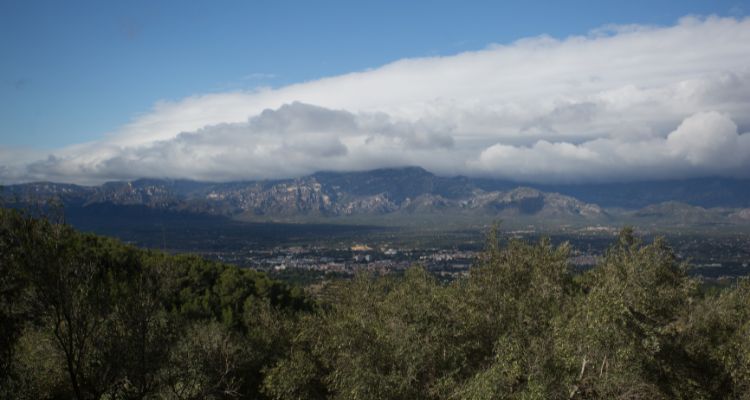
The Coll de l’Alba Hermitage is one of the oldest and most emblematic hermitages in the municipality of Tortosa. Located at an altitude of around 450 metres, it occupies a privileged position in the hills surrounding the city. Its surroundings offer panoramic views over the Ebro Valley, the Ebro Delta and Els Ports.
The complex has distinctly medieval origins. The Gothic hermitage is documented from the 15th century and underwent several extensions in later centuries. Its architecture, landscape and long tradition of pilgrimage make Coll de l’Alba an important part of Tortosa’s religious and popular heritage.
Coll de l’Alba Hermitage and its medieval origins
The present Coll de l’Alba Hermitage is a Gothic building dating from 1443, although devotion at this site predates its construction. In fact, the first documented pilgrimage to Coll de l’Alba dates from 1442. Two years later, the priest responsible for the hermitage was already receiving an allowance to celebrate Mass there on Sundays.
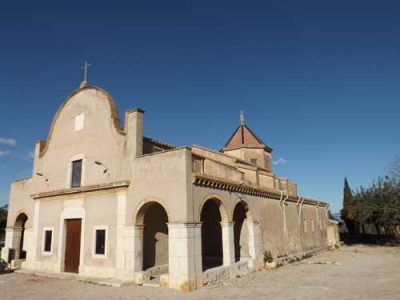
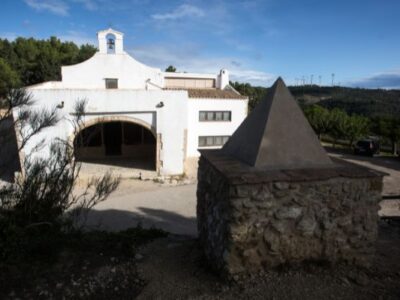
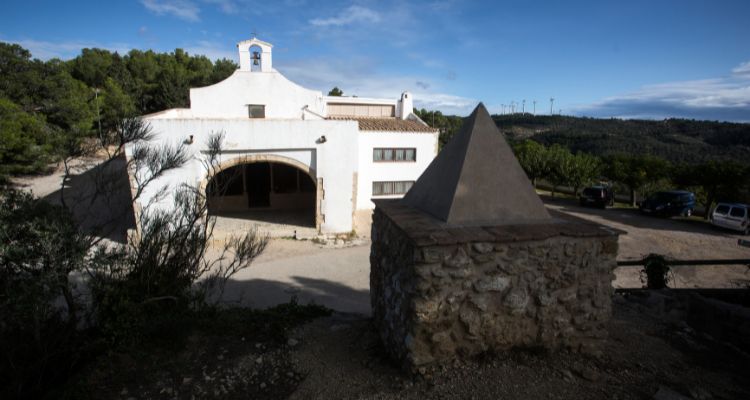
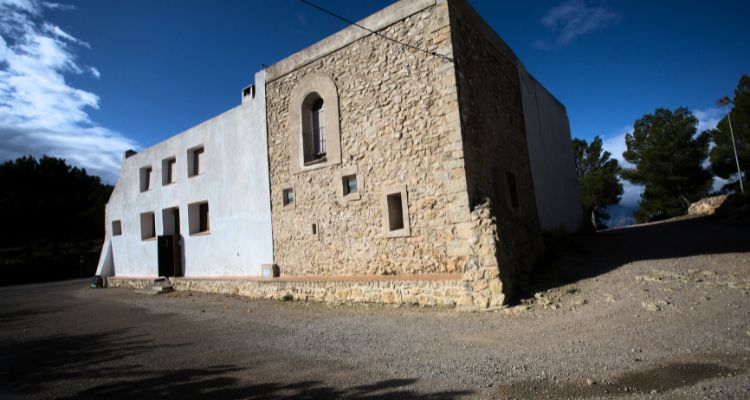
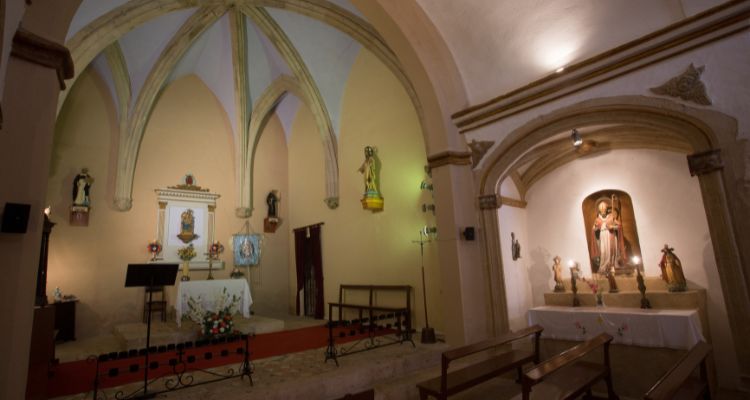
The chapel consists of a single rectangular nave with a square-ended apse and a barrel vault. Its round-arched entrance is framed by stone voussoirs. The complex is also associated with an ancient medieval defensive tower located at one of its rear corners.
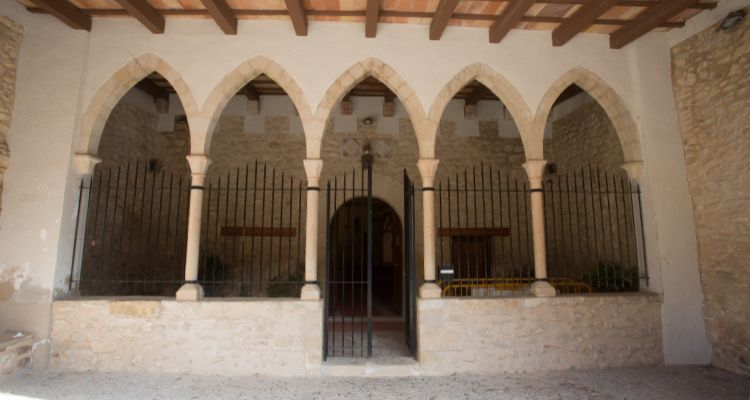
Several extensions were carried out during the 16th century. One of the most distinctive features is the porch in front of the chapel. Its arches and other surviving architectural elements contribute to the characteristic appearance of the complex.
The hermitage subsequently underwent several interventions. These included a restoration in 1892 and further work during the 1960s.
Our Lady of Coll de l’Alba
Devotion to Our Lady of Coll de l’Alba has a long tradition in Tortosa. During the Middle Ages, the site was recorded under different names, including Coll de l’Alma, Acma and Acme. Over time, the Marian devotion became associated with the name of the surrounding area.
The Virgin has also historically been known under several other titles. These include Our Lady of the Spasm, Our Lady of Fright and Our Lady of Truth. The variety of names reflects the long history and evolution of devotion associated with the sanctuary.
In addition, the hermitage is linked to old Tortosa traditions such as the Order of the Hatchet and the Bloodstained Tile. These stories form part of the popular heritage that has developed around Coll de l’Alba over the centuries.
The Coll de l’Alba pilgrimage
The Coll de l’Alba pilgrimage is one of the oldest traditions associated with the hermitage. The first documented pilgrimage dates from 1442. The connection between Tortosa and this site therefore goes back almost six centuries.
The pilgrimage is traditionally held on the Monday following Pentecost Sunday. The event maintains the religious and popular character that has brought generations of people from Tortosa to the hermitage.
The presence of a former pilgrims’ lodging beside the chapel also reflects the historical importance of pilgrims and travellers. Indeed, extensions to the complex included spaces intended to accommodate those who made their way to Coll de l’Alba.
A viewpoint over the Ebro and the Delta
One of the main attractions of the Coll de l’Alba Hermitage is its location. At around 450 metres above sea level, the surrounding area offers extensive views over the Ebro Valley and the Delta. Els Ports can also be seen from this sector.
For this reason, the appeal of Coll de l’Alba extends beyond the religious building itself. The journey up to the hermitage combines medieval heritage with the rural and mountain landscapes surrounding Tortosa.
Cycling routes through Coll de l’Alba
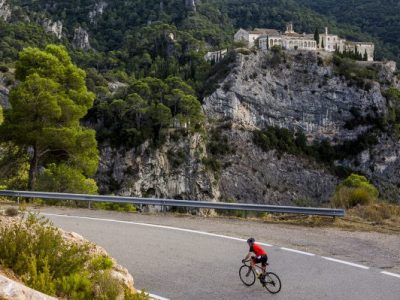
Coll de l’Alba is also an important point on several cycling and mountain biking routes. One option is “Myths, Hermitages and Little Stars”, a circular route of approximately 12 km. It starts in Tortosa, passes through Mig Camí and climbs to the Coll de l’Alba Hermitage.
From the hermitage, the route begins its descent past the Gassia Tower. It then returns towards Mig Camí and Tortosa. The itinerary therefore combines outdoor activity, heritage and landscape.
In addition, Coll de l’Alba features on several longer cycling routes. Some continue towards the medieval abandoned settlement of Fullola, while others connect Tortosa with different parts of the municipality.
Coll de l’Alba and the Via Augusta
This area has also been associated with one of the proposed historical routes of the Via Augusta. This major Roman road connected ancient Dertosa with other territories along the Mediterranean coast. One hypothesis places the route from the coast through the Coll de l’Alba area before descending towards Tortosa.
However, the exact course of the Roman road at this point has not been established with sufficient certainty. It is therefore more accurate to associate Coll de l’Alba with historical routes attributed to the Via Augusta. It cannot be stated with certainty that the Roman road passed directly in front of the hermitage.
Today, this historical connection is reflected in several routes through the area, including “By the sea and Via Augusta”.
Access to the Coll de l’Alba Hermitage
The Coll de l’Alba Hermitage does not have regular public opening hours, and its interior is not normally open for independent visits. The chapel opens on specific occasions, mainly for religious celebrations and activities associated with the hermitage.
A visit to the site therefore focuses primarily on the exterior of the complex, its architecture and the surrounding landscape. Visitors can appreciate the heritage value of Coll de l’Alba without expecting access to the interior.
Heritage, landscape and tradition
The Coll de l’Alba Hermitage brings together some of the most characteristic elements of Tortosa’s rural heritage. Its Gothic architecture, Marian devotion and pilgrimage documented since the 15th century illustrate the historical importance of the site.
At the same time, its elevated location makes Coll de l’Alba an excellent viewpoint over the Ebro Valley, the Delta and Els Ports. Paths and cycling routes also connect the hermitage with the wider landscape.
Finally, the combination of medieval heritage, religious tradition and landscape makes Coll de l’Alba one of the most distinctive sites in the hills around Tortosa.