Description
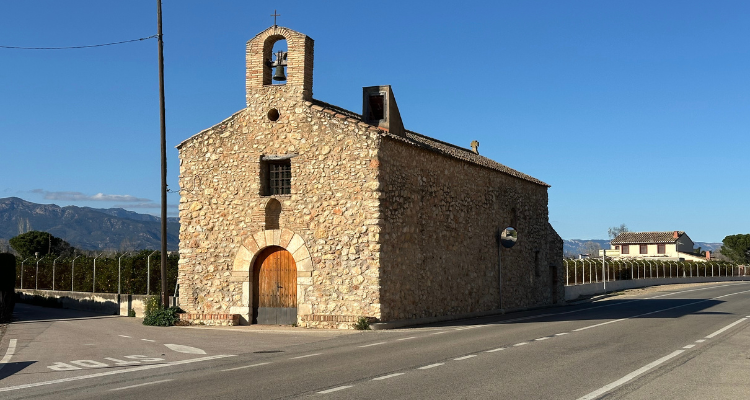
The Chapel of the Three Kings in Tortosa is a small religious building in Horta de Pimpí, north of the city, beside the road to Bítem. The chapel stands in a traditionally agricultural landscape and has long been associated with local farming communities. In addition, it preserves one of Tortosa’s most distinctive traditions: the visit of the Three Kings every 6 January.
The present building dates mainly from its reconstruction in 1821, although its origins go back to the 18th century. Its simple architecture reflects the rural character of its surroundings. Moreover, devotion to the Three Kings forms an important part of the chapel’s identity and popular heritage.
Chapel of the Three Kings in Tortosa and its origins
The origins of the chapel date back to the 18th century. A local tradition associates its foundation with King Charles III of Spain. However, there is insufficient documentary evidence to consider this attribution a confirmed historical fact.
The original building fell into poor condition and was demolished in 1810. Subsequently, in 1821, the chapel was rebuilt, probably incorporating part of the earlier structure. The building was later restored in 1981, helping to give it its present appearance.
The history of the chapel is closely connected with Horta de Pimpí. This agricultural area was already documented in medieval times under the name Horta de Pampino. Therefore, the chapel forms part of a landscape shaped over centuries by farming and cultivation.
A small chapel with simple architecture
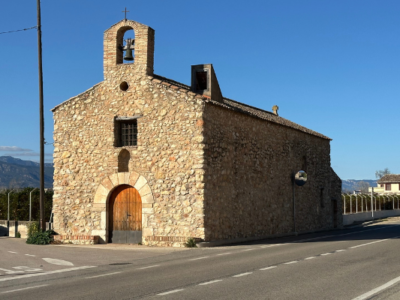
The Chapel of the Three Kings in Tortosa is a small rectangular building. From the outside, its façade is particularly notable for its simplicity.
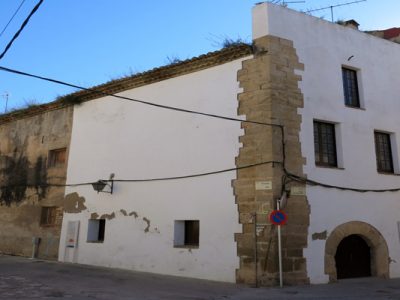
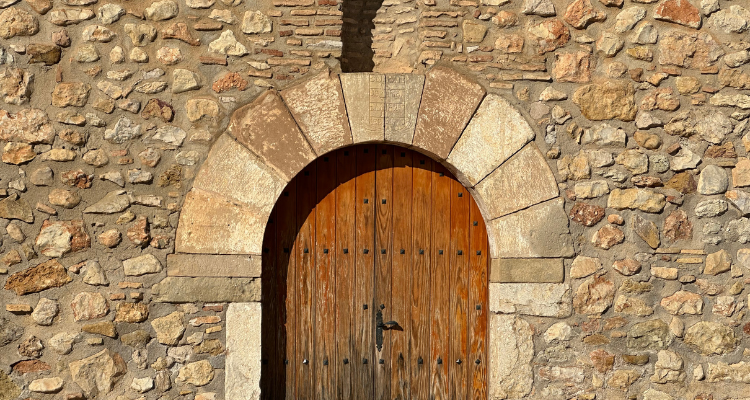
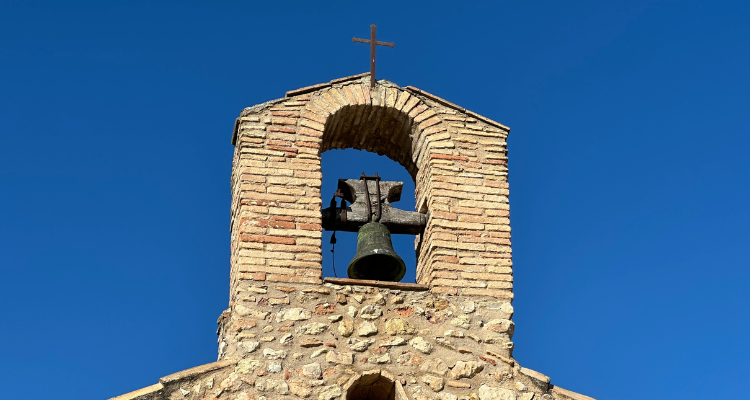
The entrance consists of a round-arched doorway framed by stone voussoirs. Above it is a small niche. In addition, a simple brick bell gable crowns the façade. These features give the chapel its characteristic appearance and can be appreciated from outside throughout the year.
Inside, a round arch separates the nave from the sanctuary. The Neoclassical-inspired altar is dominated by a relief depicting the Adoration of the Magi. There are also small niches and a raised choir supported by wooden beams.
However, these interior features are not normally accessible as part of a tourist visit. The chapel does not have regular public opening hours.
The tradition of the Three Kings
The most distinctive celebration associated with the Chapel of the Three Kings in Tortosa takes place on 6 January, the Feast of the Epiphany. On the previous evening, the Three Kings travel through the streets of Tortosa during the traditional parade. The following day, they make their way to the chapel to take part in the religious celebration.
The event brings together local residents and farmers from Horta de Pimpí. In addition, other participants gather around a tradition that has remained closely connected with this small chapel.
The Three Kings have also maintained the custom of giving presents to children. Furthermore, they record their visit in the chapel’s book of honour.
Thus, every Epiphany the chapel once again becomes the focus of local attention. The celebration brings together religious tradition, popular culture and the festivities of the Three Kings.
The chapel and Horta de Pimpí
The character of the chapel is also closely connected with its surroundings. Horta de Pimpí forms part of the agricultural land between Tortosa and Bítem. For centuries, this area has benefited from the fertile landscape of the Ebro Valley.
Its connection with the farming community remains an important part of the chapel’s identity. The chapel belongs to the parish of Sant Jaume and Santa Rosa, in the Remolins district. Moreover, the celebration on 6 January maintains its links with local farmers and residents.
The chapel has also left its mark on popular culture. In fact, folklorist Cels Gomis i Mestre recorded a traditional song that mentioned Horta de la Capella dels Reis. This provides evidence of the site’s place in local collective memory.
The Chapel of the Three Kings and the Way of Saint James
The Chapel of the Three Kings also stands in an area associated with the Ebro Way of Saint James. This route follows the Ebro corridor, passes through Tortosa and then continues northwards.
Thus, the chapel can be understood as part of a landscape historically crossed by different routes. These roads and paths connected Tortosa with settlements and agricultural areas throughout the Ebro Valley.
Therefore, its interest extends beyond the religious building itself. Its location brings together heritage, agricultural landscapes and historic routes in a lesser-known part of the municipality.
A chapel to discover from the outside
The Chapel of the Three Kings does not have regular public opening hours, and its interior is not normally open for independent visits. It opens mainly for specific celebrations, particularly the Epiphany on 6 January.
For this reason, during the rest of the year a visit focuses primarily on the exterior of the building and the landscape of Horta de Pimpí. Visitors can appreciate the façade, stone-framed doorway, niche and bell gable from outside.
Finally, the Chapel of the Three Kings shows how a modest building can preserve a strong collective identity. Horta de Pimpí, the tradition of the Three Kings and the Epiphany celebration keep this aspect of Tortosa’s heritage alive.