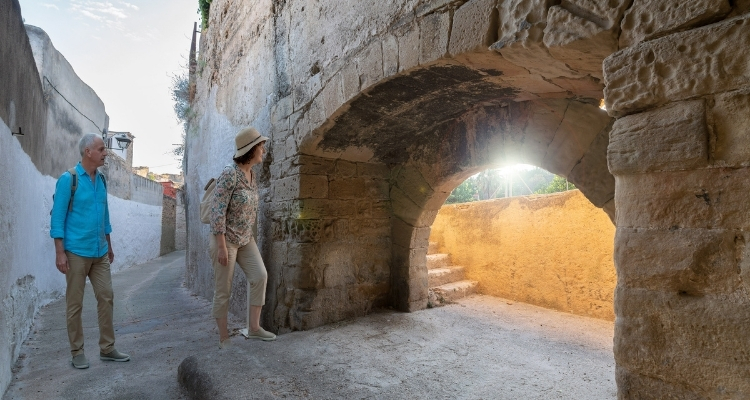
Description
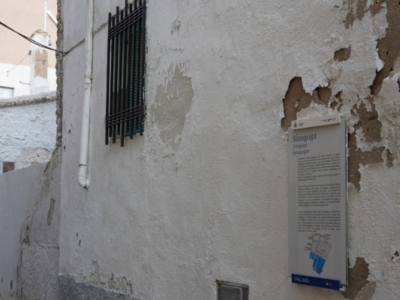
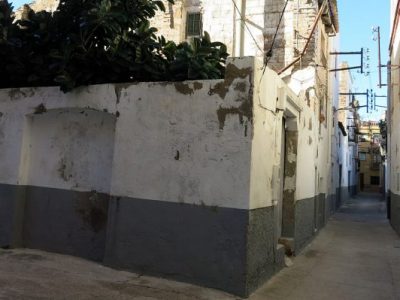
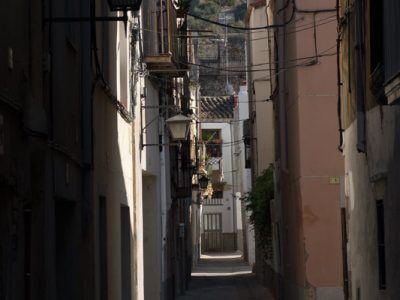
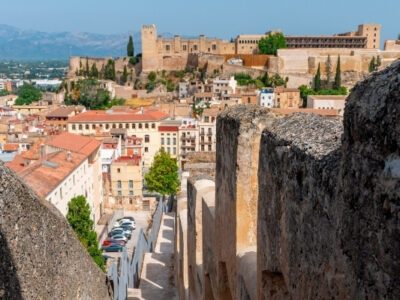
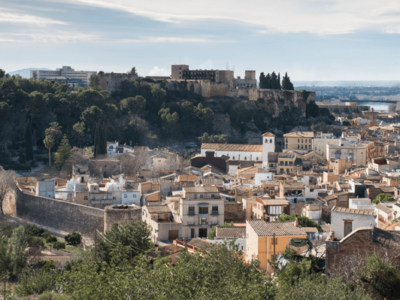
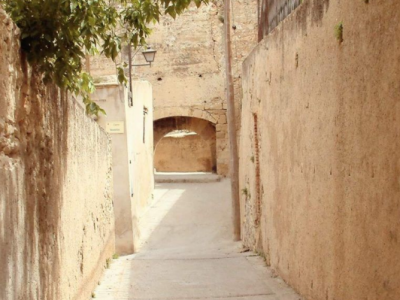
The Jewish Gate is one of the surviving gateways of medieval Tortosa. Historically also known as the Ferré Gate, it stands in the northern part of the historic quarter, beside the old Jewish Quarter and within a preserved section of the medieval walls. Its location helps visitors understand the relationship between the Jewish neighbourhood, the city’s fortifications and the areas that once lay outside the walled enclosure.
Unlike the city’s main entrances, this was a secondary gateway. It connected the Jewish Quarter with the Jewish community’s cemetery, which was located outside the walls, opposite this section of the fortifications. The gate therefore provides particularly valuable evidence of the urban layout of medieval Tortosa and the presence of its Jewish community.
A medieval gateway linked to the Jewish Quarter
The Jewish Gate dates from the same period as the walls in this part of the city, although its present features suggest that it was probably rebuilt during the 15th century.
Medieval documents refer to it as the Ferré Gate. This name may have been associated with its iron-clad doors, which were reinforced with iron to make them more resistant.
In addition, the gateway was also known as Salvaigües. This name reflects another of its functions: it provided an alternative passage in emergencies, particularly during severe flooding of the Ebro, when rising waters made it difficult or impossible to use the usual route through the Vimpeçol Gate.
From the Jewish Gate to Sant Jordi d’Alfama
The history of the gateway’s doors is closely connected to the events that affected Tortosa’s Jewish community at the end of the 15th century. Following the expulsion of the Jews, the iron-clad doors ceased to serve their original purpose.
In 1496, King Ferdinand II granted the doors to the Master of the Order of Montesa so that they could be reused in the church of the fortress of Sant Jordi d’Alfama. This episode provides an interesting example of how architectural and defensive elements were reused following the profound changes experienced by the city at the end of the Middle Ages.
The architecture of the Jewish Gate
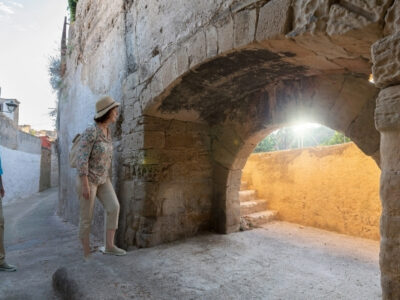
The gateway stands at the northern end of what is now Porcar Park. On its outer side, it lies below the present ground level and is reached by a short flight of steps.
Architecturally, it features a semicircular arch formed by stone voussoirs, with stone jambs on either side. On the inner face, however, the arch is segmental. The masonry is made of sandstone, a material that has suffered considerable erosion over the centuries.
Changes to the surrounding ground level have also altered the perception of the gateway’s original proportions. Elements associated with its former closing system can still be identified, helping visitors interpret how this medieval entrance once functioned.
Discover the Jewish Gate and Tortosa’s walls
Discovering the Jewish Gate provides an insight into a less monumental but particularly significant part of Tortosa’s fortifications. Its connection with the Jewish Quarter, the former Jewish cemetery and the medieval walls makes it an important element for understanding the layout and history of the medieval city.
Moreover, its location makes it easy to include in a route through the northern part of the historic quarter and connect it with other sites related to Tortosa’s Jewish and fortified heritage. The gateway preserves the memory of a passage that, for centuries, linked the walled city with the land beyond its defences.