Description
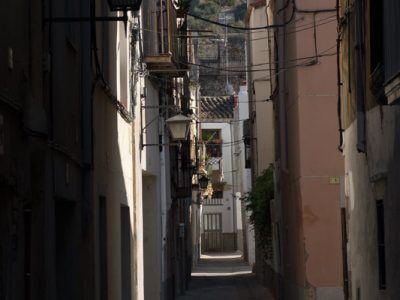
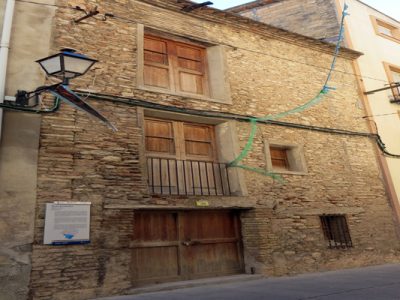
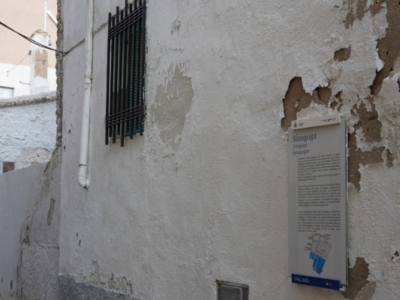
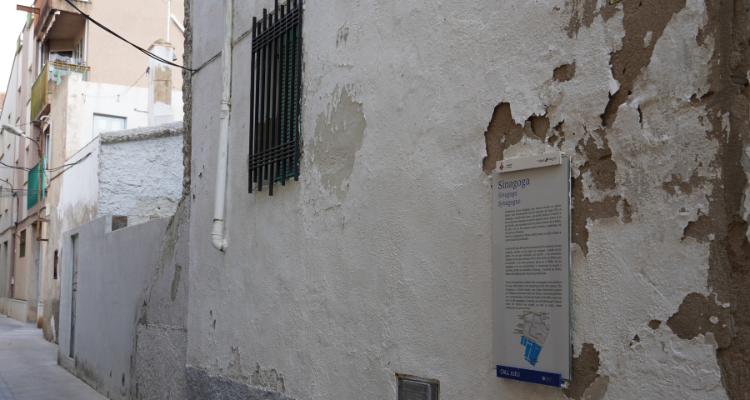
The Old Jewish Quarter Synagogue was one of the main centres of the Jewish community in medieval Tortosa. The former place of worship stood in the Remolins neighbourhood, within the city’s earliest Jewish quarter. The building has not survived. However, historical documentation has made it possible to locate its approximate site on present-day Carrer de Jerusalem, near the former Remolins esplanade.
Today, this location forms part of the route through the Jewish Quarter of Tortosa. It offers an insight into the religious and communal life of the former Jewish community. Therefore, its interest lies not in a surviving building, but in discovering one of the key sites of Jewish Tortosa within the present-day urban fabric.
Old Jewish Quarter Synagogue, a centre of Jewish life
The synagogue was much more than a place of prayer. It was one of the centres of the religious and communal life of the Jewish community of Tortosa. Ceremonies were held here, the Torah was read and other community activities took place.
The presence of a synagogue in medieval Tortosa is documented from the 13th century. Moreover, later sources allow its history to be traced through the following centuries, until the expulsion of the Jews from the Crown of Aragon in 1492.
Following the expulsion, the building passed into municipal ownership. Its sale is documented in 1493. From then on, later written records became fundamental in attempting to reconstruct its location.
Where was Tortosa’s former synagogue?
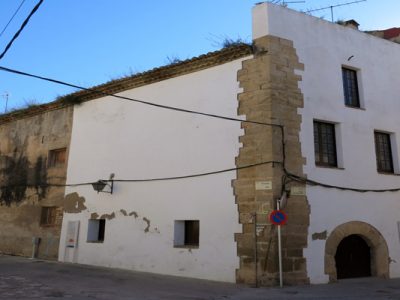
For much of the 20th century, a medieval building on Carrer Major de Remolins was identified as the possible synagogue. It is still known today as the Casa de Sant Jordi or the Synagogue. However, subsequent archaeological and documentary research ruled out this interpretation.
Excavations carried out during the 1980s found no evidence identifying the building as the former Jewish place of worship. In fact, subsequent research indicates that the Casa de Sant Jordi originally had a hospital function. It was later converted into cavalry barracks.
Therefore, the Casa de Sant Jordi and the former Old Jewish Quarter Synagogue are two different sites. The traditional name nevertheless associated them for many years.
From Pla d’en Pol to Carrer de Jerusalem
Historical documents provide an especially valuable clue to the location of the former synagogue. An inventory dating from 1635 records a house known as the former Jewish synagogue on Carrer del Pla d’en Pol, within the parish of Sant Jaume.
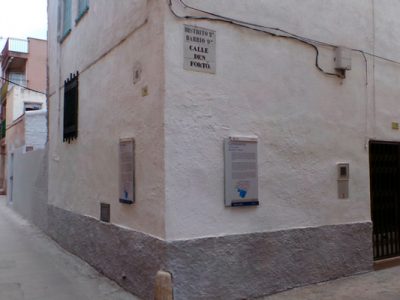
Research into the historical topography has linked this location to the former Remolins esplanade. As a result, the synagogue has been situated approximately around present-day Carrer de Jerusalem, which led into this open area.
Interestingly, the name Carrer de Jerusalem does not derive from the medieval Jewish community. The name appeared later and is associated with the nuns of Sant Joan de Jerusalem. They settled in this part of Remolins from the 16th century onwards.
Thus, the present-day place name and the geography of the medieval Jewish quarter belong to different historical periods. Over the centuries, these different layers of history have gradually overlapped.
The synagogue and Tortosa’s Old Jewish Quarter
The Old Jewish Quarter has its origins in the reorganisation of the city following the Christian conquest. In 1149, Ramon Berenguer IV granted the former Islamic shipyards to the Jewish community so that houses could be built there.
Over time, the community grew and the New Jewish Quarter also developed. Consequently, this part of Remolins became one of the main centres of Jewish life in medieval Tortosa.
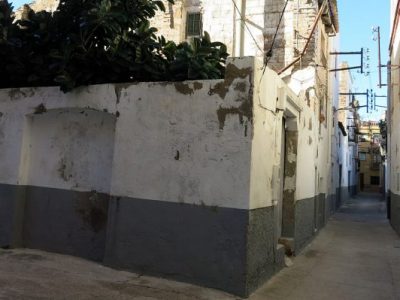
The synagogue formed part of an urban network of homes, workshops, commercial premises and other communal facilities. In addition, narrow and irregular streets still characterise part of the neighbourhood. Their layout helps evoke the urban character of the medieval period.
A stop on the Jewish Quarter route
The Old Jewish Quarter Synagogue has not survived as a building and therefore cannot be visited as a monument. What visitors can discover today is the approximate location of the former synagogue as part of the route through Tortosa’s historic Jewish quarter.
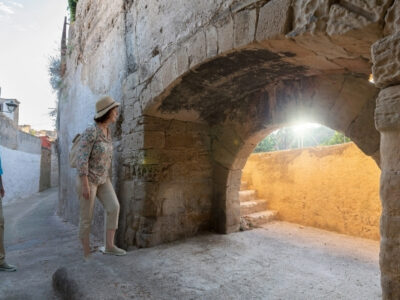
From here, the route continues to other sites associated with the Jewish community. These include the Jewish Oven, the former kosher butcher’s shop, the pottery workshop and the Casa de Sant Jordi. Visitors can also discover the remains of the city walls and the Jews’ Gate.
In this way, a walk through the Jewish Quarter gradually reveals the everyday life of the former community. Surviving sites, the historic street pattern and locations identified through documentary research all contribute to understanding its history.
Finally, the site of the Old Jewish Quarter Synagogue is an essential point for understanding the Jewish heritage of Tortosa. Although the building itself has disappeared, historical research has recovered its memory. As a result, its place within the urban landscape of Remolins can once again be recognised.