Description
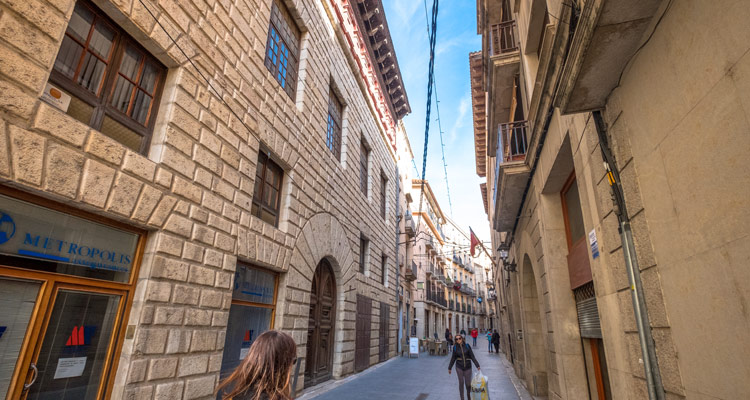
Capmany Palace in Tortosa is one of the most notable historic residences in the city’s historic centre. Located on Rosa Street, its façade provides an excellent example of Tortosa’s civil architecture and reflects the residential character this part of the city had for centuries. Although the interior is not open to visitors, the exterior retains many architectural features that make it a worthwhile stop on a walk through the old town.
Capmany Palace in Tortosa: a stately façade
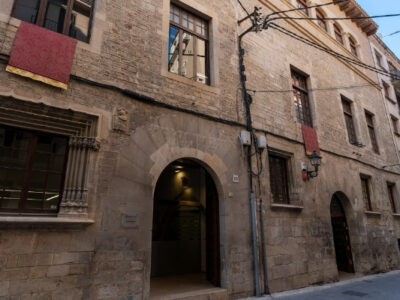
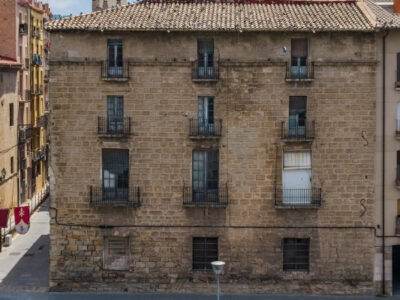
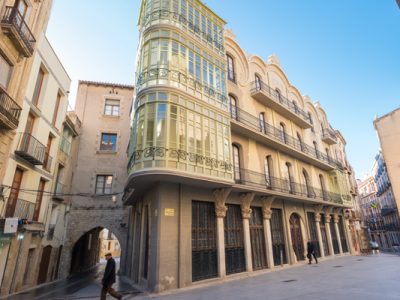
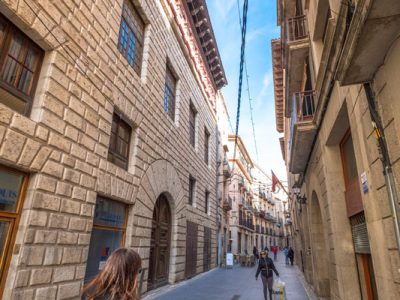
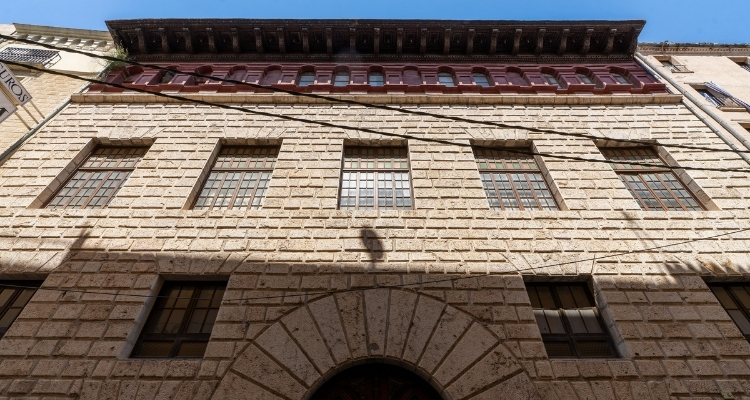
The façade is the main feature visitors can appreciate from the street. Its balanced and monumental composition reflects the character of the grand urban residences once occupied by Tortosa’s wealthy families.
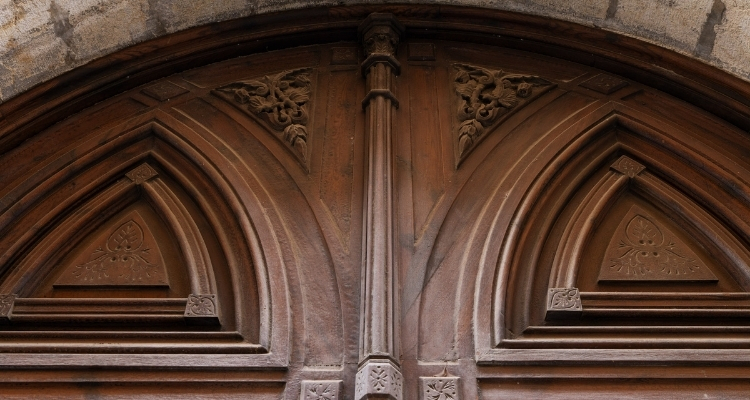
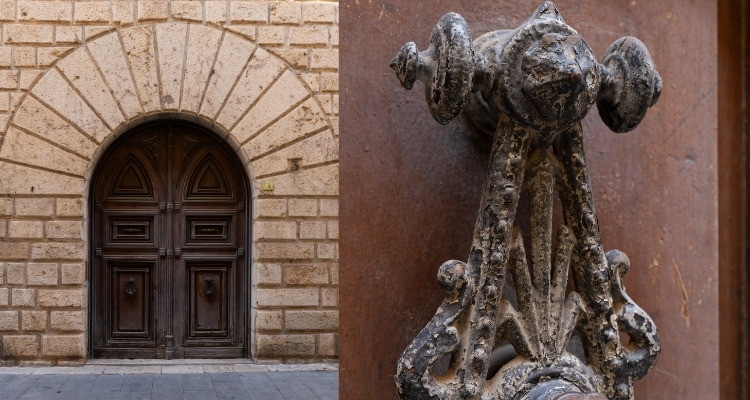
At ground level, the large semicircular arched doorway with stone voussoirs stands out against the rusticated stonework of the façade. In addition, the regularly arranged openings on the upper floors reinforce the harmonious composition of the building.
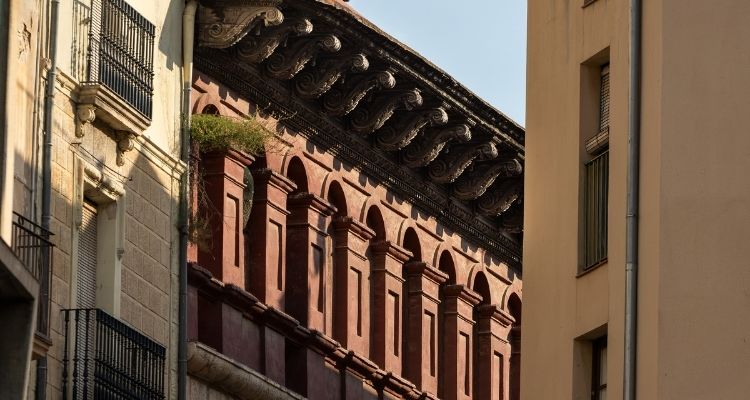
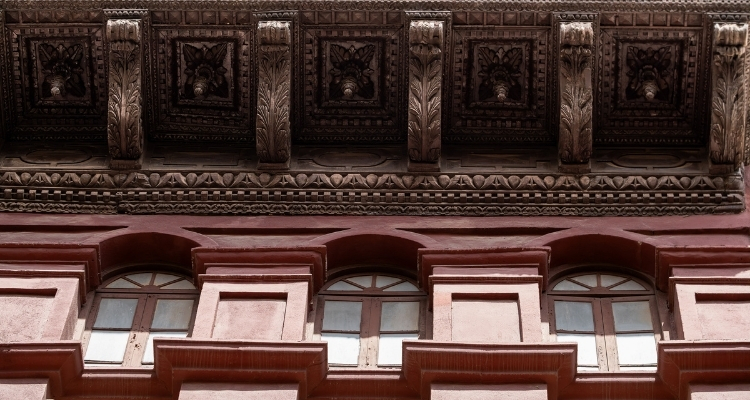
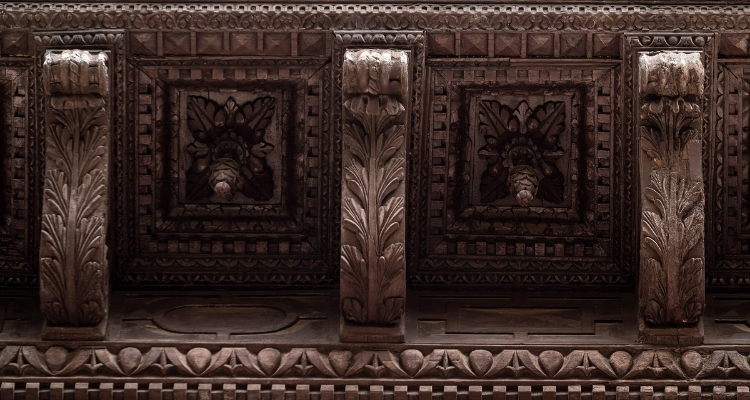
At the top, the arcaded attic gallery is one of the palace’s most distinctive architectural features. Above it projects a broad wooden eave, decorated with carved plant and floral motifs. Thus, stone and wood combine to create a façade that is particularly representative of Tortosa’s historic residential architecture.
A palace linked to Tortosa’s cultural life
Throughout its history, the building has been associated with several wealthy families and has served different purposes. In fact, in the late 19th century it housed the Centro Dertosense and the Liceu de Tortosa.
These uses made the palace one of the places associated with the city’s social and cultural life. Therefore, its significance extends beyond its architecture and forms part of the history of Tortosa’s cultural institutions and associations.
The birthplace of Gerard Vergés
Capmany Palace also occupies an important place in Tortosa’s modern literary history. In 1931, Gerard Vergés was born here. A poet, essayist, translator and pharmacist, he became one of the most prominent figures in contemporary Catalan literature.
In addition, for many years the ground floor housed the well-known Vergés Pharmacy. This connection adds another cultural dimension to a building that had already played a significant role in the city’s social life.
Capmany Palace from Rosa Street
Today, the interior of Capmany Palace is not open to visitors. For this reason, the best way to discover the building is by observing its façade and architectural details from Rosa Street.
It is worth taking a closer look at the entrance, the regular arrangement of the openings, the upper gallery and the decorative woodwork of the eaves. At the same time, its location makes it easy to include the palace in a walk through the historic streets of Tortosa.
Overall, viewing Capmany Palace offers an insight into the residential architecture of historic Tortosa and part of the city’s cultural heritage. Its stately façade and connection with Gerard Vergés make it one of the most interesting historic buildings on Rosa Street.