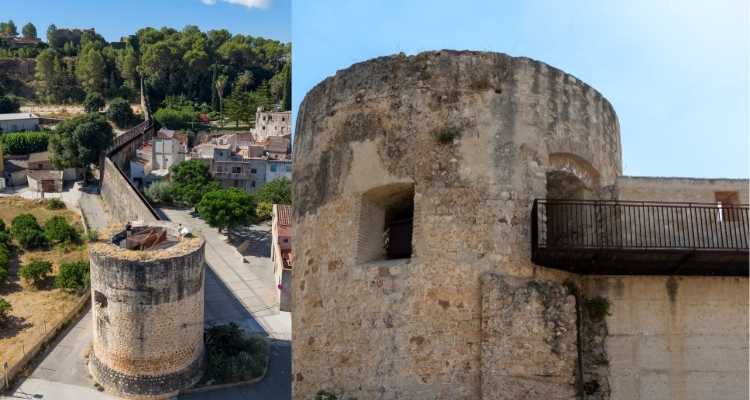
Description
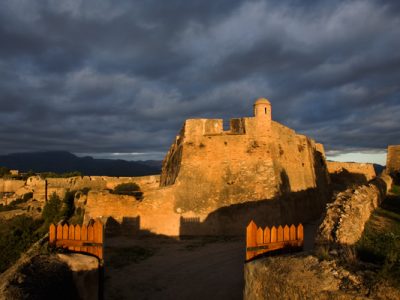
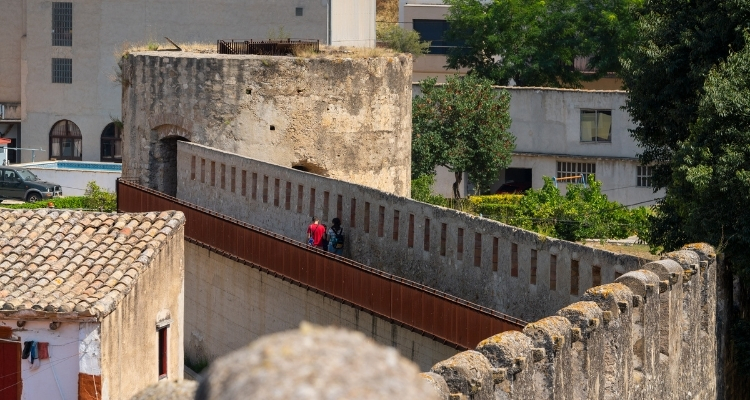
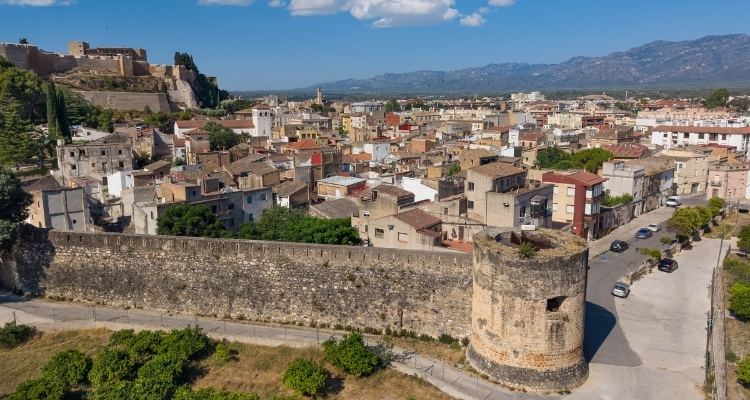
Célio Tower Tortosa is one of the city’s most notable medieval fortifications. It is also one of the most distinctive features of the walls in the Remolins area. Located beside the Célio ravine, it formed part of the defensive system protecting the northern side of the city. Today, the tower is open to visitors and can be reached along a surviving section of Tortosa’s medieval walls.
Célio Tower Tortosa: a 14th-century defence
Historically also known as Torre Grossa or Torre Rodona, Célio Tower is notable for its circular plan and robust appearance. It stands approximately fifteen metres high. Its construction dates from the late 14th century, when Tortosa’s medieval defences were being strengthened.
The tower occupied a particularly strategic position. Indeed, it protected the junction between two important sections of the city walls. One climbed towards Saint John’s Advanced Fortifications. The other continued towards the former Vimpeçol Gate and the Ebro.
Thus, these defences helped protect the Remolins neighbourhood and the area of the historic Jewish Quarter. Together, they formed part of the fortified system enclosing this section of the city.
A tower accessible along the medieval walls
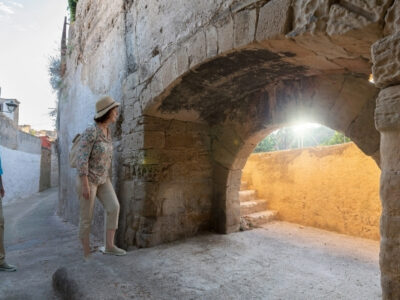
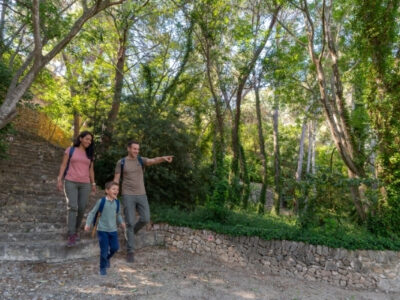
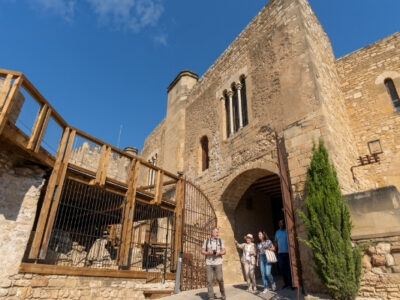
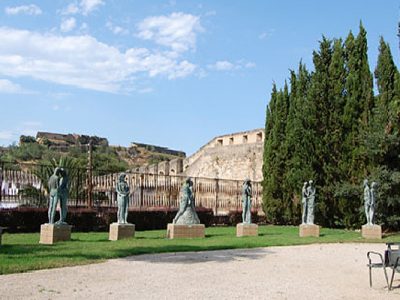
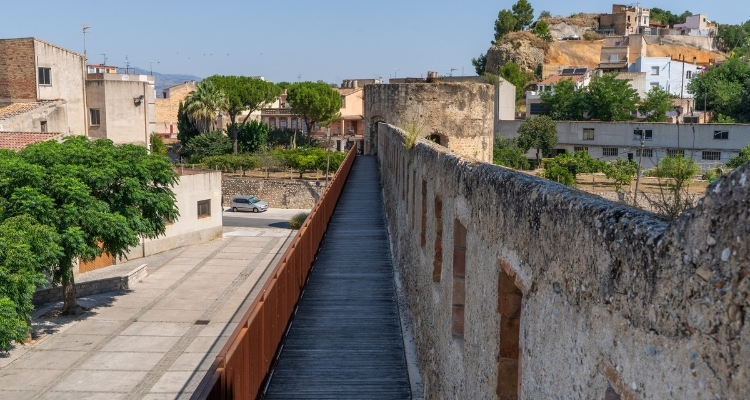
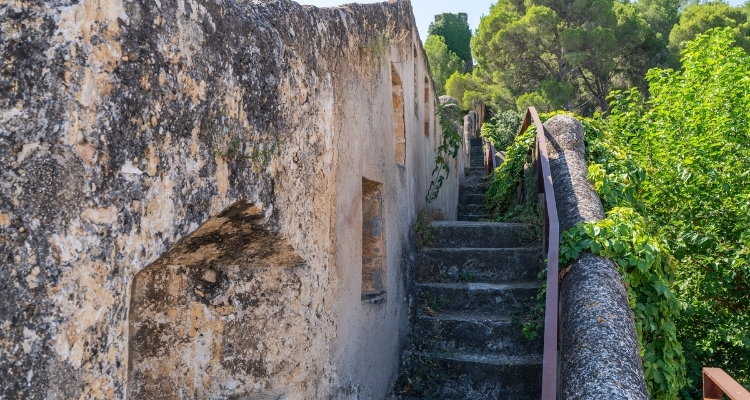
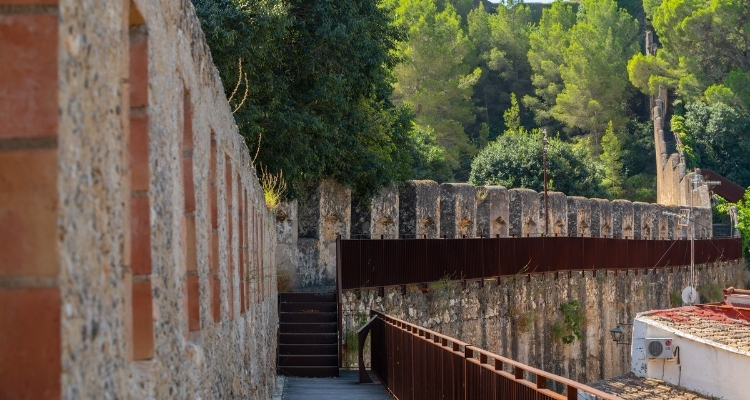
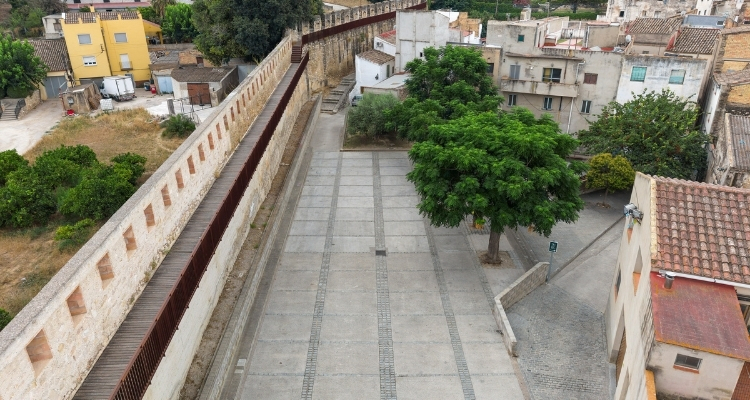
Célio Tower has been restored and is currently open to visitors. Access is via the visitable section of the 14th-century walls, beginning at the Prince’s Gardens. From there, the route follows the former wall walk until it reaches the tower.
In this way, visitors can walk along part of Tortosa’s medieval defences. The route also reveals the relationship between the walls, the wall walk and Célio Tower.
The itinerary helps explain how the fortifications functioned. Walls, towers and passageways formed an integrated system designed to control and defend the approaches to the city.
In addition, the route offers an unusual perspective over historic Tortosa. Visitors can experience the walls from the same elevated walkway once used by the city’s defenders.
Célio Tower and Tortosa’s fortified landscape
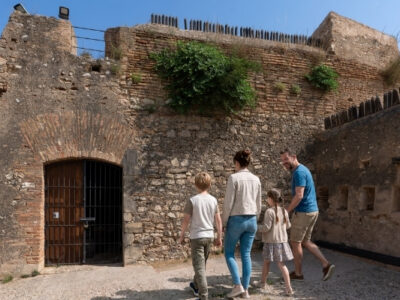
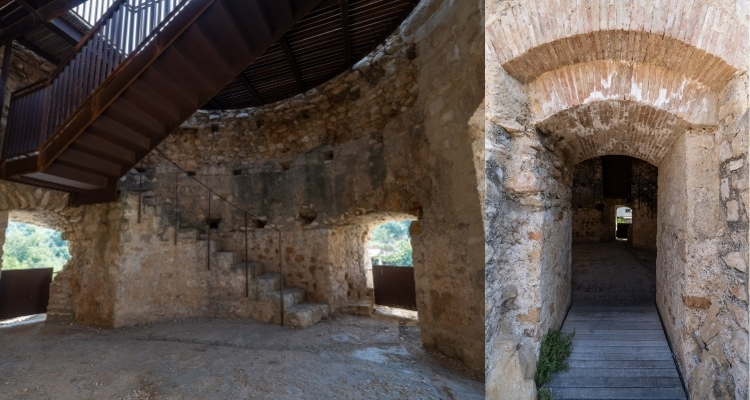
The tower retains much of its stone structure. Its former connection with the city walls can still be interpreted. Features associated with the historic access to the wall walk and the fortification itself can also be identified.
At the same time, different phases of construction and subsequent restoration work help explain the tower’s present appearance. The visit therefore provides an opportunity to explore a medieval structure transformed over several centuries.
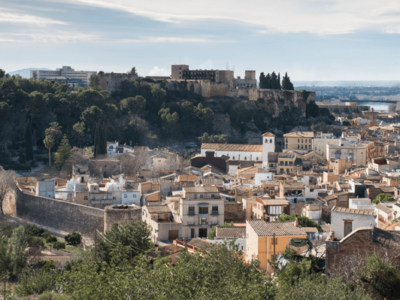
The elevated position of the tower and walls provides views over Remolins and the surrounding fortifications. From this sector, visitors can also understand its relationship with Suda Castle and Saint John’s Advanced Fortifications. Thus, the landscape itself helps explain how the northern side of Tortosa was defended.
A route from the Prince’s Gardens
A visit to Célio Tower Tortosa combines particularly well with a walk through the Prince’s Gardens and along the 14th-century walls. In this way, a single route brings together heritage, military architecture and different perspectives over the historic centre.
Overall, following the former wall walk to Célio Tower is an excellent way to discover Tortosa’s fortified past. The tower, walls and their position above Remolins help visitors understand how this part of the medieval city was defended.