Description
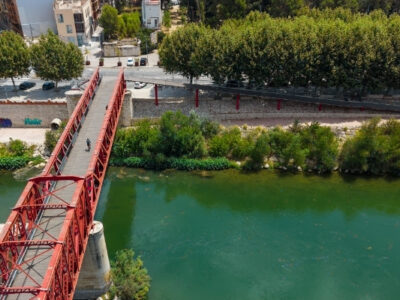
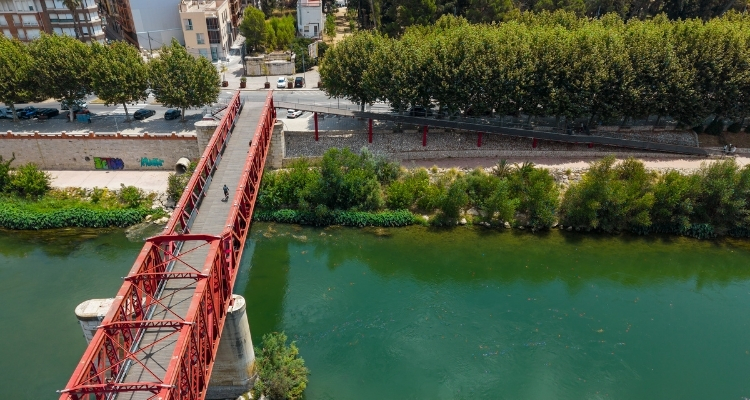
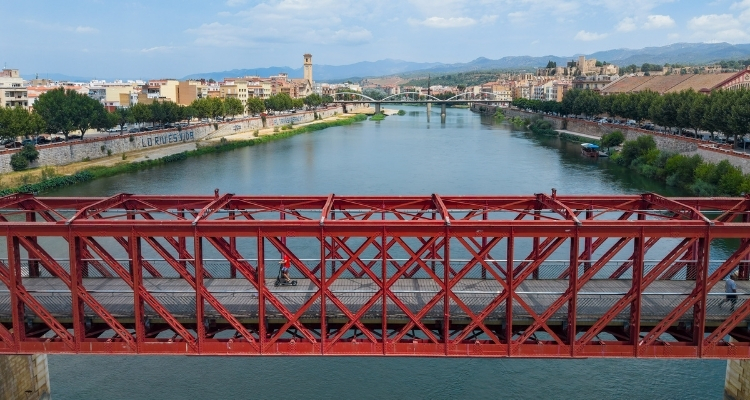
The Red Bridge and Tortosa Greenway form one of the city’s most emblematic settings for enjoying the River Ebro, its railway heritage and the landscapes of the Terres de l’Ebre. The former railway bridge, restored for pedestrians and cyclists, crosses the Ebro and provides continuity between the major non-motorised routes that converge in Tortosa. From here, visitors can follow the Val de Zafán Greenway inland, take its new extension towards La Ràpita or follow the River Ebro all the way to its mouth.
Red Bridge and Tortosa Greenway: railway heritage over the Ebro
The Red Bridge was built between 1865 and 1868 and became the first permanent bridge across the Ebro in Tortosa. Until then, communication between the two banks depended mainly on the pontoon bridge.
The new infrastructure helped complete the railway connection between Barcelona and Valencia. As a result, the bridge became a key transport link and one of the most important engineering works built in 19th-century Tortosa.
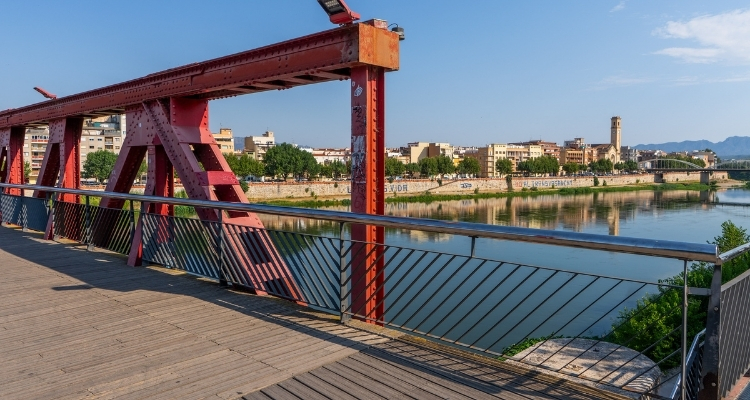
More than 220 metres long, the structure retains the industrial character of the former railway line. Its metal deck and piers were renovated between 1911 and 1913. Later, during the Spanish Civil War, the bridge was severely damaged after being blown up. However, it was rebuilt and remained in service until the railway line closed in 1996.
Crossing the Ebro on foot or by bicycle
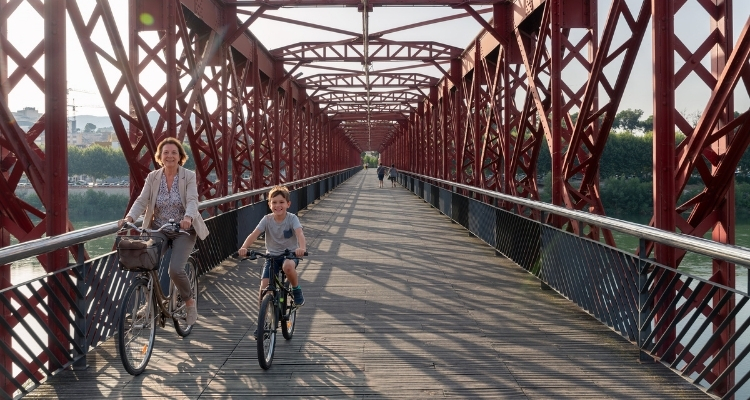
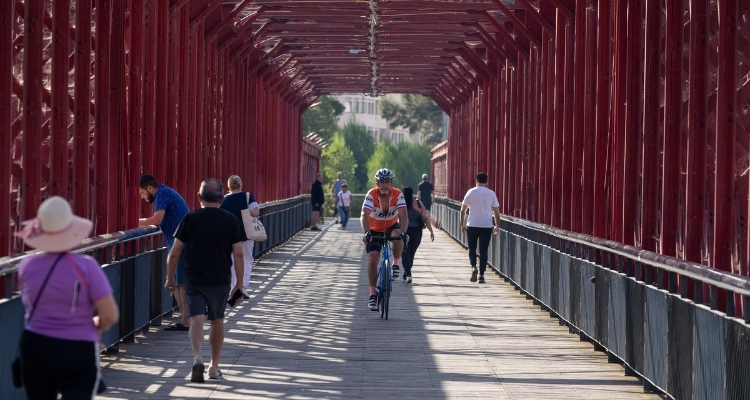
Between 2011 and 2013, the former railway bridge was restored and adapted for non-motorised use. It was during this project that it acquired the distinctive red colour that defines its appearance today.
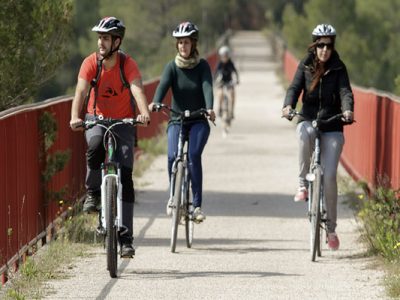
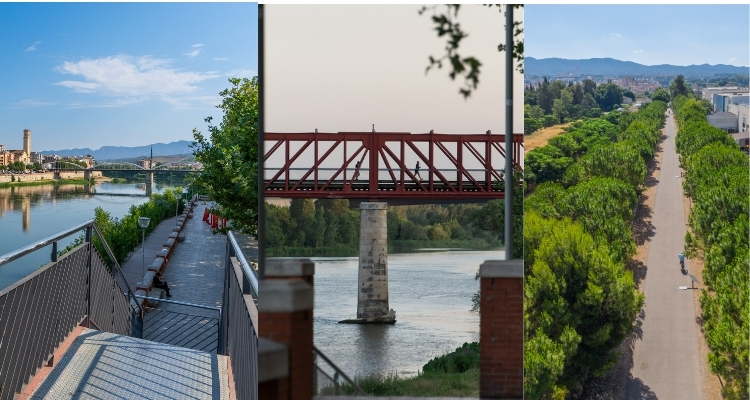
Today, the Red Bridge provides a convenient way to cross the Ebro on foot or by bicycle. Along the way, visitors can enjoy different views of the river and Tortosa’s urban landscape. These include Teodor Gonzàlez Municipal Park, the riverfront and several landmarks that shape the city’s historic skyline.
In addition, the bridge plays an important role in providing continuity between the routes that pass through Tortosa. Therefore, the city is not simply a stop on the Greenway, but also a junction from which different routes can be followed inland or towards the Ebro Delta.
The Val de Zafán Greenway towards the interior
Heading north from Tortosa, the Val de Zafán Greenway continues towards Roquetes, Aldover, Xerta and Benifallet. From there, the route crosses the Terra Alta region and continues into Aragon.
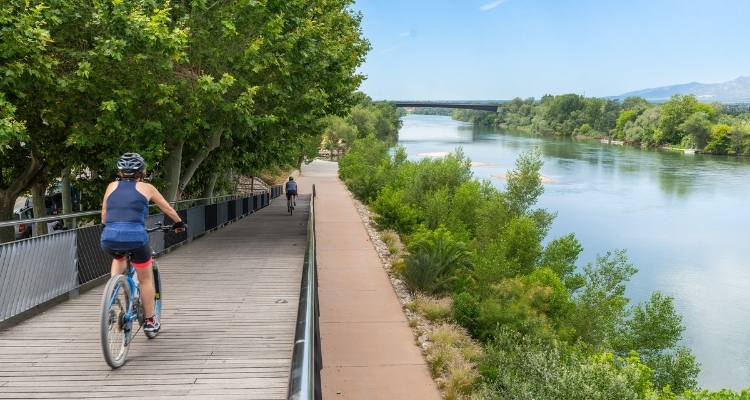
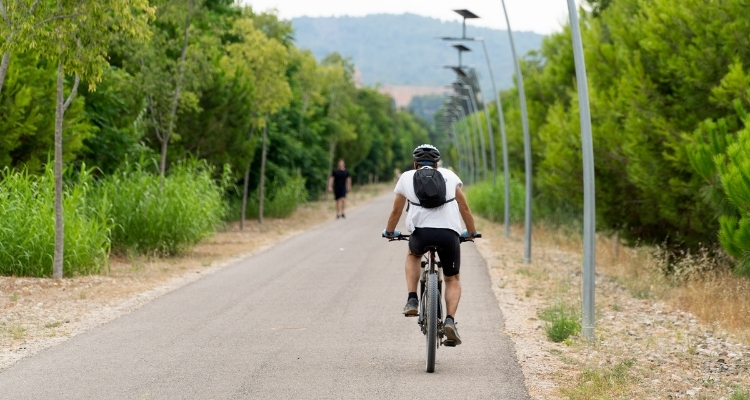
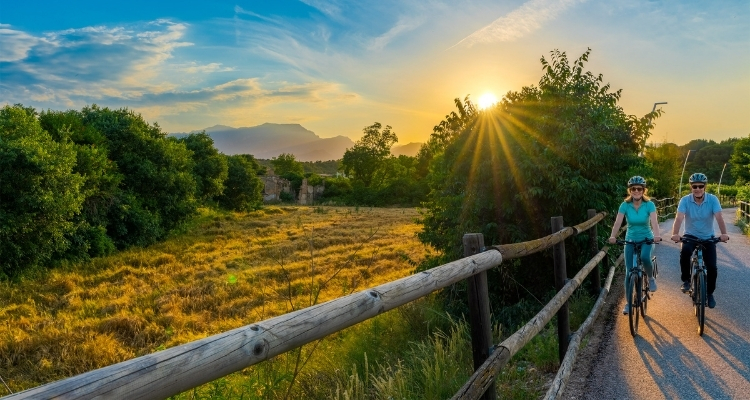
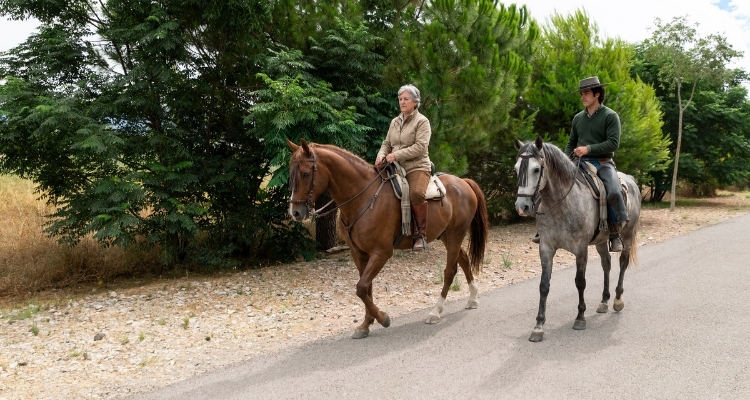
The Greenway follows much of the former railway line and passes through tunnels, across viaducts and alongside olive groves, vineyards and Mediterranean woodland. It also offers striking views of the Canaletes River valley. Moreover, the route is particularly suitable for cycling, walking and horse riding.
This continuous route makes longer journeys possible, connecting Tortosa with places such as Horta de Sant Joan, Valderrobres, Alcañiz and, following the complete route, La Puebla de Híjar.
The new Greenway extension towards La Ràpita
Since 2026, the Greenway has also continued south from Tortosa thanks to the new extension connecting Roquetes with La Ràpita. The 27.3-kilometre section passes through the municipalities of Tortosa and Amposta, extending this major non-motorised route all the way to the coast.
From Tortosa, this section can be joined by following the Greenway south towards Vinallop. From there, it continues towards the Torre de la Carrova, Amposta and finally La Ràpita. In this way, anyone arriving in Tortosa along the Greenway from inland can continue south without interrupting their journey.
From Tortosa to the mouth of the River Ebro
Tortosa also offers another route towards the Delta. This follows the Ebro Nature Trail, or GR-99, a different itinerary from the Greenway extension to La Ràpita. From Tortosa, the route follows the River Ebro towards Deltebre, Riumar and the river mouth.
Along the way, orchards and riverside vegetation gradually give way to the extensive rice fields of the Ebro Delta. Therefore, Tortosa acts as a crossroads for several routes: the Greenway continues inland towards Aragon, its new extension leads to La Ràpita, while the Ebro Nature Trail continues towards the mouth of the River Ebro.